
The founding societies—namely the ASA, Royal Statistical Society, International Statistical Institute, Institute of Mathematical Statistics, and International Biometric Society—established the International Prize in Statistics Foundation to separate the awardee and process from the day-to-day activities of the associations. Guy Nason of Imperial College London currently chairs the foundation.
The International Prize is awarded every other year, with awardees to date including the late Sir David R. Cox (2017), Brad Efron (2019), and Nan Laird (2021). Although I was unable to travel to the World Statistics Conference (WSC) in 2017 to hear Cox, I have fond memories of sitting in the amphitheater in Malaysia at the WSC as Efron gave his prize remarks remote from Palo Alto to a mesmerized audience.
He spoke about the next frontier of deep learning, reminding us that deep learning models are recognizable regression functions, and the AI field moving past prediction and possibly back to inference and causality. Efron also pointed to others who might have won in the past if such an award existed, calling out my academic grandfather Emanuel Parzen and academic great aunt Grace Wahba, among others, and reminding me of my accomplished lineage!
I also watched as the presidents of the statistical associations celebrated the event together, never imagining I would one day be one of them.
For many of us, this was also the last in-person conference, as the pandemic soon became reality. Indeed Laird’s remarks were presented virtually, but quite compellingly, as she addressed the importance of longitudinal studies with direct links to survival analysis and the bootstrap, the foci of the first two prizes, respectively.
In addition to international recognition, the awardee is provided a sum of $80,000 directly from the societies.

New to the statistics prize landscape is the Rousseeuw Prize in Statistics, which will be awarded for the first time this year and every other year thereafter. Nominations are due March 31. Peter Rousseeuw speaks to his reasons for establishing this prestigious $1 million prize below. Together, the two prizes constitute an opportunity to truly recognize and celebrate our innovators.
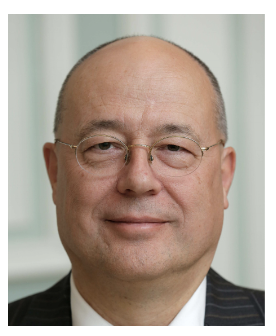
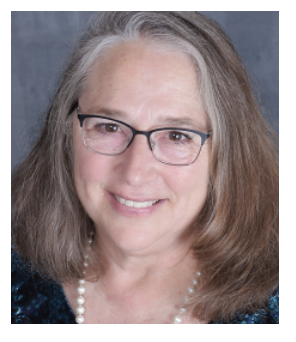
I reached out to Rousseeuw (PR) and Nason (GN) to get their thoughts about our field and capture their unique perspectives on each prize.
What advice would you give to students and early-career statisticians who want to make an impact through the field of statistics?
PR: A crucial element is choosing the problem you will work on. If at all possible, try to work on a topic that people care about, whether they realize what they need or not.
GN: I think a key thing to remember is that there are many routes to follow to make an impact in statistics; there isn’t just one. People can progress ideas in theoretical, methodological, computational, and application areas, as well as many cross-areas such as medical statistics, economic statistics, and environmental statistics.
What areas of research are you most excited about? This could be your own research or other areas of research in statistics that you find particularly interesting at this time.
PR: My own research nowadays centers on cellwise outliers. That is, cases (rows of the data matrix) may contain a few entries that have been recorded wrongly, but the remaining entries still contain useful information you want to preserve. I’m also interested in visualizing classification results and in fast algorithms for a variety of methods. To avoid the appearance of a conflict of interest, I cannot comment on work by other people here.
GN: Many areas and too many to mention here. I find work in causal inference very exciting, but also the interface between statistics and machine learning. I am also excited by the increasing profile of graphs (networks) in different statistical applications.
What do you see on the horizon for the field of statistics, say 5, 10, 20 years out?
PR: That we, as statisticians, will continue to tackle difficult problems whose solution is directly or indirectly beneficial to society. And that we will get better at communicating statistical results to the public.
Peter, I have to say this is exactly my perspective, and what I see in action every day!
GN: It’s been going on for a while, but I see an increasing coalescence between statistics, probability, and parts of computer science and electrical engineering. This might mean the birth of new structures that include these disciplines in new units and, perhaps, even splitting from their existing homes. Some organizations in the world have done this, or are in the process of doing so, and it will be interesting to see how they develop.
For those who are just learning about the [Rousseeuw] prize, what are the goals, and how will the entries be judged?
PR: The goal is to award pioneering work in statistical methodology—an outstanding contribution that has had significant impact and found wide application in statistical practice—with relevance to society. The focus is on the innovation, rather than a single individual. This allows recognition of several individuals who made important contributions to the innovation. In the long run, it is hoped that the prize promotes awareness of the important role and intellectual content of statistics and its profound impact on human endeavors—and to make statisticians proud.
Nominations should be submitted to the website rousseeuwprize.org by March 31, after which they will be evaluated by an international selection committee consisting of 10 reputed statisticians. The identities of the committee members will be communicated when the prize is announced. The award ceremony is planned for 2022, and the prize will continue in even years.
What motivated you to give so generously to recognize the contributions of statisticians? Why is this the right time for another grand prize in statistics?
PR: Like many colleagues, I’m a big fan of all sciences, and I used to read most of Scientific American. But already as a graduate student, I was disappointed with the lack of recognition for statistical research. Part of this is due to the typical modesty among statisticians, and our field is wedged between more abstract disciplines and more lucrative ones. But the existence of prestigious awards also has an effect. The fact that some disciplines have Nobel prizes has certainly helped them, as the visibility of such awards sparks the imagination, which attracts students, good researchers, funding, and so on. For some disciplines without a Nobel prize, the gap has been filled by other initiatives, like the Abel, Shaw, and Breakthrough prizes for great achievements in mathematics.
For about 40 years, I was hoping a Nobel-sized prize would be created for statistics, but it never happened. So, I decided to take the initiative myself by giving part of my earnings as a statistician back to the field.
It would have been preferable had such a prize started a century ago, but 2022 is also an interesting point in time. Statistical work on the pandemic has been covered extensively in the media. Also, a lot of statistical research is being done by people who do not necessarily identify as statisticians and under different flags such as data science, big data, and so on. Creating a large prize for statistics, defined broadly to encompass all those endeavors, will hopefully encourage a more unified view of the various strands.
What is the purpose of the International Prize in Statistics, and how are the recipients selected?
GN: I would direct you to the prize’s website (statprize.org). The prize “recognizes an individual statistician or team of statisticians for a single work or body of work” and “powerful and original ideas will be the focus of the award, but a practical and positive effect on the world’s population will be factored into the selection criteria.”
The prize is awarded biennially at the World Statistics Congress of the International Statistical Institute. The prize foundation appoints members of the organizing committee, who then appoint the selection committee. The selection committee is responsible for selecting the recipient(s) of the prize.
We go to great lengths to ensure the selection process is fair, free from external influence, and as transparent as possible. The foundation members are nominated by the five founding societies, and the two-layer structure is intended to give some separation between the prize and any potential influence from the founding societies.
How does having a second grand prize in statistics help promote the value and impact of statistics?
GN: The foundation warmly welcomes having a second grand prize in statistics. It’s wonderful, and its establishment can only further recognise the value and impact of statistics. Most people reading this understand the immense value statistics brings to the world, but both prizes do (and will) convey that value to a worldwide audience.
As always, take care, and I send well wishes for a fantastic March. And for those of you traveling to Houston for ENAR at the end of March, welcome to our wonderful city!
Leave a Reply