

Steve Pierson, ASA Director of Science Policy
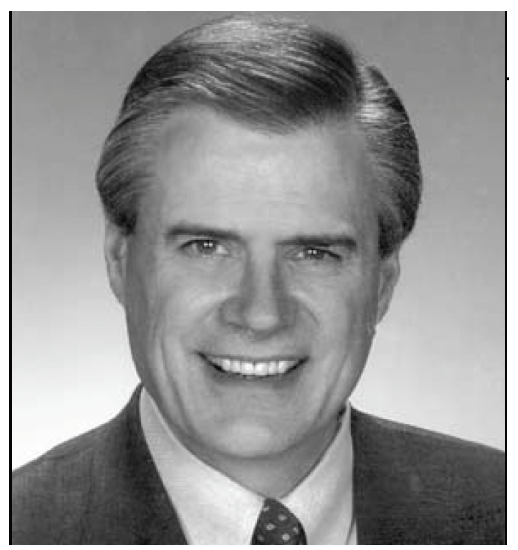
The May 20 passing of Rep. Tom Sawyer sparked memories and praise of his work in support of the decennial census and other data production activities among longtime members of the federal statistical community.
Terri Ann Lowenthal, an inaugural member of the ASA Scientific and Public Affairs Advisory Committee, recalled his keynote address to the 2002 Joint Statistical Meetings in New York City, possibly the only JSM address by a member of Congress. Katherine Wallman, 1992 ASA president and chief statistician of the US from 1992–2017, remembered a 1993 hearing—one of a series of oversight activities—during which Sawyer charged her and then-administrator of the OMB Office of Information and Regulatory Affairs, Sally Katzen, to review and possibly revise the 1977 standards for federal data on race and ethnicity. Wallman said he was motivated by the correspondence he was receiving from folks who “couldn’t find themselves” in the 1990 census options.
“Tom’s characteristically informed and polite urging led OMB to undertake a robust and, in some respects, unprecedented process leading to the 1997 revision that has served the federal system since,” Wallman said. “The inclusive process that his request inspired is, in fact, being emulated in the review currently underway.”
Sawyer represented Ohio’s 14th congressional district from 1987–2003, gaining prominence in the federal statistical community for his oversight of the 1990 census as chair of the House panel with jurisdiction over the US Census Bureau and federal statistical system more broadly. Indeed, the title of his obituary in The New York Times referred to him as the “Congressman Who Challenged Census Undercount” and stated “he said the 1990 population data missed more than two million Black Americans and shortchanged the nation’s older cities.”
Lowenthal, who served as Sawyer’s staff director on the House census oversight panel, recounted the subcommittee’s issuance in 1991 of the first congressional subpoena to a commerce secretary for the unofficial adjusted 1990 census data at the block level. She also recalled the difficult occasion when Sawyer had to tell House Rules Committee Chair Joe Moakley (D-MA) that the inclusion of overseas service members in the 1990 census apportionment counts—a policy change Sawyer had championed—cost Massachusetts a congressional district.
Margo Anderson of the University of Wisconsin-Milwaukee, a historian of the US Census Bureau and federal statistical system, observed Sawyer’s “serious attention to the policy, legislative, academic issues surrounding federal statistics and his recognition that he could both learn from staff, constituents, and the ‘bureaucrats’ and contribute to public policy as a member.” She added, “He recognized he could ‘fix’ things, sponsor legislation, nudge officials and fellow members to respond to the many voices he heard and improve the statistical system.”
Lowenthal expressed similar admiration for Sawyer:
“My fondest memory of Congressman Sawyer comes from the battle over the 1998 appropriations where Republicans tried to outlaw sampling in the census,” wrote David McMillen, another congressional staffer and former Census Bureau demographer who worked with Sawyer. “It was a series of congressional sessions that ran until three in the morning and information was scarce. The White House negotiators wouldn’t share the details of the census negotiations with the minority democrats, often to their peril. When the dam broke, it was Congressman Sawyer they chose to talk to, even though, at that time, he held no position of authority within the House. Congressman Sawyer offered them a rational and reasoned response to the language they were negotiating.”
McMillen further reminisced:
Regarding the program to improve the census address list, Joseph Salvo, longtime chief demographer of New York City, voiced his praise that “staff actually collaborated with us—the locals—to see whether what was being proposed made sense.” He noted that collaborative effort was the primary reason New York City achieved the eight million mark for the first time in 2000 and commended its accomplishment as manifest by its far-reaching effects to this day.
McMillen, who with other committee staff shepherded the bill through the Senate, noted Salvo used the law to add 700,000 people over the 1990 New York City count that would have otherwise been missed.
Former Census Director Martha Farnsworth, who Sawyer introduced at her 1994 confirmation hearing, recalled Sawyer’s vote in support of the North American Free Trade Agreement that probably cost him his seat after the next round of redistricting because it would expose Ohio’s tire manufacturing industry to competition. She remembers him believing “it was ‘the right thing to do,’ so he did it, and delivered the final, decisive vote.” She concurred with others: “He passed the test of character.”
Lowenthal, then serving double duty as Sawyer’s personal office chief of staff, remarked on the NAFTA vote: “I can’t tell you how much pressure the congressman was under from both sides to vote against or for the bill. It felt like a parade of cabinet members and Vice President Gore, as well as President Clinton, chasing him down by phone on a daily basis, while union members in DC and the district threatened to withhold future support if he voted for the agreement.” She concluded with this praise:
Leave a Reply