
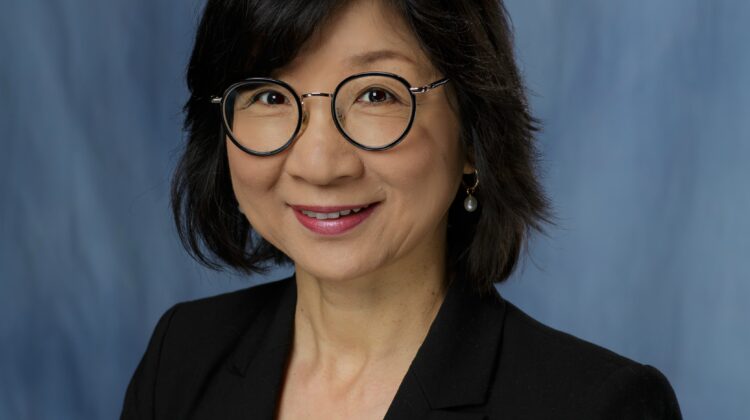
I am deeply honored to serve as your president. This journey feels like stepping onto a bridge, each step bringing me closer to new opportunities. Writing this inaugural President’s Corner for Amstat News is my first step, and I’d like to use it to share a bit about myself and my vision for the year ahead.
Reflecting on my past year as president-elect, I am profoundly grateful to have had the opportunity to talk with members of the ASA community at conferences, chapter meetings, and even on Zoom. These interactions have been invaluable—not only in affirming the breadth and diversity of our profession but also in shaping my understanding of our members’ needs and aspirations.
During our conversations, I had the privilege of sharing my vision for my presidency and insights on the role of statisticians in clinical trials, personalized medicine, and team science. The most rewarding part, however, was to hear your stories and perspectives. Throughout this year, I hope to continue to reflect on how we can work together to celebrate the successes and address the challenges faced by statisticians across different career stages and sectors.
A question I often received was, “How did you get involved in ASA leadership and become president-elect?” While I often joked, “Well, I thought you voted for me,” this question deserves a thoughtful answer. My journey, like many of yours, has been shaped by mentors, colleagues, professional organizations, and a sense of purpose—a desire to give back to the community that has given me so much.
My Journey
“Numbers in health” is how I was introduced to biostatistics. After earning a master’s degree in sociology, I was working as a research assistant at a university institute, but I was not fulfilled by my work.
The 1990s were a turbulent time in Korea, marked by economic uncertainty and often violent political demonstrations. Many of my classmates sought stability in corporate jobs, yet the stories they shared painted a stark picture. For women, professional opportunities were scarce, and rigid societal norms dismissed women’s potential and confined them to predefined roles. I vividly remember one friend was the only woman among a cohort of 20 new hires. Unlike her 19 male colleagues, who were each assigned an assistant to help with their work, she was expected to type everything by herself. For many, marriage was seen as the natural path, with little consideration for pursuing a career.
But I wanted something different—a discipline that would prepare me for meaningful work and allow me to chart my own path. It was during this search that a new faculty member in my lab introduced me to biostatistics.
Back then, we couldn’t ask Google, ChatGPT, or Claude, so guidance was sparse. With limited resources, I had to rely on Peterson’s Guidebook, a thick volume that became my road map to graduate programs in the United States. Among the listings, I found The University of North Carolina at Chapel Hill. I knew little about rankings or reputations, but the name alone sparked my imagination, and I applied.
Adjusting to life in the US was tough for me. After a decade of professional experience in Korea, returning to student life was a humbling transition. The language, culture, and academics were unfamiliar, and many in my circle thought my decision was crazy or reckless. And yet, there was no turning back. This was my path forward.
Looking back, I remain deeply grateful for the education, friendship, and sense of community I found at Chapel Hill. It was a transformative experience. Beyond academics, it showed me the power of perseverance and the importance of supporting others on their journeys.
ASA: A Path to Leadership
As a statistician, I integrate diverse perspectives to produce effective outcomes. Both roles involve a sense of ownership—of a piece of music, a project, or a shared mission—and both bring joy through collaboration.
After graduation, I joined Moffitt Cancer Center, which is where I began my career as a collaborative statistician working in oncology. It was also where I began volunteering with the ASA Florida Chapter. Through my work with the chapter, I was introduced to the passionate statisticians who make up the ASA. I remain inspired by members like Subhash Bagui, who honored his parents’ legacy through travel awards for students.
Inspired by Subhash, I created the Lee Family Award to honor my late parents. In Korea, we have a tradition called “jesa” to mark the anniversary of a parent’s passing. It involves preparing food for a ritual and gathering family to reflect on the lives of our parents. Although jesa has faded in recent years, it remains significant in my family. As the eldest daughter no longer living in Korea, I’ve had a deep sense of sadness and guilt for being unable to lead or attend these ceremonies. Creating the Lee Family Award became a way to honor my parents and bridge my heritage with my professional life.
What began as volunteering at the local level grew into leadership roles. I served as District 6 vice chair and later as a Council of Chapters representative to the ASA Board of Directors. These roles gave me the opportunity to work alongside dedicated colleagues on initiatives that strengthened our association. Each experience broadened my understanding of the ASA’s mission and the opportunities and challenges we face together.
When I was nominated as a candidate for ASA president in 2022, my first reaction was disbelief. I assumed it was a mistake—or perhaps spam! However, after taking time to reflect, I saw how my purpose and values aligned with the ASA’s mission. To me, leadership is about creating opportunities for others, building bridges, and ensuring our profession thrives for future generations. The ASA has always been a platform for empowering statisticians and data scientists, and I thought it was time for me to take a big step toward contributing to its continued growth and success.
Looking Ahead
Our work as statisticians has never been more critical. We stand at the intersection of science and society. Now more than ever, advancing our shared vision of a world that relies on data and statistical thinking to drive discovery and inform decision-making is critical. As ASA president, my priorities are the following:
- Growing visibility: Elevating the role of statistics in science and society
- Enhancing opportunities: Expanding professional development and leadership programs
- Fostering inclusion: Building a diverse, welcoming community
We’ve already made strides. We formalized a partnership with Nature Medicine, creating its first-ever statistical advisory board with 30 statisticians (thank you for volunteering!) and are forming a working group to build bridges with the program evaluation community. In addition, we are developing plans for regional meetings to build bridges between statisticians, data scientists, and local communities; reinvigorating the StatsForward program; and enhancing the leadership education provided through the ASA Leadership Institute, including courses on effective communication for leaders of diverse teams and culturally competent leadership in the digital age.
A Call to Action
As a hobby, I play the cello in a local orchestra and chamber music group. These groups enrich our community and bring us together. And, of course, having a great deal of fun is an essential part of the journey. Over time, I’ve realized how much my musical activities mirror my professional life.
Success in music and statistics requires technical skills and the ability to listen to others. As a cellist, I balance my part with the ensemble. As a statistician, I integrate diverse perspectives to produce effective outcomes. Both roles involve a sense of ownership—of a piece of music, a project, or a shared mission—and both bring joy through collaboration.
Collaboration continues to be the most fulfilling part of my career, and it’s what I value most in my musical activities. Coming together with others to create something greater than the sum of its parts is at the heart of what I hope to inspire during my presidency.
I encourage you to engage with the ASA and take ownership of our professional home. Think of it as your own concert, where your contributions add richness to the whole. Mentor the next generation, foster meaningful conversations, and bring your unique voice to our initiatives. Together, we can make a strong and sustainable impact.
In closing, thank you for your trust and support. Let’s continue to collaborate, listen, and create harmony, not just in our professional work but in advancing our practice and profession.
Leave a Reply