
Penny S. Reynolds, University of Florida College of Medicine
Birthdays in January
Edna Paisano January 1, 1948 – September 3, 2014
First Native American full-time employee of the US Census Bureau and principal statistician in the Racial Statistics Population Division. Credited for making the census more inclusive and diverse by substantially improving count accuracy for indigenous peoples and improving proportionate allocation of government resources and services.
Genichi Taguchi January 1, 1924 – June 2, 2012
Awarded the Deming Prize in 1960 for contributions to the global quality movement. Best known for his robust designs, Taguchi loss function, concept of offline quality control, and the signal:noise ratio concept.
David Finney January 3, 1917 – November 12, 2018
ASA Fellow 1951; Biometric Society president 1964; Royal Statistical Society president 1973. Pioneered statistical methods of experimental design, statistical computing, pharmacovigilance, biological assay, and probit analysis. Established and headed three statistics schools (Aberdeen, Agricultural Research Council, and Edinburgh). He once said if he had not contracted typhoid as an undergraduate at Cambridge, he would not have switched to statistics and would have ended up as “a rather poor schoolteacher of mathematics.”
Aryness Joy Wickens January 5, 1901 – February 2, 1991
ASA Fellow 1936; ASA president 1952 (second woman after Helen Walker). Acting commissioner of labor statistics. One of the developers of the US Consumer Price Index. In 1933, she served on the ASA committee to advise Secretary of Labor Frances Perkins on setting up the Bureau of Labor Statistics.
Jacob Bernoulli January 6, 1655 – August 16, 1705
Part of the Bernoulli family (brother of Johann, uncle of Daniel), his posthumous 1713 book Ars Conjectandis demonstrates the first version of the law of large numbers. He was influenced by Christiaan Huygens’s De Ratiociniis in Ludo, the first printed work on the calculus of probabilities.
Lowell J. Reed January 8, 1886 – April 29, 1966
ASA Fellow 1927; ASA president 1951; Royal Statistical Society Fellow. Co-developer with Wade Hampton Frost of the 1928 binomial-chain Frost-Reed Susceptible-Infectious-Removed (SIR) model. They went on TV in 1950 to demonstrate the model behind the mathematical formulae, using colored marbles rolling down a trough.
Jean-Baptiste Joseph Talon January 8, 1626 – November 23, 1694
Canada’s first official statistician, Talon was appointed by Louis XIV to improve the management of French colonies in what is now Canada. He needed to measure the population to gauge the progress of European colonization and implement policies to diversify the economy and strengthen governance.
Mollie Orshansky January 9, 1915 – December 18, 2006
ASA Fellow 1974. Best known for the Orshansky Poverty Thresholds—the first US government-accepted measures of income adequacy—developed when at the Social Security Administration. These tools are now updated each year by the Census Bureau and used mainly for statistical estimates of the number of Americans in poverty each year.
Marc Daniels January 11, 1908 – March 3, 1953
A pioneer in establishing standards for clinical trial methods and reporting. His 1951 methodology descriptions for anti-tuberculosis chemotherapy trials were the forerunner of CONSORT.
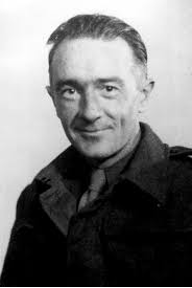
Archie Cochrane January 12, 1909 – June 18, 1988
The father of evidence-based medicine and the name behind the Cochrane Collaboration and Cochrane Library, he established new high standards for clinical epidemiological research. He advocated randomized controlled trials to evaluate medical therapeutic efficacy and medical decision-making. He got the idea from his first randomized controlled trial, which he conducted while he was a prisoner of war in WWII.
Stella Cunliffe January 12, 1917 – January 20, 2012
First female president of the Royal Statistical Society 1975–1977. As head statistician at Guinness Brewery, she pioneered statistically based quality control assessments; however, she could not be promoted to director because of her gender. During WWII, she was statistician for the Danish Bacon Company and in charge of London bacon rationing. In 1972, she became the home office director of statistics, shaping key public policy on crime and criminal justice.
Yvonne Bishop January 12, 1925 – May 26, 2015
ASA Fellow 1975. A pioneer in the development of multidimensional contingency tables, she is best known as coauthor of Discrete Multivariate Analysis: Theory and Practice. She contributed to the National Halothane Study, which revolutionized surgical and anesthetic safety and ushered in a new emphasis on both medical quality improvement and modern data processing.
Robert Sokal January 13, 1926 – April 9, 2012
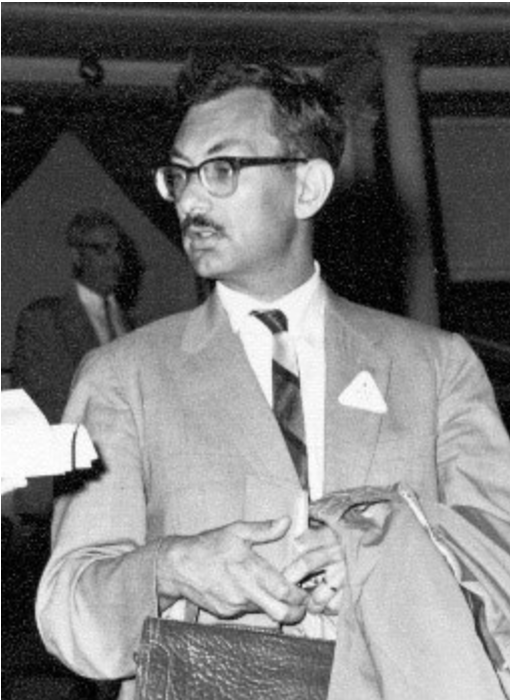
Biostatistician and entomologist. Known for his classic text Biometry (coauthored with FJ Rohlf), he co-founded the field of numerical taxonomy in 1963 and pioneered the use of rigorous statistical methodology and computers in systematics.
Gertrude Cox January 13, 1900 – October 17, 1978
ASA Fellow 1944; ASA president 1956; Royal Statistical Society Fellow 1957; International Biometric Society president 1968; National Academy of Sciences 1975; International Biometric Society founding member 1947. Known as a pioneer in applied experimental design. A woman of many firsts, she was the first woman to be elected to the International Statistics Institute, first women to head the North Carolina State experimental statistics department, and editor of Biometrics from 1947–1955.
Eva E. Jacobs January 17, 1921 – April 28, 2015
ASA Fellow 1982; ASA Julius Shiskin Memorial Award for Economic Statistics 1998. A survey statistician, she worked 50+ years at the Bureau of Labor Statistics and 20 years as chief of the Division of Consumer Expenditure Surveys as the person in charge of the Consumer Price Index.
Joseph-Louis Lagrange January 25, 1736 – April 10, 1813
Known to statisticians for outstanding contributions to probability 1776–1777. He developed the first complete analytical solution to the problem of duration of games of chance, which had stumped de Moivre. More than 50 concepts and equations in math, statistics, and physics are named for him.
Charles Dodgson January 27, 1832 – January 14, 1898)
A lecturer in mathematics at Oxford, he worked on probability, symbolic logic, and linear and matrix algebra. He developed the Dodgson condensation for computing determinants of square matrices. He is best known as Lewis Carroll, author of Alice in Wonderland. He always denied the story that Queen Victoria was so keen on Alice in Wonderland that she commanded him to dedicate his next book to her and he sent her An Elementary Treatise on Determinants.
Evelyn Fix January 27, 1904 – December 30, 1965
Known for the 1951 k-nearest neighbor method that became a key component of machine learning. During WWII, she worked at the Applied Mathematics Panel of the National Defense Research Committee; these were the days when high-speed computers did not exist and all calculations were done by hand.
Carlos Bonferroni January 28, 1892 – August 18, 1960
Developer of the Bonferroni inequalities 1935–1936. However, the Bonferroni adjustment for simultaneous inference was developed by Olive Dunn and named in his honor. He published on a wide range of mathematical and statistical topics, but most of his work is not well-known because his books were never typeset. He thought books too expensive for students, so he had them printed from his handwritten teaching material.
Louis-Dominique-Jules Gavarret January 28, 1809 – August 30, 1890
Gavarret was the first to apply a forerunner of confidence intervals to clinical data (1840). He computed the range of possible errors of means (“limites d’oscillation”) for published blood-letting data and argued against taking the point estimate at face value. His book Principes de Statistique Médicale is the earliest to describe major principles for rigorous clinical trial conduct but was almost forgotten shortly after his death.
Joseph Jastrow January 30, 1863 – January 8, 1944
He and Charles Sanders Peirce conducted the first randomized and blinded trial in experimental psychology. Order of stimulus presentation was formally randomized by shuffling ordinary playing cards. They used logistic regression to estimate subjective probability of subject response.
Rosedith Sitgreaves January 30, 1915 – February 1, 1992
ASA Fellow 1960. First woman to graduate with a PhD in statistics from Columbia University. Professor of statistics and education at Columbia and Stanford.
Oscar Kempthorne January 31, 1919 – November 15, 2000
ASA Fellow 1952. Known for design of experiments and statistical genetics. Founder of the ‘Iowa school’ of experimental design. A champion of randomization and ANOVA , he was often critical of both model-based inference and Bayesian design, although he did acknowledge that “design of experiment is a Bayesian process.”
Events in January
1889 Francis Galton publishes his magnum opus, Natural Inheritance, a summary of his work on correlation and regression, which includes the concept of regression to the mean. Karl Pearson and WFR Weldon said the book was a profound influence on their thinking and the later development of biometry. Reviews by John Venn and John Dewey were enthusiastic. However, Hiram Stanley hated it because he detested statistics; he said statistical methods were in no way comparable to introspection based on facts.
1889 Herman Hollerith receives patent no. 395,782 for the first tabulating machine. In 1888, he won the contract to process the 1890 US census data in a competition organized by the US Census Bureau. Hollerith’s machine translated data from paper questionnaires to machine-readable data in 72.5 hours and sorted it into categories in less than six hours.
1895 In a paper read to the Royal Society on January 24, Karl Pearson expands on his original definition of the histogram. He saw it as a quantitative methodological tool for capturing non-normal variation, rather than simply a time diagram. This was radical as it went against Galton’s belief that all distributions ‘should’ be normally distributed. He first introduced the term “histogram” on November 18, 1891, in his Gresham lecture series.
1937 Before J. Martin Bland and Douglas Altman, there was Sir Austin Bradford Hill (1897–1991). In January 1937, he publishes the first of 17 articles about medical statistics in The Lancet. The collected articles later became the book Principles of Medical Statistics, which ran to 12 editions over 55 years.
1938 The word “googol,” meaning 1.0 × 10100, appears in the Science Today column in the Dunkirk (N. Y.) Evening Observer. It was coined in 1920 by Milton Sirotta, aged 9. His uncle, mathematician Edward Kasner, later popularized it in his 1940 book Mathematics and the Imagination. Googol is the source for the company name Google. The founders wanted a name that suggested their search engine could provide large quantities of information but spelled it wrong.
1977 A group of British and American statisticians led by Sir Richard Peto published the first methodological tutorial on survival data analysis intended for nonstatisticians. It was published in the British Journal of Cancer as the second of a two-part report to the UK Medical Research Council on best practices for design and analysis of randomized clinical trials.
1979 Bradley Efron’s bootstrap resampling method is 46 years old this month. The term “bootstrap” was derived from a story in The Surprising Adventures of Baron Munchausen, in which the baron pulls himself out of a swamp by his own bootstraps. Efron was able to resist suggestions made by his friends for alternative names for the method such as Swiss Army Knife, Meat Axe, Swan Dive, Jack Rabbit, and Shotgun.
2002 The Royal Statistical Society publishes an open letter to the Lord Chancellor of Great Britain to express serious concerns about the presentation of statistical evidence in criminal trials by unqualified witnesses. It was in response to testimony given by expert pediatric witness Sir Roy Meadow in the trial of Sally Clark for the murder of her two infant sons. Meadow calculated the odds of two infant cot deaths occurring in the same family as 1:73 million, leaving murder as the alternative explanation. But his calculations were statistically invalid and Clark was wrongly convicted. After serving three years, Clark was freed on appeal but never recovered from the trauma and died in 2007.
Leave a Reply