
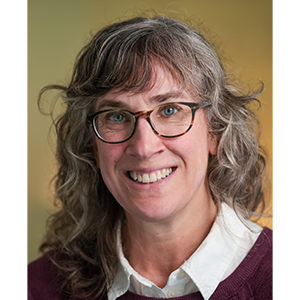
 Research Professor, Johns Hopkins Bloomberg School of Public Health
Elizabeth Colantuoni grew up in Baltimore, Maryland, and returned there after college to pursue her professional career and start a family. “Like many statisticians’ stories go, math came easy to me. In addition, I had several opportunities to tutor in high school and really enjoyed teaching,” Colantuoni said. She stumbled on the statistics field as she explored colleges that offered degrees in actuarial science and was hooked after several courses on experimental design and regression analysis at Virginia Tech.
Colantuoni’s interest in biostatistics began after working as an intern at a manufacturing facility, where her experience designing experiments in a tightly controlled environment left her curious about the complexities of designing experiments in studies of humans and human health. She took every biostatistics course offered at North Carolina State University while pursuing her master’s degree and had the opportunity to teach a section of an introductory statistics course. These experiences solidified her drive to pursue biostatistics and teaching as her career, and that is what she has done for the last 25 years in the department of biostatistics at the Johns Hopkins University Bloomberg School of Public Health.
With her training, Colantuoni supports and leads research that has a direct impact on human health, particularly in critical care medicine and patient safety. She has also developed expertise in longitudinal and multilevel data, competing risks, and the design of randomized trials and observational studies.
“I consider my greatest achievement the professional and personal mentorship, statistical consultation, and education I have provided to biostatistics and public health students, fellows, and junior faculty at BSPH and Johns Hopkins University Bloomberg School of Medicine,” Colantuoni said.
She counts it as a great privilege to have served as the master’s degree program director for her department from 2015 through 2024. During her time directing the program, Colantuoni was able to build on an already solid foundation to expand the number of students matriculating and enhance the scientific and professional supports provided by the program to allow these students to successfully complete their degrees and go on to have a broad impact in their roles in academia, industry, and government. “The opportunity to educate and collaborate with the next generation of biostatisticians and scientific researchers has been the most rewarding aspect of my career.”
Leave a Reply