
I am delighted to have a chance to share “My ASA Story” because it helped me discover that I do indeed have an ASA story! And that the ASA has been part of my journey for a long time.
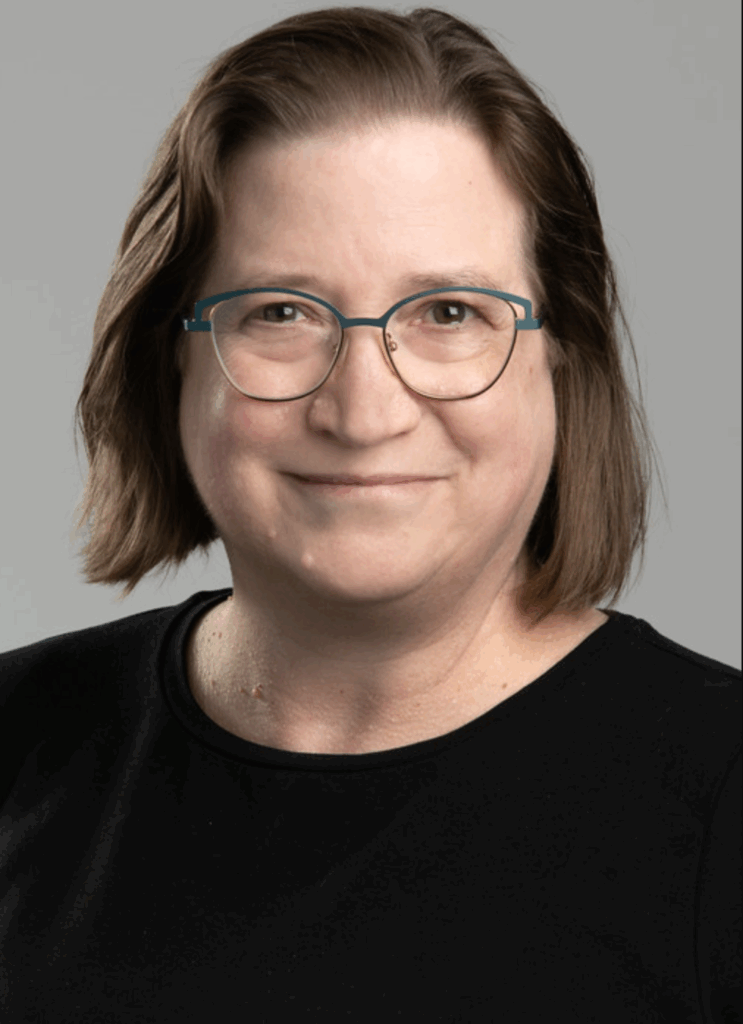
I joined in 2003, when I was a student working on my Master of Integrated Science degree at the University of Colorado at Denver. It wasn’t my first interdisciplinary degree—my Bachelor of Science was a specially designed multidepartment program. So, statistics just made sense for me since it naturally touched on so many disciplines.
To borrow Tukey’s famous phrasing, “The best thing about statistics is that you get to play in everyone’s backyard.” Given my broad interests and grounding in the sciences, especially chemistry and biology, getting to combine my love of mathematics with my experience in laboratory science was a natural step. Thus, I joined the ASA as soon as I learned about it as a student from a faculty member in the mathematics department at CU Denver who saw a good fit for me in statistics and encouraged me to pursue it.
Having discovered the field of statistics, I was fortunate to be able to pursue doctoral research, earning my PhD in statistics from the University of Rochester in 2011. It was during graduate school that the real love story began, since it was there that I discovered Bayesian statistics and was exposed to serious probability theory and functional analysis. These would lay the groundwork for the work I now do. Graduate school (like it is for everyone) was full of “blood, sweat, and tears,” but I loved it and loved my work, and I wouldn’t trade my experiences there for anything. The intellectual challenges, the close relationships with my cohort of students, the joy of having a great adviser who introduced me to Bayesian thinking (thank you, Sally Thurston!), and being at a great university in a great town all made for a remarkable experience.
A highlight I want to mention was that I was able to participate in a T32 NIEHS [National Institute of Environmental Health Sciences] training program during my time as a doctoral student. The project I worked on, which lasted for the final three years of my PhD training, was part of a long-term study on the effects of mercury exposure on child neurodevelopmental outcomes that had been being conducted at UR with collaborators worldwide for many years on multiple cohorts in the Republic of Seychelles.
This was a formative experience for me, to be part of a truly multidisciplinary team working on an important problem in public health; to see up close the workings of ‘big science’ being conducted with multinational researchers and health professionals; and to see how statistics played such a big part in handling, interpreting, and extracting rigorous meaning from carefully collected data. It was thrilling to be part of that project, and I have never forgotten the many valuable lessons I learned and carry into my current work.
The ASA was a big part of my training in graduate school. I remember presenting my very first poster at JSM [Joint Statistical Meetings] in Denver in 2008 on work that was part of my doctoral traineeship. (I was so nervous!) I also presented graduate work at JSM in Washington, DC, in 2009. (I was still so nervous!) The ASA represented to me a professional home, and it still does. As my research has evolved in my independent professional path following graduate school and postdoctoral work, the ASA has continued to be a welcoming, relevant, and important place for me to learn and expand.
Currently, my work involves more mathematics than data analysis. I have moved away from environmental health studies to topics in genomics, protein structure studies (which involve more spatial thinking), and especially image processing and analysis. But the ASA always seems to be there, contributing and providing me with forums that help me move forward. Right now, this is through the Statistics in Imaging Section.
I was invited to share some of my story while I visited the ASA booth at the recent Joint Mathematics Meetings in Seattle and was delighted to see statistics represented at that meeting. Statistics, for me, has been a truly interdisciplinary pursuit, which is why the ASA remains so important, no matter where my journey has led me.
Strangely enough, I still carry my original membership card from becoming a member 20+ years ago! It is pretty worn at this point, but it serves as a reminder of how much the ASA has played a role in my path this entire time.
This series features ASA members who share their ASA stories. Our mission is to collect authentic and meaningful accounts of member experiences. If you have a story you would like to share, email the ASA’s marketing project manager, Kim Gilliam.
Leave a Reply