
Penny S. Reynolds, University of Florida College of Medicine
JULY BIRTHDAYS
1682 Roger Cotes, best known for editing Newton’s Principia, anticipated the method of least squares, showed e was the natural base for the logarithm, and developed modern numerical analysis methods such as interpolation.
1783 George Cheyne Shattuck (Senior), a physician, he was the first ASA vice president from 1840-1845 and second ASA president from 1846-1851.
1784 Friedrich Wilhelm Bessel is best known for the Bessel function and Bessel’s correction, n – 1, for correcting bias in sample variance. In yet another example of Stigler’s Law of Eponymy, the Bessel function was probably first developed by Daniel Bernoulli and Bessel’s correction by Gauss.
1799 Oliver William Bourne Peabody (not to be confused with his identical twin William Bourne Oliver Peabody) was one of the original five founders of the American Statistical Association. A lawyer, professor of English literature, and preacher, he chaired the second meeting of the new society on December 11, 1839, and was one of the ratifiers of the ASA constitution.
1801 Sir George Biddell Airy, astronomer royal and mathematician, developed the basics of what are now linear mixed models and meta-analysis and was a major influence on Karl Pearson and Ronald Fisher. He is also known for his long-term feud with Charles Babbage—he famously dismissed Babbage’s Difference Engine as “worthless.”
1837 Wilhelm Lexis developed statistical methods for economics and demography but is best known for the Lexis ratio, a test of sampling homogeneity and process stability that was a precursor of modern time-series analysis.
1837 Robert Giffen (July 22, 1837-April 12, 1910) was president of the Statistical Society of London in 1882, won the Guy Gold Medal in 1894, and was chief statistical adviser to the British government. He proposed the Giffen Good paradox that describes situations when demand for non-luxury common essentials increases with price and vice versa, contradicting the standard law of demand.
1840 Francis Amasa Walker, fourth ASA president (1883-1896), oversaw the growth of the ASA into a national organization. He was also the first ASA president to die in the line of duty, after traveling to Washington to attend the December 1896 ASA meeting.
1840 Carroll D. Wright—fifth ASA president (1897-1909), first US commissioner of labor from 1885-1905, and head of the 11th US Census—held the first annual ASA meeting outside Boston in 1908 (in Atlantic City) and inaugurated the tradition of the annual ASA presidential address.
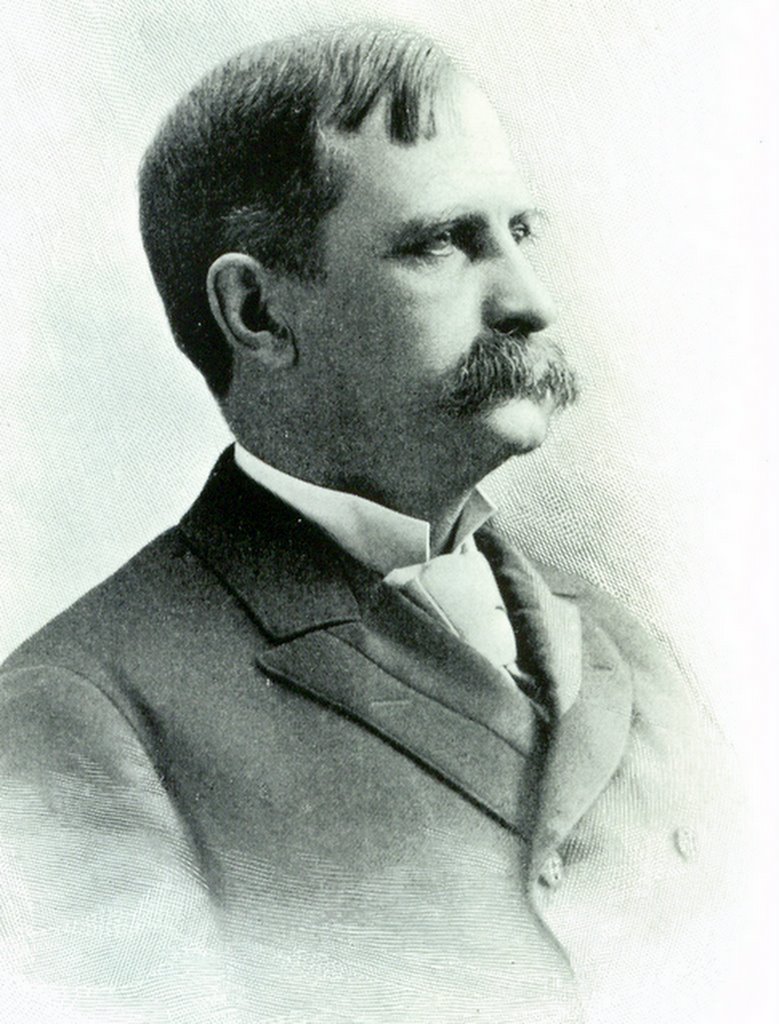
1843 Friedrich R. Helmert developed the χ2 distribution, but he was best known for his 1872 book on least squares in his time. Karl Pearson developed the χ2 distribution independently, using χ2 as shorthand for the exponent in a multivariate normal distribution. When, in 1931, he learned of Helmert’s priority, he unsuccessfully tried to correct the attribution.
1868 Povl Heiberg, a Danish physician, was among the first (1897, revisited 1940) to describe the key role of statistical thinking in evidence-based medicine.
1874 Robert H. Coats was an ASA Fellow in 1922 and ASA president in 1938. He was the founder of the Bureau of Statistics of Canada and first dominion statistician in 1915. A member of the League of Nations Commission on Statistics, he helped several countries in the organization of their national statistical services.
1881 Edgar Sydenstricker, ASA Fellow 1922. The first US Public Health Service statistician in 1915, he is a forgotten pioneer of health economics. Co-developer of the US National Health Survey, he documented the effects of poverty and income disparity on disease patterns, especially for the 1914 influenza epidemic and pellagra. His sister was Pearl S. Buck, winner of the Nobel Prize in Literature.
1883 Emanuel Goldenweiser was elected an ASA Fellow in 1921 and ASA president in 1943. He was a director of research and statistics at the Federal Reserve and influential government economic and financial adviser.
1897 Sir Austin Bradford Hill was president of the Royal Statistical Society in 1950 and the Guy Gold Medal winner in 1953. Considered the leading medical statistician of his time, he pioneered modern clinical randomized controlled trials and the Bradford Hill criteria for causation in observational studies.
1905 Frances Elizabeth (Betty) Allan revolutionized agricultural research in Australia. The first statistician at CSIRO and effective founder of the CSIRO Division of Mathematics and Statistics, she introduced experimental design and analysis methods after a two-year studentship at Cambridge and Rothamsted.
1906 William (Vilibald Srećko) Feller was elected an ASA Fellow in 1949. He was also an RSS Fellow, Institute of Mathematical Statistics president in 1947, and winner of the National Medal of Science. He made contributions to probability theory, genetics, Markov chains, random walks, and diffusion theory.
1909 Isobel Loutit was one of the first female professional statisticians in Canada. She was elected an honorary member of the Statistical Society of Canada in 2009 for her work in quality control statistics.

1909 William G. Cochran was elected an ASA Fellow in 1944 and ASA president in 1953. A mathematician, he emphasized practical application of statistical methods. He is best known for popularizing ANCOVA and for influential textbooks on applied statistical methods and design of experiments coauthored with George Snedecor and Gertrude Cox.
1910 Leslie Kish (László Kiss), ASA Fellow 1959; ASA President 1977; RSS Fellow 1980; ISI Fellow 1994; Wilks Award winner 1997. He is best known for pioneering applications of probability sampling to survey design and practice.
1913 Anders Hald was elected an ASA Fellow in 1952 and an RSS Fellow. A noted statistics historian and father of modern Danish statistics, he modernized statistical pedagogy to include statistical theory, quality control, survey sampling, and design of experiments.
1924 Sir David R. Cox, ASA Fellow 1962; RSS president 1980; International Prize in Statistics; Guy Gold and Silver and Copley medals. The most eminent statistician of the 20th century, his groundbreaking work included development of the Cox proportional hazards model.
1924 Ingram Olkin, ASA Fellow 1962; Wilks Medal; IMS president. He made contributions to meta-analysis, multivariate analysis, and statistics education. A champion for women and minorities in statistics, he was the fourth recipient (and only man so far) of the Elizabeth Scott Award.
1924 Paul Meier, ASA Fellow 1959; Wilks Award 2004; IMS Fellow; RSS Fellow; Society for Clinical Trials president 1989. Best known for the 1958 Kaplan-Meier estimator, he also made contributions to clinical trial design and trial reporting and emphasized the necessity for randomization at a time when it was regarded with suspicion by clinical researchers.
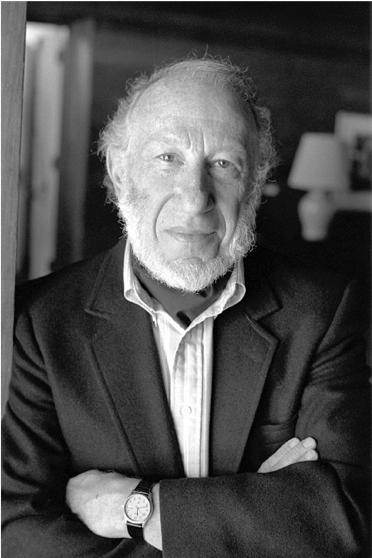
1940 William Carter Jenkins, the “Tuskegee whistle-blower” and epidemiologist, was one of the first to publicize the Tuskegee Syphilis Study, becoming a social justice activist and exposing and correcting systemic racism in US health care and research.
1945 James Kalbfleisch, ASA Fellow 1975, Statistical Society of Canada president 1984. He was a teacher and author of Probability and Statistical Inference.
1948 Douglas G. Altman (July 12, 1948-June 3, 2018), RSS Fellow; Bradford Hill Medal 1997; British Medical Journal Lifetime Achievement Award 2015. He spearheaded major initiatives for the reform of medical research reliability and reporting.
JULY EVENTS
1621 Thomas Hariot (or Harriot) died. Founder of the English school of algebra, he pioneered math symbols such as the dot · for multiplication and invented binary (base 2) 50 years before Leibnitz. His work was largely unknown until his remaining manuscripts were put online in 2012.
1698 In a July 5 letter to Gottfried Wilhelm von Leibniz, Johann Bernoulli defines the term “function” in its analytical sense of a relation between a variable and constants. Leibniz had coined the term in 1673 and apparently approved its new use.
1788 On July 31, Francois Cretté de Palluel (1741-1798) describes the first use of the Latin square as an experimental design, 150 years before Ronald Fisher. He used a 4 x 4 design to test weight gain of 16 sheep fed four diets.
1801 On July 30, William Playfair introduces the first pie chart in his Statistical Breviary. In 1805, he presents a fully realized pie chart to illustrate the relative sizes of states and territories in the USA. He mixes up New York and New Jersey and gets many of the areas wrong.
1835 Adolph Quetelet publishes his statistically constructed concept of “the Average Man,” with various measured traits summarized as the mean and upper and lower limits of variation.
1857 On July 4, John Snow of Broad Street Pump fame shows again the thinking that made him one of the founders of modern epidemiology. He suggests that the then-routine adulteration of bread with alum might be a cause of rickets, a mechanistic hypothesis to explain it, then a case-control design to test it.
1905 William S. Gosset (Student) is on holiday in England and mulling over the problem of small sample estimation. He decides to cycle 20 miles to visit Karl Pearson and talk statistics. After returning to work at Guinness Brewery in 1908, he publishes his now-famous paper showing how multiples of “probable error” could determine the practical significance of results.
1918 On July 8, in a paper on Mendelian genetics, Ronald Fisher introduces the term “analysis of variance,” but it appears only in the table of contents.
1923 Ronald Fisher and Winifred Mackenzie publish the first systematic description of analysis of variance and Gosset publishes the first modern-looking ANOVA table. (John Tukey coined the acronym ANOVA in 1949.)
1972 On July 20, the Statistical Society of Canada is officially founded. Two months before, Arak Mathai, Eustratios Kounias, and Neville Sancho (McGill University), along with Narayan Giri (Université de Montréal), applied for incorporation of a national statistical society. The official SSC Coat of Arms was conferred on June 5, 1990.
Leave a Reply