
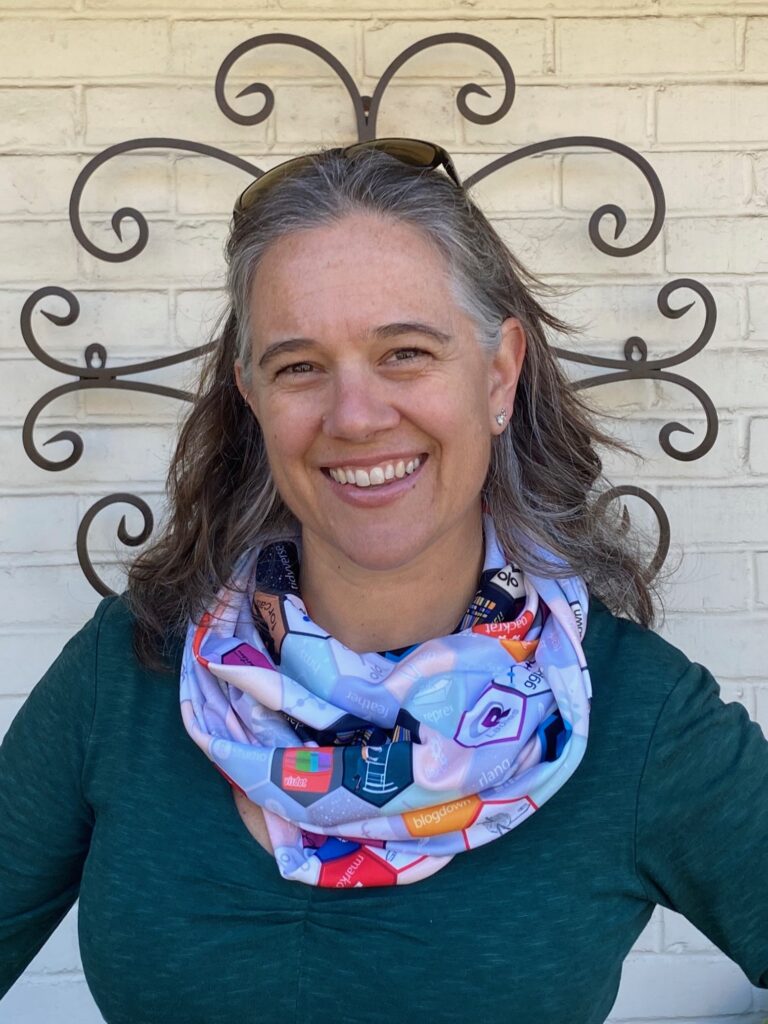
As a DataFest host, Jo Hardin, professor of mathematics and statistics at Pomona University, talks about how DataFest builds community and sparks collaboration.
I first heard about DataFest in the fall of 2011, when Rob Gould shared his inaugural experiences of the first University of California at Los Angeles DataFest during a meeting of the ASA Southern California Chapter. Although Pomona College is 50 miles from UCLA, I immediately asked Gould how I could involve my own students in the UCLA DataFest. Gould was working on growing his local DataFest and welcomed my students to join.
Every year since 2012 (except the pandemic years when DataFest took place virtually), I have brought Pomona students to UCLA to take part in the competition. In some years, my students have done quite well. In other years, we haven’t even made it to the final round. Every single year, my students have learned a ton and enjoyed their experience.
The DataFest competition at UCLA happens over 48 hours. The students stay up quite late working together in a single space. They are provided with food and consultants who help them work through any hurdles. Which is to say, being 50 miles from the competition complicates taking part for the Pomona students. So that they can have the full experience, we put them up in a hotel close to the UCLA campus both Friday and Saturday nights. Another complication is transportation to the event. Usually, there are enough students with cars to make it work, but we sometimes must rely on ride-share for transportation.
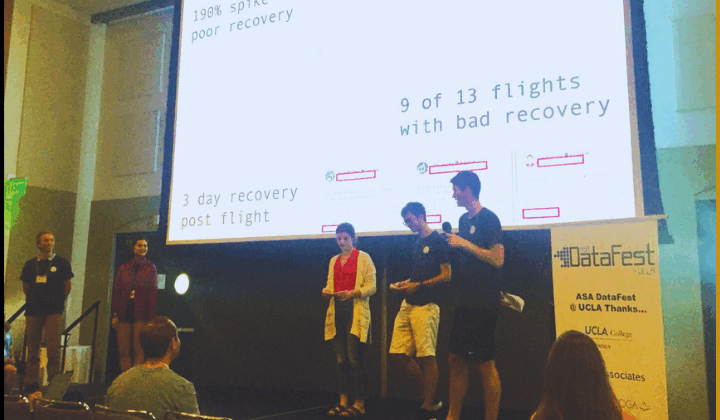
One of my favorite analyses was by a group of students (Madelyn Andersen, Amy Watt, Connor Ford, Adam Rees, Ethan Ashby) who won the award for Best Use of External Data in 2019. The data set had biometrics information from the Canadian National Women’s Rugby Team. The Pomona students were able to look through social media to find the exact date the team flew to an international match and correlate the recovery time to jet lag, recognizing that the players needed three days postflight for a full recovery.
My students regularly tell me that the DataFest line on their CV garners the most attention in interviews for jobs or graduate schools. Even students who didn’t win a prize are asked about their experience. They talk about learning how to problem solve in real time and about parsing down a large query into small pieces, something they have typically not done in class assignments.
The last few years have brought large language models into the competition. In some ways, students have become less frustrated because they can easily get help with their coding. In other ways, students struggle more if they haven’t developed their own core coding skills, independent of ChatGPT. And in yet a third way, the DataFest challenge is the same because the students need to use creative approaches to tackle the problem—something AI is unable to do.
I am a firm believer in collaboration. Almost all my own research is done in collaboration, and I encourage my students to work in groups on many assignments. DataFest is a perfect venue for students to fully grasp the importance of collaboration to solve real problems. Many perspectives facilitate having a strong approach to problem solving, and having different technical skills allows the group to try a range of analyses. DataFest is fun, low stakes, and yet both collaborative and competitive, giving students a taste of what statistics and data science can be at their best.
Read more perspectives from DataFest hosts:
Leave a Reply