

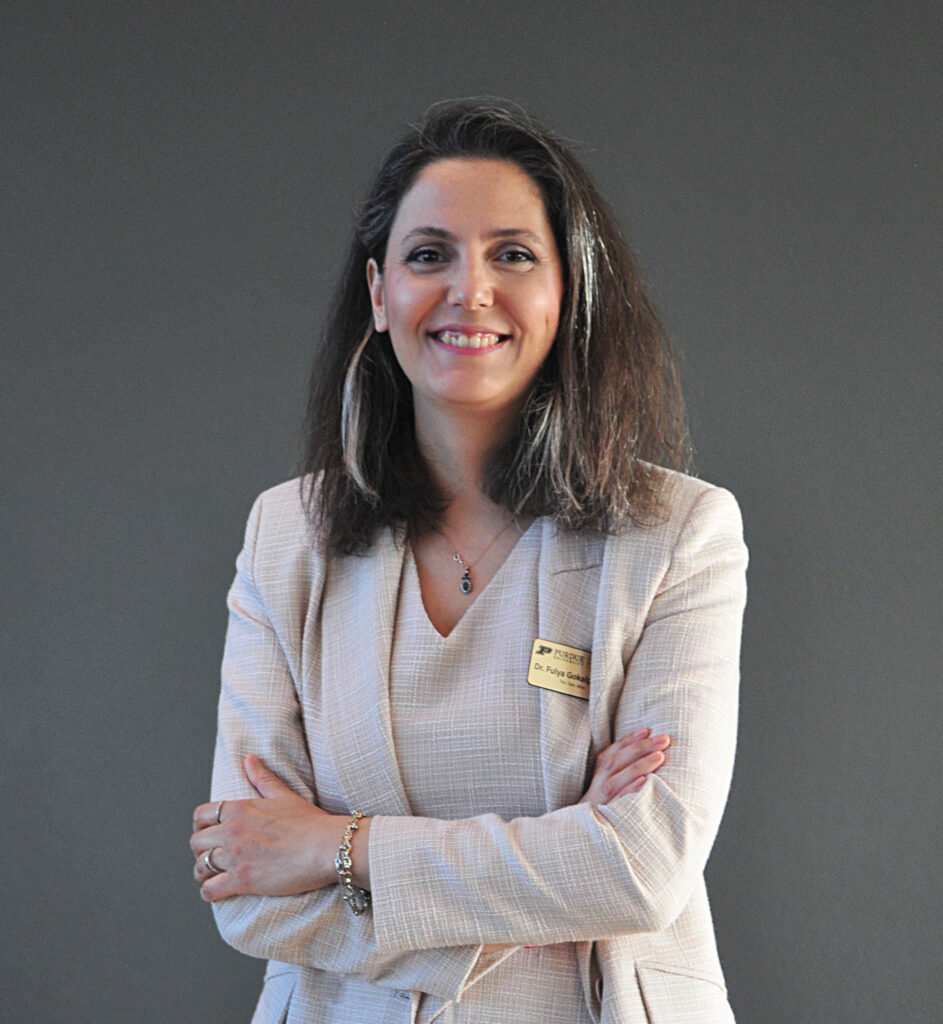
As DataFest hosts, Mark Daniel Ward and Fulya Gökalp Yavuz from Purdue University discuss the surprises students find in working with real-world data during DataFest.

Purdue University has coordinated a DataFest every year since March of 2015, except for the spring of 2020 due to the COVID-19 pandemic. In March of 2015, we had only five teams competing. The 20 sophomore undergraduate students that year were all participating in the Statistics Living Learning Community, called STAT-LLC. Those students worked on research projects throughout their sophomore year. They took courses together, and they also lived on the same floor of the same residence hall. Their work was supported by the National Science Foundation. Since the students knew each other well, they had a special sense of camaraderie during the event.
The next year, in April of 2016, Purdue had 19 teams of students sign up, and we knew this event would never be the same. The DataFest fever had taken hold! In the early days, we served food for all the students throughout the weekend. Also, many of the students used a computing node on campus, which had a remarkable (at the time) 384 GB of RAM, 50 TB of disk space, and 24 processing cores.
Things have changed a lot at Purdue University. The students now routinely work on a computing cluster with 1,000 computing nodes and 128 processing cores per node. Many students are also involved in a program called The Data Mine, which is on track to have more than 2,000 graduate and undergraduate students participating during the upcoming 2025–2026 academic year.
This growth parallels the broader, nationwide interest in statistics and data science. As programs in data-driven areas have exploded in popularity, the ASA DataFest is now held all over the world. Beyond statistics, students come from broad backgrounds, including engineering, business, liberal arts, and humanities.
One lesson learned is the earlier we advertise the event, and the more broadly we publicize the event on campus, the more students we attract. This may seem obvious, but this small insight can help people organizing an ASA DataFest event for the first time. There are advantages to starting small and growing the event as resources and administrative personnel for the program grow.
ASA DataFest also occurs during the last few weeks of the semester on many campuses, so it is important to plan the dates and locations in such a way that avoids spring break, midterm exams, campus alumni events, and campus visit days for prospective students.
A few more observations:
- Purdue students have used a wide variety of technologies over the years. One team of students made a 3D visualization of the globe, showing how the data affected countries worldwide.
- Graduate students love to serve as judges and interact with the undergraduate students, who take advantage of several tools for their analysis. This year, Purdue had almost 20 judges for our DataFest.
- It can be insightful to visit other colleges and see how one’s neighbors and peers are coordinating their ASA DataFest. Colleagues from Miami University in Oxford, Ohio, have invited us to see their event on multiple occasions over the years. In this way, the ASA DataFest can lead to deeper friendships and collaborations across institutional boundaries.
Most of all, ASA DataFest is a joyous weekend for students to work with an intensity that is comparable to real-world, real-time data analysis projects that arise in industry. Students spread their wings, learn teambuilding skills, and hone their communication skills. They learn to focus on the most important, essential aspects of analysis and statistical insight. If you have not (yet) organized an ASA DataFest in your neck of the woods, we highly encourage you to do so!
Read more perspectives from DataFest hosts:
Leave a Reply