
Penny S. Reynolds, University of Florida, College of Medicine
BIRTHDAYS
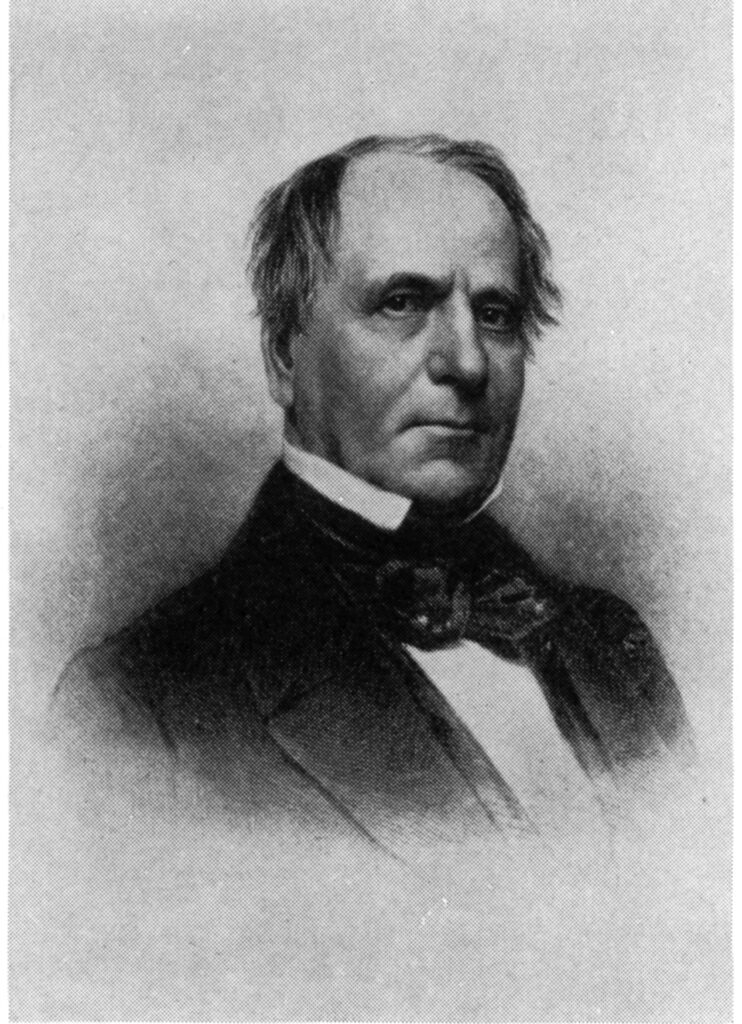
1793 Lemuel Shattuck was one of the five founders of the American Statistical Association and first ASA secretary. He was a social statistician, bookseller, historian, and pioneer of modern American public health. His name also appears on the frieze of the London School of Hygiene and Tropical Medicine.
1796 F. Bisset Hawkins, an English physician, promoted statistical analyses for assessing treatment efficacy over clinical impressions or opinions. His 1829 eight-volume Elements of Medical Statistics was a pioneering compilation of vital statistics describing the ‘salubrity’ of the civilized world. (Spoiler alert: The English are best.)
1811 Évariste Galois was a math prodigy and French revolutionary. He derived the necessary and sufficient conditions for a quintic polynomial to be solved in radicals, unsolved for 350 years until then. In 1832, he was killed in a duel at age 20. In 1846, Joseph Liouville finally completed and published the proofs.
1871 Edward Dana Durand (ASA President, 1915) was chief economist for the Department of Commerce, US Census Bureau Director 1909–1913, then taught statistics at the University of Minnesota.
1874 Olimpiy Kvitkin was head of the Soviet census bureau. The official 1937 census showed disappointingly low numbers, contradicting Stalin’s claims that the Holodomor and Stalin’s brutal policies had no effect on the population. Stalin annulled the results, saying statisticians had sabotaged the census. In 1937, Kvitkin was arrested and shot for treason. The revised census in 1939 showed everything was just fine.
1893 Faith Moors Williams (Lorimer) (ASA Fellow, 1946) was director of the Office of Foreign Labor Conditions in the Bureau of Labor Statistics. Williams, Aryness Joy Wickens (ASA Fellow, 1937; ASA President, 1952), and Stella Stewart (chief, Retail Price Division) oversaw the BLS cost of living index, later to become the US Consumer Price Index.
1900 Nikolai Smirnov is best known for contributions to the Kolmogorov-Smirnov test (unified and streamlined by William Feller in 1948 and popularized by Frank Massey in 1951) and the Cramér-von Mises-Smirnov criterion for assessing goodness of fit of a cumulative distribution function.
EVENTS
1675 On October 29, Gottfried Leibniz first uses the integral sign ∫ in his manuscript Analyseos tetragonisticae pars secunda. The sign was adapted from the long letter S (∫) meaning ‘∫umma.’ [He does not include dx; that came later].

1685 On October 22, the Edict of Nantes was revoked, making Protestantism illegal in France. It had huge consequences for the history of statistics; Abraham de Moivre was forced into exile in London, where he did some of his most influential work on probability theory.
1850 On October 20, Gustav Fechner publishes Fechner’s Law, which describes the relationship between the magnitude of a physical stimulus and its perceived intensity. It was a precursor to probit regression, later developed by Chester Bliss, who rediscovered it and coined the term.
1852 On October 23, in a letter to William Rowan Hamilton, Augustus De Morgan first reports on the four-color conjecture (the problem of ‘unavoidable sets’). His student Francis Guthrie noticed only four colors were needed to color a map of England such that no adjacent areas had the same color. In 1886, Lewis Carroll made it into a two-person party game. It was set as a challenge to schoolboys with the proviso that “no solution may exceed one page, 30 lines of manuscript, and one page of diagrams.” It was finally solved in 1976 by Kenneth Appel and Wolfgang Haken. Their proof was more than 100 pages long and required hundreds of hours of computer time.
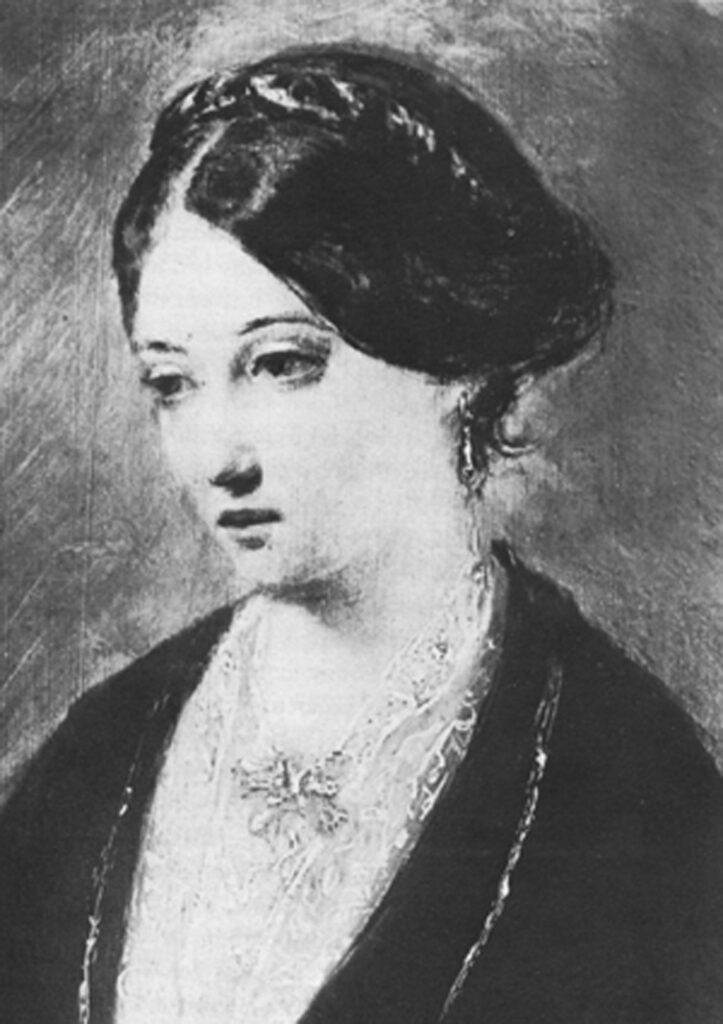
1854 On October 21, Florence Nightingale leaves for Crimea with her aunt and 38 nurses. Two years later, she returns to England to work with William Farr, reforming the collation and communication of medical statistics.
1900 On October 16, Walter Frank Raphael Weldon reads Gregor Mendel’s 1866 paper on the inheritance of traits in peas and writes to Karl Pearson about it. They thought Mendel’s ratios were too good to be true, triggering a bitter and decades-long feud between them (the “Biometricians”) and the “Mendelians” (Bateson, Saunders, and Punnett).
1903 On October 22, Malcolm C. Rorty (ASA Fellow, 1921; ASA President 1932), then an engineer at Bell Telephone, writes a memo that turns into a pioneering paper on the application of probability theory to estimate future service demand.
1904 On October 25, the first patent for a pocket watch slide rule was issued by Keuffel & Esser in the name of Elmer A. Sperry. K&E was founded in 1867 and started manufacturing slide rules in 1891.
1906 October was a busy month for Karl Pearson. He published seven papers plus an obituary tribute to Frank Weldon in Biometrika. (It was his journal, so he could do what he liked.) Topics ranged from correlation of intelligence with skull size (negligible), determining model fit by method of moments, “probable error” tests of significance, and a reply to a Professor Kapteyn who criticized his 1899 theory of skew variation.
1920 Ethel Edgerton publishes an ambitious attempt to determine heritability of fingerprints based on an extensive collection made by Francis Galton. She tested for sex differences, sibling, generational and affinity resemblances, and assortative mating, while adjusting for pattern type, order, and finger.
1930 On October 24, Ronald Fisher writes his first article on fiducial inference. Interpreted as an attempt to perform inverse probability without priors, it was never widely accepted. (Neyman called it a “conceptual fallacy.”)
1945 John Gaddum (1900–1965) coins the term “lognormal” to describe the normal distribution of log-transformed, non-normal data. The distribution was first described but not named in 1879 by Donald MacAlister. In 1919, Sture Nydell named it the logarithmic normal.
1948 On October 19, the National Bureau of Standards authorizes construction of its Standards Western Automatic Computer, the first fully operational, stored-program, electronic computer in the US. It was completed in 1950 and decommissioned in 1967.
Download the references for further reading.
Leave a Reply