
Penny S. Reynolds, University of Florida College of Medicine
BIRTHDAYS
1839 Happy 186th birthday to the American Statistical Association! Founded on November 27, 1839, it managed to outlast all the competition. Between 1836 and 1851, five statistical societies started up in the USA, but four never got off the ground or changed focus. Edward Jarvis, ASA president for 31 years, deserves the credit for keeping the ASA going in the early years.
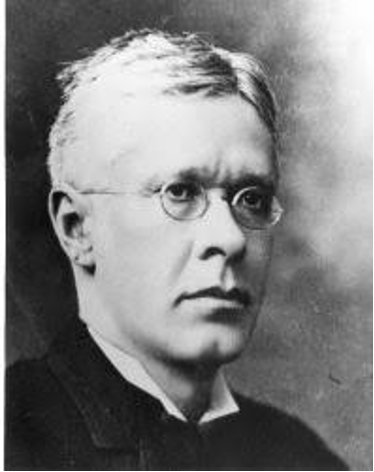
1848 Simon Newton Dexter North (6th ASA President, 1910; inaugural ASA Fellow, 1914) was chief statistician of the 1900 census and second director of the US Census Bureau 1903–1909. He promoted the use of Hollerith’s electromechanical tabulating machine for later censuses, but mostly for its application in support of white supremacist ideology.
1851 Jacques Bertillon (Chief Statistician of Paris; Fellow, Royal Statistical Society; brother of criminologist Alphonse, creator of the Bertillon biometric method and inventor of the mugshot). Best known for his work on disease classification, he led the charge in promoting the combined application of statistics and advanced data visualization methods for medicine, social sciences, and demography.
1878 Sedley Antony Cudmore, professor of political economy 1908–1919 at the University of Toronto, he was chief of general statistics at the Dominion Bureau of Statistics; editor of the Canada Year Book, 1920–1935; and Canada’s second dominion statistician, 1942–1945.
1885 Joseph S. Davis (31st ASA president 1936) was director of Stanford’s Food Research Institute 1937–1952, president of the American Economic Association 1944, and member of the Council of Economic Advisers to President Eisenhower.
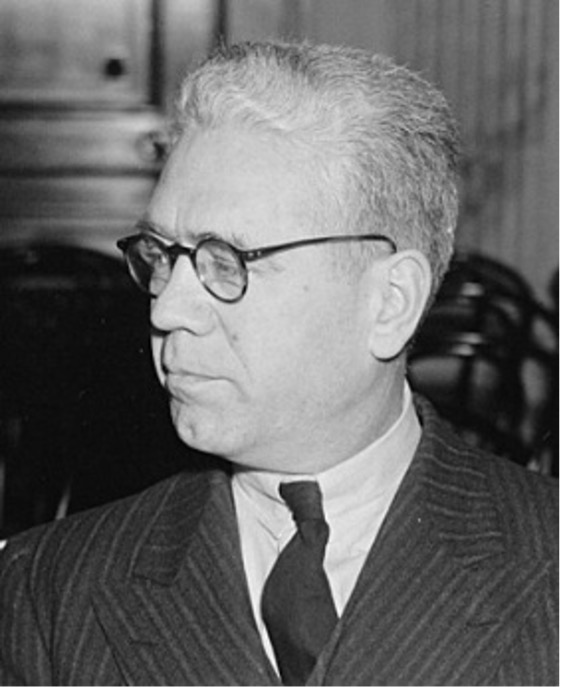
1889 Stuart A. Rice (ASA Fellow, 1933; 28th ASA President, 1933; ISI President, 1947–1953) Assistant director of the Census Bureau, 1933; chair of the Central Statistical Board, 1936; assistant director for statistical standards in the Budget Bureau; one of the developers of the UN Statistical Office; and first chair of the UN Statistical Commission.
1898 John Wishart (ASA Fellow, 1951) worked under Ronald Fisher at Rothamsted Experimental Station and was first director of the statistical laboratory at Cambridge in 1953. A generalization of the gamma distribution is named for him. He also made numerous contributions to the design and analysis of agricultural experiments.
1904 Ida Craven Merriam (ASA Fellow, 1965) was director of research and assistant commissioner of the Office of Research and Statistics for the Social Security Administration.
1912 W. Allen Wallis (ASA Fellow, 1948; ASA President, 1965), although best known as codeveloper of the Kruskal-Wallis nonparametric test, he was economics adviser to four US presidents and dean and administrator at The University of Chicago and Rochester. During WWII, he headed the Statistical Research Group at Columbia University, which made major breakthroughs in sequential analysis and statistical quality control methods.
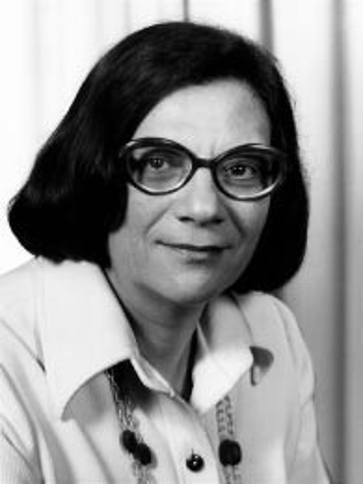
1926 Shirley Kallek (ASA Fellow, 1972; President of the Caucus for Women in Statistics, 1980; President of the Washington Statistical Society, 1981–1982) was associate director for economic program at the US Census Bureau. She was recognized internationally for developing on-time and cost-effective statistical programs for economic information.
1937 Joseph L. Fleiss (ASA Fellow, 1973; President of the Eastern North American Region of the International Biometric Society, 1986) is best known for work on mental health statistics and developing the weighted kappa as a measure of reliability and agreement for categorical data. His books, Statistical Methods for Rates and Proportions and Design and Analysis of Clinical Experiments, are classics.
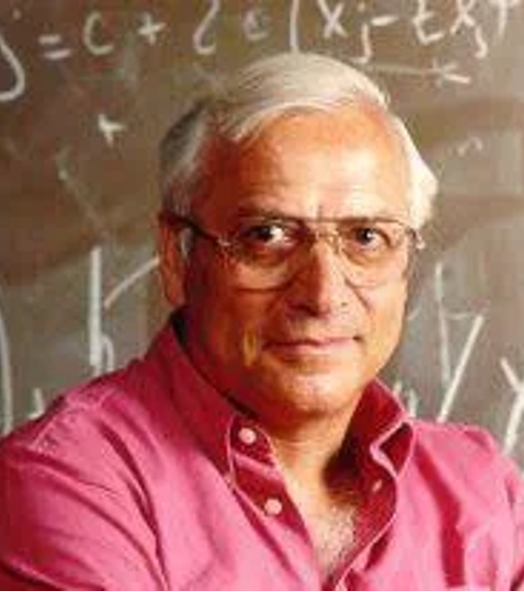
1942 Stephen Fienberg (ASA Fellow, 1972; Institute for Mathematical Statistics President, 1999; COPSS Award, 1982; Wilks Award, 2002; Statistical Society of Canada Lise Manchester Award, 2008; Zellner Medal, 2016) made major contributions to a variety of statistical areas, including loglinear modeling of categorical data, causal inference, forensic science, law, survey and federal statistics, machine learning, and Bayesian analysis. He also founded CHANCE magazine in 1988 and was the first editor of Annals of Applied Statistics in 2007.
1951 Peter Gavin Hall (ASA Fellow, 1996; IMS Fellow, 1984; COPSS Award, 1989; Wilks Award, 2012; Guy Medal Silver, 2011; Officer of the Order of Australia, 2013) made major contributions to nonparametric statistics, bootstrap resampling, limit theory, spatial processes, and stochastic geometry. the Statistics Trifecta: the R. A. Fisher Lectureship (now COPSS award) 1997, Deming Lectureship 2004, and Wilks Memorial Award 2007.
EVENTS
1726 On November 3, James Stirling (1692–1770) was elected Fellow of the Royal Society. Three years later in 1729, he made his most significant contribution to probability, Simpson’s formula, an asymptotic approximation for estimating factorials (n!) of large numbers. In 1721, Abraham de Moivre had already derived a similar, but according to Stirling, less accurate formula.
1731 On November 25, in a letter to Christian Goldbach (1690–1764), Leonhard Euler used e to denote the base of natural logarithms 2.71828… He first used it in a 1728 paper, “Meditation on Experiments Made Recently on the Firing of Cannon.” Why did he choose e? Nobody really knows, but it may be because a, b, c, and d were already in common use and e was the next letter.
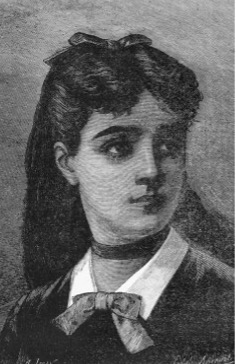
1804 On November 21, Sophie Germain, under the pseudonym Monsieur A-A Le Blanc, begins corresponding with Gauss. She was forced to conduct her mathematics studies in secret because of parental disapproval, the fear of ridicule from male mathematicians, and the ban of women from institutes of higher learning. In 1807 when her cover was blown, Gauss commented on her “most noble courage, extraordinary talent, and superior genius.”
1924 Beginning in November, a series of studies on the effect of lighting on worker productivity was performed at the Western Electric Hawthorn Plant in Cicero, Illinois. The results were the basis for the Hawthorne Effect, which describes the phenomenon of subjects changing their behavior in response to being under observation rather than to the manipulation itself. Reanalysis of the original data suggests the evidence was surprisingly weak and ambiguous.
Download the references for further reading.
Leave a Reply