
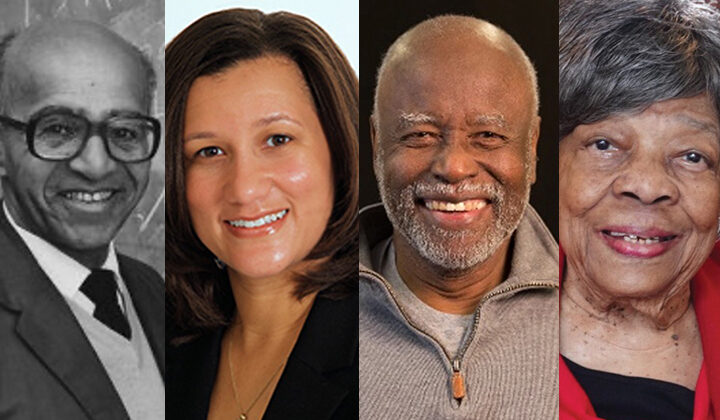
Penny S. Reynolds
This month, we highlight the contributions of seven pioneering Black and African American statisticians. James McCune Smith, W. E. B. DuBois, and Charles Bernard Bell Jr. also appear in our Black History Month cover story.

James McCune Smith
April 18, 1813 – November 17, 1865
Born into slavery in 1813, James McCune Smith was the first African American to earn a university degree in medicine. He was a founding member of the New York Statistical Society and joined the American Geographical and Statistical Society in 1853, two years after it was founded. A leading abolitionist, public intellectual, and accomplished linguist, he pioneered the use of statistical evidence to assess efficacy of medical treatments and counter racist arguments of Black inferiority.
Denied admission to American universities because of his race, Smith trained at the University of Glasgow, graduating with a bachelor’s degree in 1835, a master’s in 1836, and a medical degree in 1837. That same year, he published two articles in the London Medical Gazette using statistics to demonstrate that silver nitrate treatments for sexually transmitted disease in women were ineffective and harmful.

William Edward Burghardt (W. E. B.) Du Bois
February 23, 1868 – August 27, 1963
In 1895, W. E. B. Du Bois was the first African American to earn a doctorate from Harvard. He was also one of the founders of the National Association for the Advancement of Colored People in 1909.
Du Bois pioneered the development of sociology as a scientific discipline, integrating data from field surveys and published government census data with sophisticated statistical methods and infographics. His book The Philadelphia Negro was the first statistically based sociological study in the United States and the first to explicitly describe the use of mixed-methods research in sociology. Du Bois employed the use of original infographics to summarize complex statistical data and make the case for social reform.
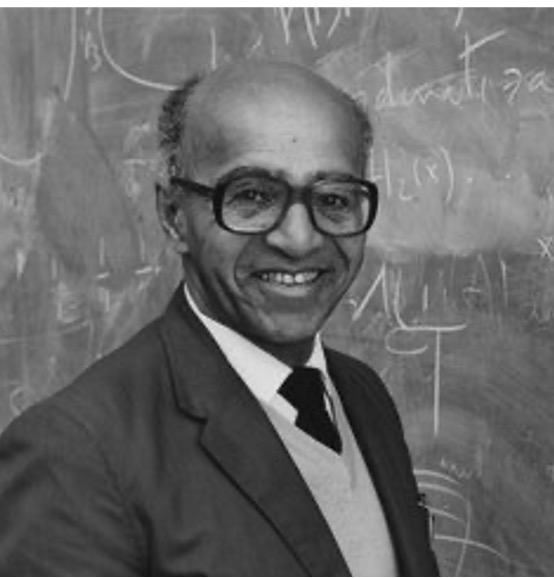
David Blackwell
April 24, 1919 – July 8, 2010
In 1962, David Blackwell was elected the first African American ASA Fellow and, in 1978, was the first African American to be elected vice president of the ASA.
A mathematical statistician, he is best known for the Rao-Blackwell theorem and earned the John von Neumann Theory Prize in 1979 for an outstanding series of papers on Markovian decision processes. This work was foundational for later developments in dynamic programming and operations and management science.
Blackwell’s many honors include election to the National Academy of Sciences in 1965, election as an honorary fellow of the Royal Statistical Society in 1976, and 12 honorary doctorates. In 2012, he was posthumously awarded the National Medal of Science by President Barack Obama.

Ann (Annie) Mae Turner Randall
January 22, 1925 – August 15, 2021
Ann (Annie) Randall was a mathematical statistician at the National Institutes of Mental Health and a trailblazer for African American women in federal science agencies.
A mathematical standout during high school, she took undergraduate and graduate classes at American University, one of the first universities in Washington, DC, to admit Black students.
During World War II, she was among the first African American “government girls” to work at the War Production Board.
After the war, Randall joined the National Institute of Mental Health Biometrics Branch, Section of Theoretical Statistics and Mathematics, and was mentored by ASA Fellow Donald F. Morrison. She became a mathematical statistician and early adopter of mainframe computing.
In 2020, the American Statistical Association established the Annie T. Randall Innovator Award to recognize the contributions of early-career statistics innovators.

Charles “Chuck” Bernard Bell Jr.
August 20, 1928 – October 26, 2010
Charles “Chuck” Bernard Bell Jr. was elected an American Statistical Association Fellow in 1970 and was an honored fellow of the Institute of Mathematical Statistics. He graduated with a doctorate in mathematical statistics from the University of Notre Dame in 1953, at the age of 19.
His research addressed nonparametric distributions, distribution-free tests of independence and randomness, and stochastic processes.
Bell was also notable for active and wide-ranging service to the statistics profession, and he was an active member of the ASA. He was chair of the ASA Committee on Minorities in Statistics and program director for the National Science Foundation program in applied mathematics and statistics. A Fulbright Scholar, his international outreach efforts included the launch of professional development programs for local teachers and mathematicians in Kenya, India, and Nigeria.

William “Bill” Carter Jenkins
July 26, 1945 – February 17, 2019
Best known as the “Tuskegee whistle-blower,” epidemiologist Bill Jenkins was among the first to expose the Tuskegee Syphilis Study.
A 1967 Morehouse College mathematics graduate, he was in the first cohort of African Americans recruited into the United States Public Health Service. From there, he learned of a PHS study observing the course of untreated syphilis in poor Black men. For more than 40 years, PHS had intentionally denied these men effective treatment while misleading them into believing they were receiving care.
Jenkins earned his master’s degrees in biostatistics and public health and a PhD in epidemiology from Harvard. He also completed postdoctoral research there. At the US Centers for Disease Control and Prevention, he served as chief of the Research and Evaluation Statistics Section and managed the Minority Health Activities Program. He also served on the Tuskegee Syphilis Study Legacy Committee that pressured President Bill Clinton to issue a federal apology in 1996.
Jenkins was active in the American Statistical Association and served as chair of the Epidemiology Section. He was also a member of the American Public Health Association, founding the APHA Society for the Analysis of African American Public Health Issues. For his contributions to public health, he received the 2003 APHA Hildrus Augustus Poindexter Award. For more information, visit his 2020 Black History Month feature.
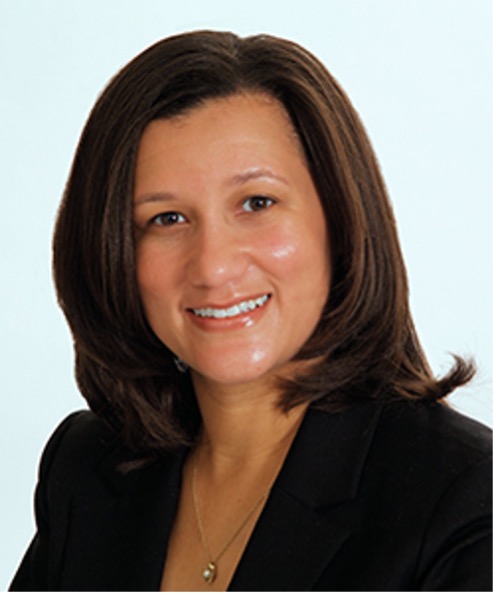
Dionne Lynnette Price
August 29, 1971 – February 22, 2024
Dionne Price was elected an American Statistical Association Fellow in 2018. She was an ASA vice president in 2019 and, in 2022, became the first African American elected as ASA president.
Price earned her bachelor’s degree in mathematics from Norfolk State University in 1993 and a master’s in biostatistics from The University of North Carolina at Chapel Hill—where she was a UNC Packard Scholar—in 1995. In 2000, she was the first African American to earn a PhD in biostatistics from Emory University.
Her statistical work concentrated on design and analysis of clinical trials, especially adaptive designs, Bayesian methods, model-based analysis, survival analysis, and patient-centered outcomes. During the COVID-19 pandemic, Price was instrumental in expediting the fast-tracking of potential COVID-related therapies and medical products, while guaranteeing their safety and efficacy.
She was chair of the ASA Biopharmaceutical Section and served on the regional advisory board and regional committee of the Eastern North American Region of the International Biometric Society. She was the Black History Month Mathematically Gifted and Black honoree in 2021, and in 2024, posthumously received the Founders Award for exceptional service to the ASA.
Download the article references for further information.
For an in-depth look at Bell, Du Bois, and Smith, see our feature story on Black History Month.
Leave a Reply