
Kun Chen, Zhenming Shun, Ming-Hui Chen, Rui (Sammi) Tang, Jing Huang, and Peng Yang

The 2025 DahShu Data Science Symposium was held October 16–18, 2025, at the University of Connecticut in Storrs. Centered on the theme “Innovative Frontiers: AI and Data-Driven Advances in Drug Development, Precision Medicine, Healthcare,” the symposium brought together researchers and practitioners from academia, industry, and regulatory agencies to showcase how AI and data science are reshaping biomedical research, drug development, and health care.
The first two days of the symposium opened with remarks from Barry Wells, UConn College of Liberal Arts and Sciences associate dean, and Rui (Sammi) Tang of Astellas Pharmaceuticals. Keynote lectures by Haiyan Huang of the University of California, Berkeley, on the first day and David Madigan of Northeastern University on the second highlighted cutting-edge challenges and opportunities in modern data science, biostatistics, and regulatory science.
The scientific program was organized into five themed sessions. Presentations in “AI in Genetics, Computational Biology, and Biomedical Studies” and “Medical Imaging, Neuroimaging, and Dependent Data” showcased advances in multi-omics integration; computational biology; and the analysis of high-dimensional, structured, and dependent data. The “Innovative Trial Design and Real-World Evidence” session highlighted new approaches to clinical trial methodology, including the use of real-world data in trial design and evidence generation.
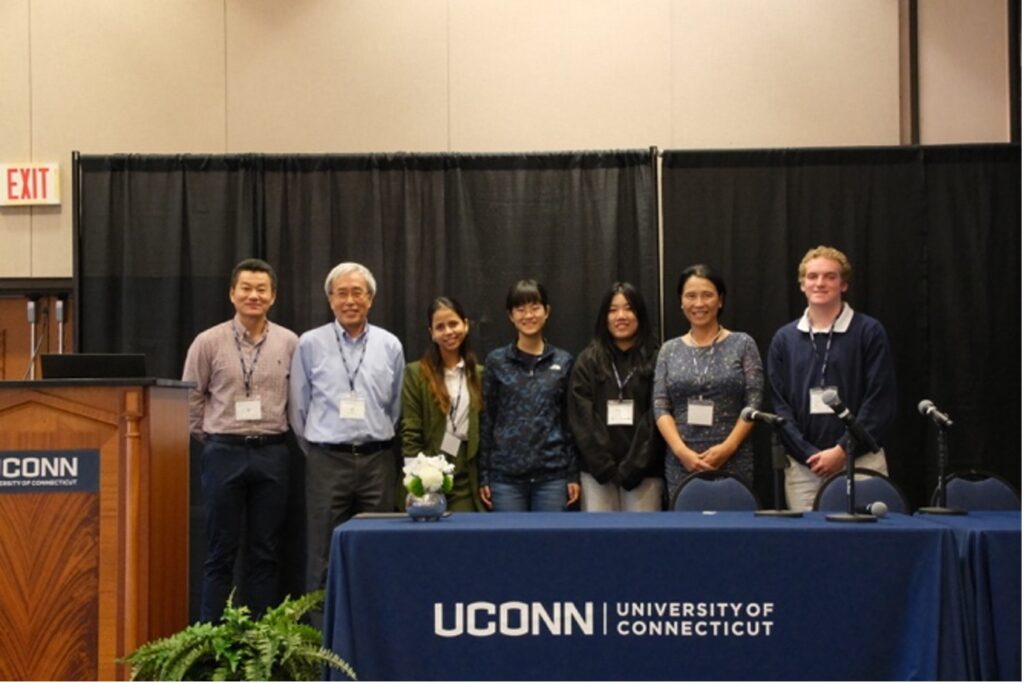
On the second day, sessions in the theme “Machine Learning and AI in Healthcare” and “AI for Drug Development” demonstrated how AI and machine learning are being embedded across the drug development pipeline, from early discovery and translational research to later-phase clinical development and post-marketing evaluation.
In addition to the scientific talks, the symposium featured two panel discussions. The first, “Thriving in the AI Era: Challenges, Tools, and New Frontiers for Data-Centric Professionals,” explored how statisticians, data scientists, and quantitative scientists can adapt to rapid advances in AI, manage evolving tools, and position themselves for leadership roles. The second panel, “AI in Drug Development: Governance, Organizational Readiness, Training, and Business Impact Evaluation,” focused on practical questions of implementation, such as building governance frameworks, preparing organizations to use AI responsibly, training the workforce, and measuring business impact.
A highlight of the social program was the Thursday evening banquet, held at the Rome Ballroom on the UConn campus. The banquet talk, “From Data to Leadership: My Path to Chief Data and AI Officer,” delivered by DauShu President Jing Huang (CareDx), offered a personal perspective on career development and leadership in data- and AI-driven organizations.
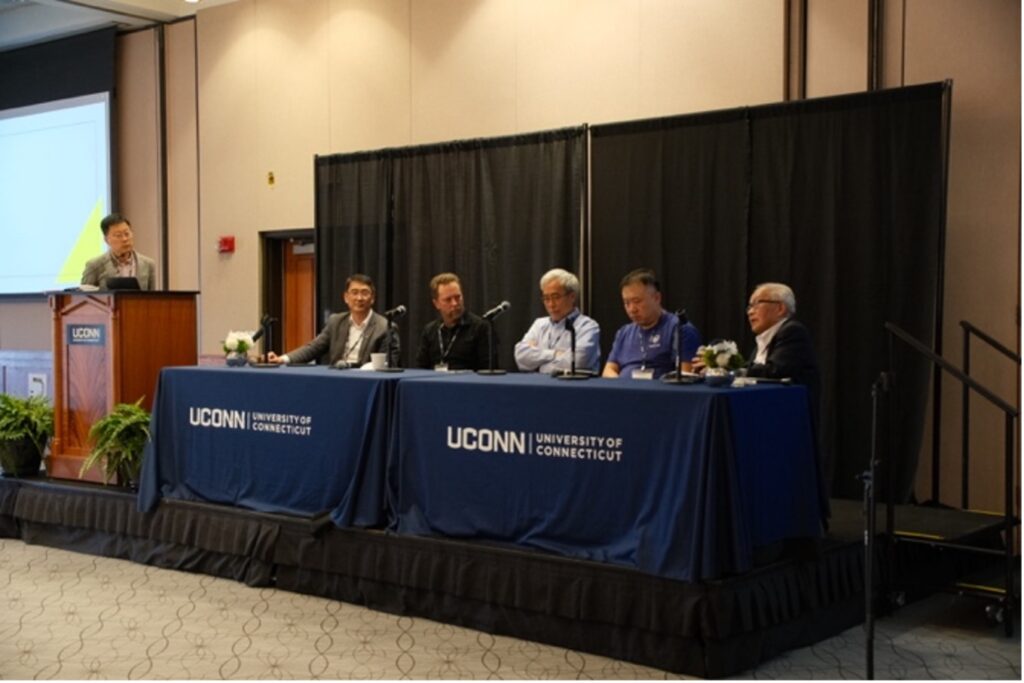
Coffee breaks, lunches, and the banquet provided opportunities for networking, mentoring, and cross-disciplinary conversations among participants at different career stages.
Another component of the meeting was the student poster competition. The symposium received 20 student poster submissions, spanning topics aligned with the major themes of the conference. During the poster sessions, students had the opportunity to present their work and engage in discussion with attendees. Several students received awards in recognition of the quality and impact of their research, and an award ceremony during the closing session honored the winners and highlighted the depth of emerging talent in the field.
Leave a Reply