

Since this column began with a guest piece in late 2017 and then became a regular feature in January 2018, my goal has been to cover the breadth and depth of possibilities for Data for Good and ways people are using Data for Good to make an impact on our lives, communities, and world. This month, for my 100th column, I’m focusing on a subject near to my heart: how statisticians and data scientists contribute to efforts seeking to eradicate human trafficking in all its forms.
Data for Good activists fight against human trafficking in a variety of ways, and AI is playing an increasingly important role. In December, a US House committee created an overview of the state of the technology. While prevalence of this hidden crime can be difficult to measure accurately, statisticians using multiple systems estimation are making important progress. Research on risk factors, especially using meta-analysis by geography, is needed to implement the most effective actions in each area.
Statisticians and data scientists are also needed by programs that find people caught in human trafficking and help them rebuild their lives. Training programs teach first responders and medical and educational staff to recognize risk factors. Legislative D4G activists meet with policymakers to develop effective actions and testify before House and Senate committees. In January, federal legislation was signed into law allowing victims to clear their record of crimes they were forced to commit by traffickers.
Safe harbor laws such as this are an effective way to support victims and encourage them to come forward to identify perpetrators. Going forward, matching state-level legislation is needed in the nearly 30 states with weak or absent safe harbor laws. This is an example of how our scientific teaching skills are needed to educate lawmakers about prevalence and risk factors. Helping to show the demonstrated impact of legislation like this can convince the rest of the states to follow the federal example.
Being engaged in Data for Good, I often find people working on important social justice programs with valuable data but without the analytic resources needed to use it effectively. One organization making great strides in data-driven activism is the Global Association of Human Trafficking Scholars. This institution has been a nexus for human trafficking researchers for more than five years, bringing together academics, government leaders, program managers, students, and others working to end human trafficking. With a mission “to respond to human trafficking by moving the knowledge base forward,” the association has become a leader in turning solid research into actionable results.
The Data for Good nongovernmental organization Peace-Work has been a partner since the organization began, providing analytic research to support anti-trafficking programs and practitioners. This year, Peace-Work and the Global Association of Human Trafficking Scholars established a human trafficking Analytic Center of Excellence. Organized as a collection of resources housed on the association’s website, it is available to all without cost. It includes four main components: links to open-source analytic research publications; a list of analytic researchers in the human trafficking space with contact information; links to programs leveraging statistics and data science in their anti-trafficking work; and a set of educational materials and other resources for program support, including procedures for recording and handling data and finding and working with statisticians and data scientists.
Peace-Work’s operating model of analytic professionals donating a few hours a week in community service fits with the strategy of encouraging and supporting more people to get involved in Data for Good. The human trafficking Analytics Center of Excellence can serve as a model for other Analytics Center of Excellence projects. It’s an opportunity for everyone to consider how to make our analytic resources available to wider audiences in Data for Good.
Getting Involved
This month, consider looking at the Analytic Center of Excellence concept that the Global Association of Human Trafficking Scholars implemented and how it could be used in your work area. Also, sign up for the email newsletters from important data resources such as the US Census Bureau, Friends of BLS , and Bureau of Economic Analysis to get the latest developments to support your work.
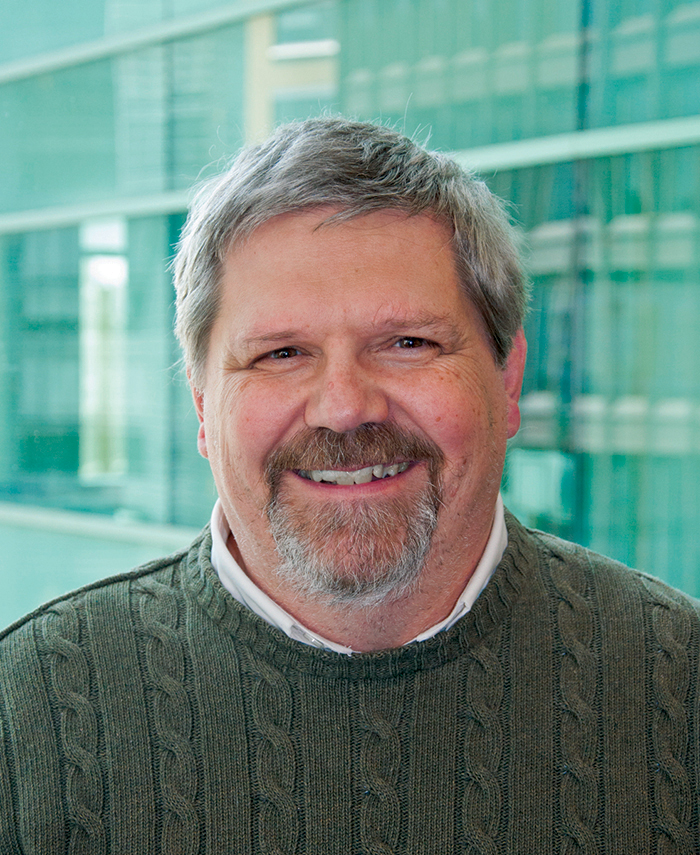
David Corliss
With a PhD in statistical astrophysics, David Corliss works as a data scientist in industry. He serves on the ASA Board as a Council of Chapters representative and is the founder of Peace-Work, a data for good nongovernmental organization.
This column is written for those interested in learning about the world of Data for Good, where statistical analysis is dedicated to good causes that benefit our lives, our communities, and our world. If you would like to know more or have ideas for articles, contact David Corliss.
Leave a Reply