
Penny S. Reynolds
This month is LGBTQ+ Pride Month and an opportunity to honor the history and impact of LGBTQ+ statisticians and their contributions.
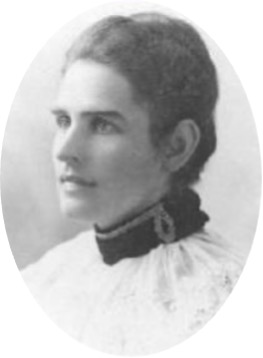
Katherine Coman
(November 23, 1857 – January 11, 1915) A professor of political economics at Wellesley, Coman was the first American woman to teach statistics, and Wellesley was the only American women’s college to offer statistics courses before 1900. For 25 years, Coman lived in a “Boston marriage” with Wellesley professor and poet Katharine Lee Bates, author of “America the Beautiful.”
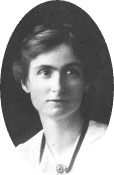
Edith Abbott
(September 26, 1876 – July 28, 1957) Named an ASA Fellow in 1945, Abbott was only the second woman to earn a PhD in political economy from The University of Chicago. She was dean of The University of Chicago’s School of Social Service Administration—one of the first female deans in the US. She pioneered applying statistical methods to policy development on crime; welfare; education; and protections for immigrants, working women, and children. She was the same-sex partner and professional collaborator of Sophonisba Breckinridge, a lawyer, social scientist, educator, and fellow dean at Chicago.
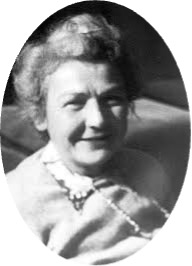
Evelyn Fix
(January 27, 1904 – December 30, 1965) An IMS Fellow and professor of statistics at the University of California, Berkeley, she is best known for developing, with co-author Joseph Hodges, the k-nearest neighbors (k-NN) algorithm, a nonparametric discrimination analysis method used for classification, regression, and data reduction. This algorithm later became an integral part of machine learning methods. She was the life partner of fellow statistician F. N. David.
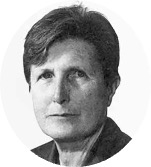
F. N. (Florence Nightingale) David
(August 23, 1909 – July 23, 1993) F. N. was named an ASA Fellow in 1954 and Elizabeth Scott Award winner in 1992. A professor of statistics at the University of California, Riverside, she’s known as a “renaissance statistician,” having made major contributions to combinatorics, correlation, and history of probability. She was also the first female professor of statistics at University College London (in the world’s first academic statistics department). During WWII, she produced 20 classified statistical papers that were crucial for planning UK offensive and defensive operations, civilian evacuation, and optimal minelaying and clearance. Named after Florence Nightingale, a family friend, she was the life partner of Evelyn Fix until Fix’s death in 1965.
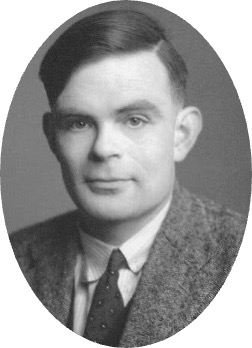
Alan Mathison Turing
(June 23, 1912 – June 7, 1954) Named an officer of the Order of the British Empire in 1946, Turing is best known as the father of AI and his pioneering work in theoretical computer science and information theory. As a 22-year-old undergraduate at Cambridge in 1935, his independent proof for the central limit theorem earned him the Smith Prize and distinction of Fellow of Kings College. During WWII, as part of his Bletchley Park codebreaking work, he developed several statistical techniques, including sequential analysis (independently of Abraham Wald) and Bayesian and Good–Turing frequency estimation with Jack Good. As this work was classified until the 1980s, his contributions to statistics are only now becoming recognized. In 2013, Turing was posthumously pardoned for his 1952 conviction for homosexuality.
For details, download the references.
Leave a Reply