
Penny S. Reynolds
On July 26, 1990, the Americans with Disabilities Act was signed into law by President George H. W. Bush. That same year, the first Disability Pride Day was held in Boston. To commemorate Disability Pride Month, we celebrate the accomplishments of disabled individuals and their contributions to statistics and the wider community.

Kimiko Osada Bowman (1927–2019): Bowman was named an ASA Fellow in 1976; Institute of Mathematical Statistics Fellow in 1987; International Statistical Institute Fellow in 1978; and AAAS Fellow in 1970. Author or co-author of more than 200 scientific articles and three books, she pioneered methods for approximating probability distributions of maximum likelihood estimators and developed divergent series algorithms for large computers. As a senior researcher at Oak Ridge National Laboratory, she worked on distributional properties of estimators for non-normal data. She contracted polio when young, regaining her ability to walk only after years of therapy, and later became an influential champion for people with disabilities. She directed tracking efforts for the 2000 US Census, for which she monitored the census questionnaire. She also chaired several people-with-disabilities committees for the National Science Foundation and was named to the President’s Committee Task Force for Statistical Tracking of PWD Employment.

Ida Rhodes (born Hadassah Itzkowitz, 1900–1986): Rhodes was a pioneer in the early development of electronic digital computing and computer programming. She came to America with her family in 1913 as a refugee from the Ukrainian pogroms. She earned both bachelor’s and master’s degrees in mathematics from Cornell in 1923. In 1940, after working as a statistician with the New York State Labor Department, she joined the Mathematical Tables Project as planner and supervisor. Established under the New Deal, the MTP was one of the world’s largest pre-digital computing organizations, employing hundreds of human computers for the calculation and tabulation of complex mathematical formulas. Rhodes supervised these operations by day and personally verified calculations at night. Recognized for her mathematical brilliance, she was selected in 1947 to help pioneer electronic computing with UNIVAC I. She later designed the C-10 programming language for the US Census Bureau and wrote some of the earliest programs for processing data from the census and Social Security Administration. Rhodes, herself hearing impaired, was committed to making computers and computer programming accessible to all. She pioneered the application of computers to language translation and developed innovative programs for training deaf, blind, and physically disabled individuals as computer programmers. Although she formally retired from the National Bureau of Standards in 1964, she remained active as a consultant until 1971. In 1981, she was honored as a UNIVAC I pioneer.

William Ogilvy Kermack (1898–1970): A biochemist trained in pure mathematics and physics, Kermack was permanently blinded in a lab accident at the age of 26. He is best known as co-developer, with Anderson Gray McKendrick, of the revolutionary Kermack-McKendrick mathematical theory of epidemic disease spread. Their 1927 paper introduced SIRS epidemiological models and key concepts such as the basic reproduction number R0. These models are foundational to modern public health strategies and the formulation and evaluation of vaccination thresholds, quarantine protocols, and social distancing measures. In 1918, working with statistician James Fowler Tocher, Kermack was introduced to the work of Karl Pearson and William Sealy Gosset (who went by the pseudonym “Student”). He published a statistical analysis of dairy cattle milk yield and later said his understanding of statistical principles contributed to the insight that biological population phenomena could be treated as distributions that followed quantitative laws, rather than a single numerical quantity.
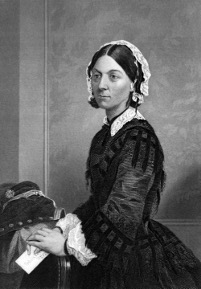
Florence Nightingale (1820–1910): A pioneer of medical statistics and data visualization graphics, Nightingale was named the first female fellow of the Royal Statistical Society in 1858 and an honorary ASA Fellow in 1874. After returning from Crimea, Nightingale was almost entirely bedridden for the rest of her life. It is thought she suffered from untreated brucellosis and post-traumatic stress disorder that contributed to long-term chronic symptoms consistent with myalgic encephalomyelitis and chronic fatigue syndrome. For more than 50 years, she wrote her statistical reports from her bedroom on a specially designed chaise longue and used a wheelchair to get around.
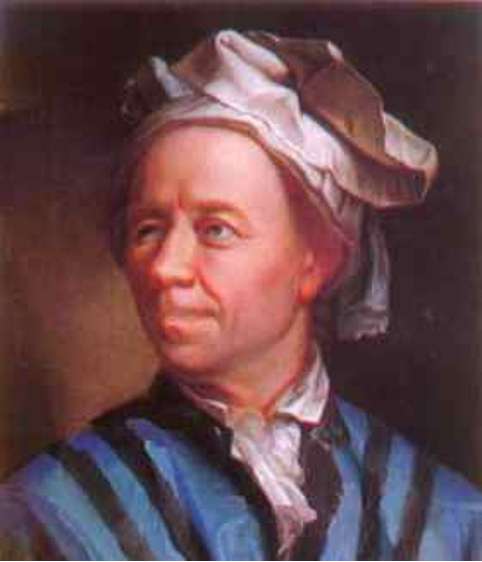
Leonhard Euler (1707–1783): Pierre Simon Laplace called Euler the “master of us all.” Euler was one of the most prolific and original mathematicians of all time, yet nearly blind. He made pioneering contributions to graph theory, topology, astronomy, fluid mechanics, music theory, analytic geometry, trigonometry, calculus, and number theory. He also created the whole form of modern mathematical thinking by using and inventing consistent notation and terminology, such as the imaginary number i, the concept of functions f(x), and the use of exponential functions and logarithms in analytic proofs (among other things). He produced more than 800 mathematics papers, almost half of which were when he was in his 60s and after he was completely blind. He was assisted in his work by his sons and grandsons, scientist assistants, and extraordinary mathematical memory and ability to calculate complex theorems in his head.
For details, download the references.
Leave a Reply