

Stephanie Shipp, Matthew Rotelli, Jennifer Van Mullekom, and Donna LaLonde
“The best thing about being a statistician is that you get to play in everyone’s backyard.” —John Tukey
The webinar titled “Ethical Thinking in Other Backyards” (from Global Ethics Day, October 15, 2025) highlighted the role of ethics in our work and increasing the visibility of the ASA Ethical Guidelines for Statistical Practice. Every five years, the ASA Committee on Professional Ethics updates these guidelines to reflect changes and trends in the statistical community and beyond. Updates are currently underway and will be reflected in the 2027 version of the guidelines.
The webinar brought together two experts with backgrounds in medicine, law, public health, and ethics to discuss the evolving ethical landscape of their work, research, and interdisciplinary collaborations. Moderated by Matt Rotelli, chair of the ASA’s Committee on Professional Ethics, the panel featured Donna Chen, a physician and professor of health humanities and ethics at the University of Virginia School of Medicine, and Kory Trott, director for research integrity at The University of Chicago. Their personal journeys, themes, reflections, and insights offer a perspective on ethical challenges and best practices for statisticians, researchers, and interdisciplinary teams.
Personal Journeys into Ethics
Trott’s journey into ethics was something he “stumbled into,” he said, rather than sought out deliberately. His first exposure to research ethics was working with HeLa cells as an undergraduate, where he encountered the complex story behind their origin and the murky ethical underpinnings. He “filed that away,” he said, but found years later, after graduate and law school, an opportunity in reviewing clinical research studies at the University of Wisconsin. This role brought those ethical considerations once again to the forefront. His work at the intersection of law, healthcare, and research focused on putting into practice “the ethical tenets that are behind the ethical guidelines and principles in the Belmont Report and others,” he said.
Chen’s journey began with a core interest in ethics as an undergraduate, paired with a desire to practice medicine, which she realized is really practicing ethics within a complex societal ecosystem. After receiving advanced training in public health and psychiatry, she became even more convinced that the technical and practical aspects of medicine and health are inseparable from their ethical foundations. This is still the case, as she tells her students, “When things go well for me as a physician, it’s because things are going well with the patient, but also, things are going well ethically.”
Yet, she finds that in clinical spaces, ethics are frequently narrowly defined, with a limited focus on the relationship between clinicians and patients. The surrounding policies, procedures, and laws of societal systems play a pivotal, yet sometimes constraining, role. This realization drew her to study systems issues and an eventual interest in research ethics, public health ethics, and organizational ethics, which refer to how institutions as complex adaptive systems create environments and respond in ways that make it easier or harder for healthcare professionals and scientists to do the right thing.
Communication in Team Science and Collaborative Research
Both Chen and Trott emphasize the importance of communication and collaboration across disciplines, especially as research teams grow more complex and diverse. In Chen’s words, “As team science and translational science grew so prominent, we moved from cells to bench to bedside to clinical to community.” The domains of researchers have broadened, and with it, the dilemmas arising from misunderstandings or clashes between different professional norms. What makes sense in one profession may not be ethically understood the same way in another, and the friction can lead to interesting dilemmas.
Trott, from a research compliance perspective, observes that “most research is collaborative,” and issues he encounters often stem from unspoken assumptions. “The issue often comes to me in the guise of plagiarism, but it’s often an authorship dispute,” he said. Researchers may assume statisticians or other collaborators are simply providing a service and not making a scholarly contribution. This can lead to disputes when contributions aren’t recognized with authorship credit. “I do think that is a common cause of dispute. Conversation can be a great preventive measure,” said Trott.
Chen agrees, adding an example from medical school, where physicians generally have little training in statistics, and without that understanding, many don’t appreciate the nuance, care, and innovation involved in choosing or designing appropriate statistical methodologies for addressing assumptions built into specific questions. “Science always has a purpose or a question to answer. A lot of doctors don’t understand the statistical side of things and the novelty that goes into developing methods,” Chen said.
This can lead to the reuse of innovative statistical approaches without proper credit or collaboration—or situations where it’s no longer the most appropriate method. However, there are examples of the opposite happening, where statisticians are “credited” as contributors when they did not provide the implied expert input. In some cases, this happens because the principal investigator assumes reusing a statistical approach developed for what seemed like a similar study and continuing to credit the statistician with authorship is appropriate without the statistician’s prior agreement. In some cases, particularly when the statistical approach is not what the statistician would have chosen, this can create significant tension and critical disputes. Both Trott and Chen emphasize that involving all contributors, statisticians, data scientists, and clinicians throughout the research process is crucial, not only for fairness and trust among collaborators, but also for the integrity of the science itself.
Building Trust with Teams and the Public
Beyond the team itself, both Chen and Trott stress the importance of fostering public trust in science. Trott observes that public health, by its nature, “impacts the public,” and professionals must proactively consider not only who is affected by interventions, but also how to communicate findings in “relevant and relatable” terms. The days of “we’re the professionals, and what we say goes are over,” she said. Accountability to the public is now a central concern.
When it comes to data management and transparency, Trott advocates for developing a clear data management plan, implementing internal controls, and sharing data among team members to “prevent research misconduct and foster trust.” If only one person has access to data, suspicions about manipulation can arise. Shared access and transparency help dispel these concerns and enable researchers to respond effectively to questions about their work. As the relationship between science and the public evolves, researchers must be prepared to answer questions and demonstrate the integrity of their data, making open engagement and technical expertise equally essential.
Chen sees a parallel between the evolving power dynamics within research teams and patient safety and quality improvement efforts in healthcare aimed to empower all team members to speak up, flatten hierarchies, and share leadership. As research teams try to move toward more equalized structures, fostering greater participation and openness, new communication and ethical challenges emerge. Hierarchies may persist, particularly when principal investigators hold ultimate responsibility and accountability, but how leaders include others and set rules affects engagement, alignment, and transparency. She draws analogies to ethical challenges in clinical and healthcare settings, where multidisciplinary collaboration is the norm and cross-disciplinary decision-making frameworks could inform research teams with similar challenges.
Navigating Scientific Disagreement, Uncertainty, Complexity, Accountability, and Emerging Technologies
A contrast arises in how time pressures can affect ethical deliberation in clinical versus research settings. In clinical care, Chen notes, “some decisions are really time-sensitive,” with little opportunity for lengthy reflection. In research, deadlines can feel urgent, but the stakes are different. And making time for collaborative decision-making is more possible and should be prioritized.
Trott points out that while the principal investigator or first author may be formally responsible, “when we’re reviewing a project … anyone who might have been a contributor … we would investigate or look into.” He advises researchers to “at least read the entire work and make sure you’re as comfortable as you can be with the entire manuscript,” even if the research includes areas outside their direct expertise.
Both agree that early, proactive, and ongoing dialogue is the best tool for navigating ethical uncertainty and interpersonal disputes. Chen points to advances in publication ethics, where authors are now required to specify the contributions of each team member, whether it’s writing, data analysis, or funding. While it can be frustrating and time-consuming, hopefully this requirement will push conversations within the team and help ensure transparency and accountability, adds Chen.
Statisticians have historically been excluded from the authorship and interpretation phases of research, despite making crucial contributions. Trott emphasizes the need for statisticians to clearly communicate their contributions and for teams to recognize the value their expertise adds. Chen adds that “letting co-authors know if novel methodologies are being created and written up” is essential for transparency and trust. Many large research teams have publication committees to structure early conversations about publications; statisticians should make sure they’re on those committees.
A recurring challenge, Trott notes, is communicating uncertainty, something science rarely resolves into black-and-white answers. Scientific communicators, whether statisticians or others, play a key role in conveying scientific results in a meaningful and nuanced way, without getting lost in the jargon. Chen adds that the media introduces another layer of complexity: “A headline can only be this long, and it’s very hard to convey uncertainty within a headline,” she said. She reflects that when statisticians are good communicators, they can help the media communicate results alongside principal investigators to ensure clarity and accuracy.
Emerging technologies, especially AI, present new ethical questions. Trott notes, “One of the new and emerging complicating factors is the use of AI tools in statistical analysis.” The challenge is to communicate what that tool has done, why it was the appropriate tool, and what uncertainty the tool itself might be creating or solving. Meanwhile, Chen expresses hope that there’s an [expert] human in the loop reviewing and validating outputs, even as AI is used to generate code or language.
Accountability, both agree, remains with human researchers. Trott uses the analogy of autonomous vehicles and raises the legal and moral question, “Who has responsibility for the impact that things … have on the world?” For now, the prevailing wisdom is that the researcher is ultimately responsible for anything and everything that gets included in a work.
The interpersonal and organizational dynamics within teams are also in flux. The principal investigator is still the end-all, be-all of a project, but as Trott notes, “finding that appropriate level of scrutiny within a team without feeling like you’re being accusatory … is a really delicate balance.”
Chen emphasizes the need to “get comfortable having conversations around ethically sticky things early when teaching students and early-career professionals involved in clinical work or research” and that ethical uncertainty is best navigated with others. Waiting until a problem arises to start conversations about ethics makes it harder to find the right words amid emotional stress: “If you’ve had these kinds of discussions earlier, it’s a little more comfortable than later on,” she said.
Trott adds that professionals make a thousand decisions a day, and the challenge is knowing which decisions have an important ethical consideration. Recognizing those moments and knowing when to seek additional consultation is a skill.
In closing, both offer practical advice for statisticians, data scientists, and researchers of all stripes. Trott champions researcher-led conversations about ethics, noting that “conversation has tremendous value because it helps us learn to talk through and discuss challenging things.” Both Chen and Trott suggest discussing case studies together—especially those without clear right or wrong answers—as a way for groups to practice working through the kind of messy, uncertain situations most professionals face in real life.
The conversation concludes with a reminder that ethical challenges are rarely resolved by easy answers or rigid rules. Instead, they are navigated through ongoing dialogue, transparency, and a willingness to engage with uncertainty together.
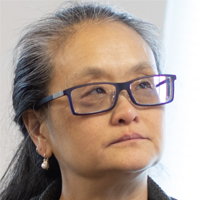
Donna Chen is a professor in the center for health humanities and ethics and the departments of psychiatry and of public health sciences at the University of Virginia School of Medicine. As an interdisciplinary translational physician-ethicist, she teaches, consults, conducts research, and provides services in bioethics, research ethics, health humanities, medical education, public health sciences, and psychiatry. She explores the role of the arts in health profession education and in promoting health and human flourishing. Chen has consulted with researchers, policymakers, and educational leaders at institutions in the US and abroad. She’s also served on committees related to ethics and health humanities, community engagement, and other topics at numerous National Institutes of Health agencies, the Office of the Surgeon General, the National Clinical Research Ethics Consultation Consortium, and several professional associations.
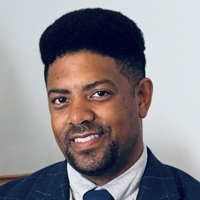
Kory Trott is the director of research integrity at The University of Chicago. In this role, he leads strategic initiatives to support ethical research and innovation. Previously, Trott was director of research ethics and compliance at The University of Alabama. With degrees in law, public health, and biological anthropology, he’s held interdisciplinary positions at Virginia Tech, the Centers for Disease Control and Prevention, and the University of Wisconsin. Trott’s professional service includes roles on the editorial board of Accountability in Research and the National Cancer Institute’s late-phase emphasis institutional review board.
Matthew Rotelli moderated the conversation. He is the 2026 chair of the ASA’s Committee on Professional Ethics. Rotelli recently retired from Eli Lilly, where he was the vice president of bioethics. He is a founding partner of Nat and Matt Consulting.
Further Reading
- University of Virginia, Online Ethics Center
- University of Illinois Urbana-Champaign, National Center for Principled Leadership and Research Ethics
- Hanlon Method for Public Health Decision-Making
- Alliance for Data Science and AI Ethos Tool and Case Studies
- ASA Committee on Professional Ethics: Ethical webinars
Leave a Reply