

If you’ve ever walked into JSM and felt like you needed a translator, a map, and a friend all at once, docents are exactly that. On a recent episode of the Practical Significance podcast, cohosts Donna LaLonde and Ron Wasserstein welcomed longtime JSM docents Jessica Kohlschmidt and Justin Jacobs, who pulled back the curtain on what it means to be a docent—from fielding questions and steering people toward the right sessions to demystifying conference culture and turning first-timers into JSM regulars.
Donna LaLonde: Tell us about your day job.
Jessica Kohlschmidt: I’m Jessica Kohlschmidt. I teach at The Ohio State University. I like to volunteer quite a bit, so I volunteer for the Caucus for Women in Statistics and the ASA—whatever I can find to fill my time.
Justin Jacobs: I’m Justin Jacobs. I’m a group leader for the spatial statistics group at Oak Ridge National Laboratory. I’ve been there for a year-and-a-half, but I’m more than a year-and-a-half into this type of work. I’ve been working in the federal government space for more than 20 years at the US Census Bureau, National Security Agency, and Sandia National Laboratories.
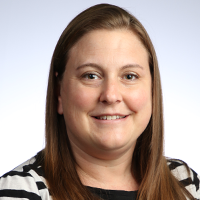
Donna LaLonde: What moments do you remember from JSM that encouraged you to volunteer to be a docent?
Justin Jacobs: So, there are two primary moments for me. The first is what convinced me to be a docent, and the second is what convinced me to stay as a docent.
I remember back to JSM 2009 in Washington, DC. I showed up for the first time. I was presenting, and I was clueless as to what I was doing. There were over 5,000 people there, and it was overwhelming for me. At JSM 2011 in Miami, I wasn’t presenting, so I felt I could actually take my time to learn how things worked. So, it took me a conference-and-a-half to get into a rhythm.
When the opportunity came to be a docent, I was definitely in! I had about four years of lessons learned I could condense into a couple of hours. I wish I would’ve had a docent to help me through those first few meetings.
I continue to serve as a docent because I’ve met so many people over the years in the same situation I was in when I was an early attendee. First-timers don’t always know what to do or how to find sessions or network—they have so many questions.
People reach out to me on LinkedIn afterward and say, “Thank you so much for this help. I got a job interview with this company,” or “I transitioned into this new job,” or “I’m going back to school and picking up this new area of expertise.”
Seeing how my insight helps them navigate JSM and identify avenues to improve their careers and build their community—that just makes me want to keep doing this.

Jessica Kohlschmidt: At JSM 2005 in Minnesota, a friend asked me to go to the first-timers reception, and I met people and made some great connections and friends that I still have today. And I learned a lot. I got something out of that experience, and because I’m a “yes” person, when the opportunity came to be a docent, I said, “Sure!” I’ve missed two JSMs in 25 years, so I’ve been to a lot of them, and I’m happy to share what I know and what I think.
Ron Wasserstein: Looking back, what level of commitment did you expect when you signed up, and how did it compare with the actual experience?
Jessica Kohlschmidt: I’ve had a few people stop me, but it’s never a huge chunk of time that takes away from your experience at the conference.
I want to be the kind of person people are comfortable talking to. I grew up in Texas, and we smiled at everyone when we walked by.
So, I like smiling at people and engaging with attendees I pass in the hall. But being a docent doesn’t in any way detract from my JSM experience. All it does is add to and enrich your life and build a network.
Justin Jacobs: My first time as a docent, I wondered what we’d be doing. But we had a well-organized first-timers orientation. We had a docent at every table who answered questions. I thought there would be more to it, but we are primarily a resource.
And back then, we didn’t have the orange docent buttons that we have today. We had small banners, and people never really talked to me at first. When we switched over to the orange buttons, people started recognizing us as docents. I’ll hear, “Hey, you’ve got the button.” And I tell them, “If you ever see me with a button and want to ask me a question, just come press the button.”
And that became a game last year … and I probably ended up answering upwards of—no joke—about 150 questions. People just wanted to keep pressing the button.
Ron Wasserstein: What does a typical day at JSM look like for you?
Justin Jacobs: Typically, I come in the night before JSM kicks off—I look through the guide, identify some of the talks that I want to go to, and map things out.
I’ll pull up the expo map to figure out the easiest route. Often when you have those two-hour blocks of back-to-back talks, the locations just aren’t easy enough to get between. So, what I like to do is pick out four or five talks that I really want to see.
I also want to carve out three different times when I’m going to go to the expo—at least half an hour each at a minimum—just so I can go in and see who’s around, talk to different booths, and catch up with people.
I’m at the point now where I know people at different booths and different groups that show up, so I get updates from them and talk to folks. I also usually try to figure out what’s going on in the evening, like the opening mixer, special interest events, the dance party, and awards ceremony. I would say probably 40% of the time is sessions and the other 60% is networking.
I get so much out of the networking aspect. I gain insight into current trends and how different industries or academics are using those new trends.
Jessica Kohlschmidt: I end up in more meetings than sessions at JSM—with Council of Sections, Council of Chapters, and other organizations. This year, I have four talks I’m attending, so those are already on my schedule.
I’m always at the convention center early. I stop by the expo because I’m usually helping with three of the community tables. I meet people there, and I use that time to network. In the hallways, walking back and forth between talks, people will stop and chat. I’m going from 8 a.m. until 10 p.m. for about three straight days, and then I crash.
Donna LaLonde: When people see your docent button, what questions do they ask?
Jessica Kohlschmidt: Questions range from needing directions to “What should I go to tonight?”, “How do I network?”, and “What’s the right etiquette for JSM about talks and leaving?”
There are so many things on the schedule socially—business mixers and other events—and I like to encourage people to show up to those because this is an opportunity to network with people you don’t see in your everyday life in areas that might be interesting to you.
Usually, it’s easy questions like, “How do I get here?”, “Where’s the Expo?”, or “Should I go to this mixer?”
Justin Jacobs: Directions are probably the most common thing I get asked, like “Where’s the bathroom?” I’ve also been asked, “What are the coolest talks you’ve been to?” And then people will usually look up who gave those talks and try to track that person down.
Another common question is, “Which companies should we talk to that are hiring?” So, I’ll usually stop by the employment section and see who’s hiring and whatnot, then encourage them to talk to those people. I’ll know if they have a booth because I’ve already been through the expo.
Attendees ask about the difference between invited sessions and topic-contributed sessions. They’re often shocked when they go to an invited session, and there are 100 people there, then they go to a topic-contributed session, and there are nine people.
I’ll explain the topic-contributed sessions are niche graduate student work—people ironing out a new thought they’ve had and just getting to the publication point. It can be so specialized that there are only a handful of people there, and half of them might be the speakers in the session. It’s a great opportunity to engage and ask questions.
Ron Wasserstein: Can you share a moment where you feel like you really made a difference for someone?
Justin Jacobs: Definitely. There was one first-time attendee who had a biology background, who I believe was doing actuarial science, and he felt like he hit a wall. So, he came to JSM to see what else he could do in statistics.
I sat with him for 45 minutes, just talking about his background, interests, and where in the US he’d want to work. We discussed different careers and the types of courses he wanted to take. We went over to the Duke University booth in the expo, and I introduced them. I explained they had a great data science program and would be a good place to start.
I also introduced him to folks at Amgen. With his biology background and the Bayesian background, he would get into Duke, and he would do well at Amgen. Two years later, that person messaged me on LinkedIn with their Amgen account attached, telling me how that 45 minutes we spent together had changed his career, and now he was where he wanted to be in life. That is what makes being a docent worth it.
Ron Wasserstein: What’s one piece of advice you give to every first-timer?
Jessica Kohlschmidt: I tell first-timers to go to an introductory lecture, pick some invited sessions, and stop by some mixers.
Justin Jacobs: My advice is to become the extrovert that you have never been—make friends. I recommend meeting five new people every day to build out your network, and the easiest place to do that is at the expo, particularly at the poster presentations. It’s an easy place to meet people, and it’s not just grad students giving talks.
Ron Wasserstein: If someone’s on the fence about being a docent, Jessica, what would you tell them to convince them to jump in?
Jessica Kohlschmidt: I’d tell them not only are you helping JSM first-timers, but you also get the opportunity to network with a small group of people—your fellow docents. So, it’s an opportunity to work with people who also care about helping others at ASA.
Ron Wasserstein: Justin, what do you hope a first-time attendee will take away from their interaction with a docent?
Justin Jacobs: Whenever I have an interaction with a first-timer, especially during that first-timers orientation, I want them to leave feeling confident about what they are doing at JSM.
One of the most important tips for success: They need to know how to use the JSM app. We spend some time during the first-timers orientation going through the app, and I’ve helped to set enough of those up over the last couple of years.
But I also want them to be armed with ideas about networking and to realize that this conference isn’t just about showing up and sitting in talks. This conference is about getting a sense of the pulse of the current statistics community: where we’re going in our different research areas; what new avenues are opening across academia, industry, and government; and identifying what aspects they may want to build into their own careers.
Interested in volunteering as a JSM docent? Fill out this form to learn more.
Leave a Reply