
Penny S. Reynolds
This month, we celebrate the historical role many statisticians played in the development of modern statistical ecology. Statistical ecology uses probability-based tools and modeling to investigate fundamental ecological processes, such as species abundance and distribution, population dynamics, animal movement patterns, and biodiversity.
1902
In January of this year, biologist Oswald H. Latter made one of the first explicit references to significance testing in wildlife biology. He compared sizes of eggs from cuckoo brood parasites to those of host species. He classified differences as significant or nonsignificant based on the ratio of differences to probable error. Decades later, his dataset is used as a teaching tool for randomization and analysis of variance.
1904
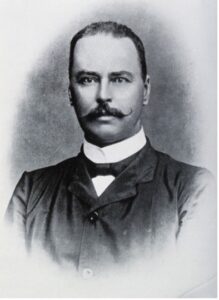
Sir Ronald Ross wrote to Karl Pearson requesting his help in devising a mathematical model of mosquito movement patterns. Pearson wrote back to say the problem was less tractable than he thought, and in an open letter to Nature, Pearson asked for assistance with what he calls “The Problem of the Random Walk” (or Drunkard’s Walk). The solution came from physicist Lord Rayleigh, who had derived it some 25 years earlier. It eventually morphs into general random-walk models applied to animal movement, search strategies, habitat selection, and home range. Only Ross is unhappy; he thinks Pearson pinched his idea.
1918
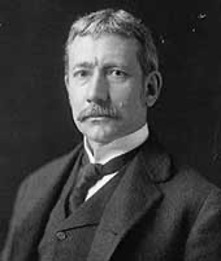
The Migratory Bird Treaty Act is enacted, effectively ending the slaughter of millions of birds for the women’s hat trade. The principal architect was Elihu Root, elected ASA Fellow in 1921. He was a lawyer and politician, not a statistician. He was US Secretary of War and received the 1912 Nobel Peace Prize for his work in foreign policy and international arbitration. He was made an ASA Fellow for spearheading data-driven reforms to government administration and record-keeping.
1937
Working independently, Ronald Fisher, Andrei Kolmogorov, and colleagues developed a diffusion model to describe the spread of advantageous alleles in a population. In a series of field experiments in 1942, T. Dobzhansky and Sewall Wright (ASA Fellow 1944) applied the model to quantify dispersal of mutant fruit flies. A decade later, John G. Skellam (president, Biometric Society, British Region) used diffusion theory to develop methods of estimation for metrics essential to modern conservation biology. These included dispersal rates of introduced species (such as muskrats) across a landscape and critical patch size, which is the minimum habitable area required for an isolated population to be sustainable.
1943
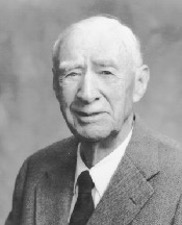
Ronald Fisher and entomologists Alexander Steven Corbet and Carrington Bonsor Williams proposed that the species abundance distribution for a biological community can be described by the parameters of a log-series distribution. They observed that animal communities typically comprise a very small number of highly abundant species, and many species are represented by only one or two individuals each. In 1948, Frank Preston presented the alternative canonical lognormal model. Their papers were the foundation for all subsequent biological diversity indices, such as the Shannon’s H index (1947), Simpson’s D index (1949), and Pielou’s Evenness J’ index.
1947

Charlotte Kipling (1919–1992) was hired as a part-time statistician by the Ferry House Laboratory, Lake Windemere. She was later elected Fellow of the Royal Statistical Society for her revolutionary work in freshwater fisheries science. She spearheaded the transition of the field, from observational short-term field studies to rigorous predictive modeling based on long-term data. The 50-year Lake Windermere Perch and Pike Project (one of the longest ecological studies in the world) revealed generational impacts of habitat change and overfishing on fish population dynamics. She also contributed to the development of statistical and empirical methods for correcting sampling bias due to disproportionate capture, mark-recapture, and determination of fish age.
1962
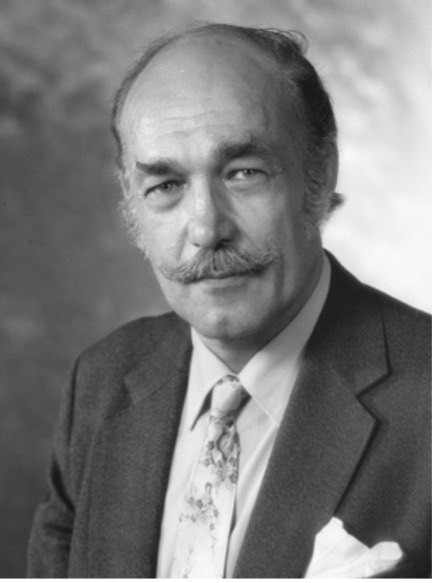
John Nelder (1924–2010), famous for his work on generalized linear models and experimental design, was also a keen birdwatcher. In August 1962, he published a statistical analysis of patterns found in rare bird records from southeastern England between 1892 and 1930 (the Hastings Rarities). He claimed that the statistical impossibility of a natural explanation for such patterns pointed to fraud by local taxidermist George Bristow. However, a recent reassessment suggests alternative explanations, such as natural weather patterns and the World War I U-boat blockade.
1963

Robert Sokal (1926–2012) and Peter Sneath (1923–2011) established the field of numerical taxonomy, a quantitative classification method that uses multivariate data analysis and cluster algorithms to measure statistical similarity between organisms. Although highly controversial, their statistical and computational methods led to the later development of modern cladistics and computational phylogenetics. However, Sokal is best known for his influential textbook Biometry. Coauthored with F. James Rohlf (1936– ), it is described as the “canon for experimental design and analysis in the biological sciences.”
1969
Evelyn Chrystalla (E. C.) Pielou (1924–2016) published her first book, Introduction to Mathematical Ecology. She is now recognized as one of the most influential ecologists of the 20th century for her foundational work in statistical ecology. She developed pioneering methodologies still used today, such as the Evenness Index (J’) for quantifying biological diversity, hypothesis-driven spatial pattern analysis, and ecological null models for determining causal mechanisms of species distributions. She was only the second woman to receive the Ecological Society of America Eminent Ecologist Award in 1986, and in 1990, she was the first woman to win the International Association for Ecology’s Distinguished Statistical Ecologist Award.
For details, download the references.
Leave a Reply