
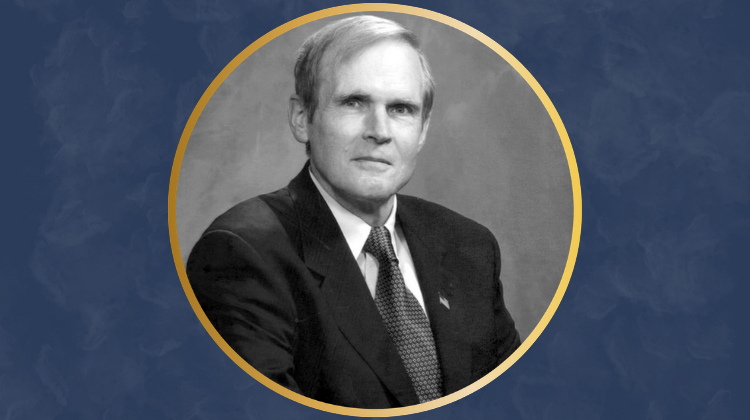
Ask Fritz Scheuren how he became a statistician and he’ll tell you it happened almost by accident. He didn’t intend to spend more than 50 years shaping American official statistics, mentoring generations of researchers, and applying his skills to human rights investigations on three continents. He set out, first, to be an engineer like his father. Then an English teacher. Statistics found him somewhere in between, and it never let go.
Ask those who’ve crossed paths with him and another picture emerges—a statistician deeply curious about people, generous with his time and knowledge, and guided throughout his career by a simple idea: Statistics should be used to make a difference.
This month, we’re highlighting Scheuren’s Legacy Page in our series because his colleagues felt his impact couldn’t go unmarked. His friends and collaborators rallied to establish a Legacy Page in his honor, one of the many ways the ASA community celebrates the people who’ve shaped our field.
Scheuren grew up in public housing in Boston, walking across an active dump every day to reach Boston College High School. His father, a civil engineer, expected his first-born son to follow him into the profession. Scheuren rebelled instead, enrolling at Tufts University as an English major.
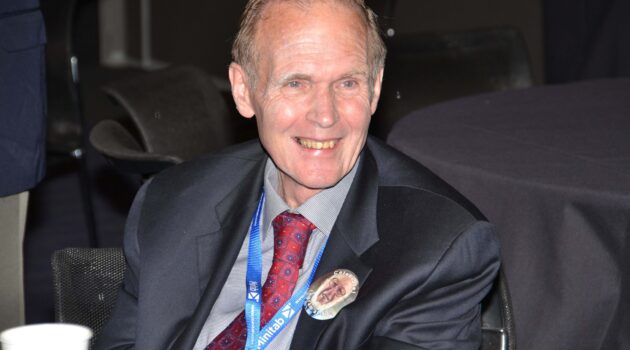
After college, he took a technical job at the Internal Revenue Service. The agency wanted to hire a statistician, and although he was not yet one, they agreed to pay for his statistical training. Scheuren began taking classes at The George Washington University at night. After nine years, he earned his PhD.
His path into statistics may have been accidental, but his commitment to the field was anything but.
In 1966, he helped develop the first IRS estate-multiplier wealth estimates—a way to gauge the wealth of living Americans using estate tax data from the deceased. For Scheuren, the experience was personal. Looking at the wealth of the richest Americans made him reflect on his own journey out of poverty, a feeling he’s called “survivor’s guilt.” He soon joined the Office of Economic Opportunity to work on the war on poverty instead. That connection between statistics and people’s lives would follow him for the rest of his career.
At the Social Security Administration and later the IRS, Scheuren worked to improve the quality and usefulness of government data while wrestling with difficult questions of transparency, privacy, and statistical disclosure protection. He later brought that expertise to academia, social policy, and complex public-interest projects, including work related to the Cobell litigation, which involved Individual Indian Monies trust records, which he described as a chance to “help the little guy.”
But it was his human rights work that brought his philosophy into sharpest focus. In 1994, Scheuren was asked to help evaluate reports of civilian casualties from land mines in Cambodia. He saw a role for statisticians in humanitarian work because they could bring objectivity to settings often dominated by advocates.
In 1999, he traveled to Albania to help document refugees fleeing Kosovo. At the border, he and Patrick Ball recognized the value of the records Serbian authorities kept and helped arrange for them to be scanned. The data later became key evidence in war crimes trials at The Hague. Scheuren went on to support humanitarian and human rights projects in Haiti, Guatemala, East Timor, Peru, and elsewhere. He also helped found Statistics Without Borders. In 2012, the ASA recognized his humanitarian contributions with its Karl E. Peace Award for Outstanding Statistical Contributions for the Betterment of Society.
Scheuren’s career has crossed boundaries that are often treated separately: government and academia; theory and application; statistics and public policy; technica work; and humanitarian service.
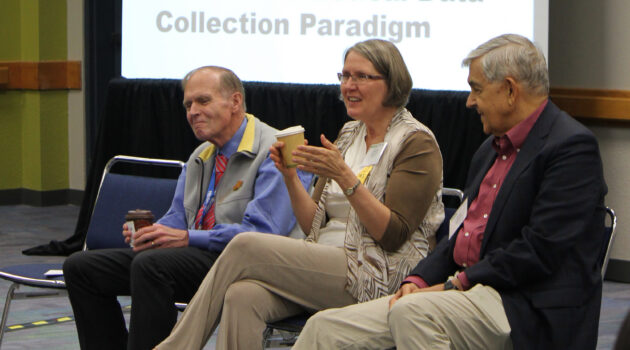
Throughout it all, he continued to learn. Scheuren has described the Japanese concept of Kaizen, or continuous improvement, as a useful way of understanding his own life. Each person he meets, he suggested, can provide a “Kaizen moment”—an opportunity to learn and become a better person.
As the 100th president of the American Statistical Association in 2005, Scheuren chose the theme, “Use our discipline to enhance human welfare.” The phrase captured a philosophy that had already shaped his career for decades.
It’s easy to describe Scheuren through titles, awards, papers, and accomplishments. But the deeper story is about what he did with those opportunities.
Being a statistician, in Scheuren’s example, can mean asking who is represented in the numbers. It can mean protecting the people behind a dataset. It can mean using evidence to understand inequality, document human rights abuses, improve public statistics, share knowledge, or simply help a colleague see a problem differently.
The statistics will remain. The papers, methods, datasets, awards, and institutional contributions will remain. But so will the people who learned from him, the projects he helped strengthen, and the communities he encouraged.
For Scheuren, becoming a statistician may have been an accident, but becoming the kind of statistician who uses the discipline to help people was clearly a choice.
Celebrate Legacy
Anyone can start a campaign to set up a Legacy Page for someone, living or deceased, and once a campaign reaches $5,000 in donations, the honoree receives a page on the ASA website featuring a photo, brief essay on their accomplishments, and a list of everyone who contributed.
Leave a Reply