
Megan Murphy, ASA Communications Manager
“When will I ever use statistics?”
It’s a question familiar to anyone who’s taught an introductory statistics course—especially one filled with students taking it because their program requires it.
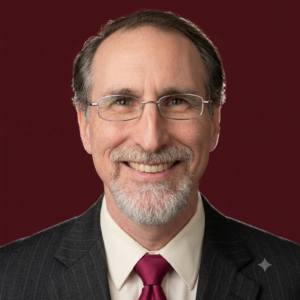
For Chad Lower, an adjunct instructor who teaches MAT-115 Introductory Statistics online at Wilson College, the challenge isn’t simply teaching students how to calculate a mean or construct a confidence interval. He wants them to understand why statistics matter in the first place.
His approach is to tell stories.
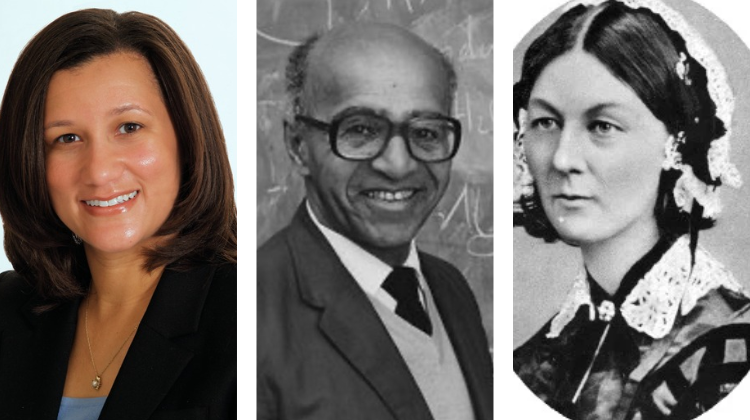
Each week, Lower introduces students to a statistician whose work connects to the statistical concept they’re learning. Florence Nightingale opens the course. John Tukey appears when students learn about boxplots. Jerzy Neyman arrives with confidence intervals. Gertrude Cox, David Blackwell, C. R. Rao, and Dionne Price round out the group.
The idea began in 2022, when Lower was teaching statistics at Southern New Hampshire University. He found the ASA’s ThisIsStatistics Famous Statisticians webpage and began using the profiles in his courses. When the page was no longer available, he rebuilt the series using profiles from Amstat News.
“That turned out better,” Lower said, “because every profile can now send a student to a full article about the person.”
Lower has taught MAT-115 at Wilson College five times—four online and once in person—and this fall will be his sixth time teaching the course. He’s still an adjunct at Southern New Hampshire University, while now serving as senior curriculum manager for mathematics, science, and world languages at Laurel Springs School, an online K–12 school. He also serves as an AP Calculus reader and table leader for the College Board.
His path to statistics wasn’t exactly planned.
As a mathematics major at Messiah College, Lower expected to choose computer programming over statistics. He had been programming since seventh grade and saw statistics as a requirement he simply needed to push through.
Then came a January-term statistics course in 1996.
Messiah’s January term compressed an entire course into a month, with classes meeting four hours a day.
“What I didn’t expect was that whatever we talked about at 8 a.m. came back at 11 a.m. the same morning,” he said. “I could see how the topics connected because I met them twice in one day. I fell in love with statistics that month.”
That experience stayed with him as a teacher. The irony, he said, is that the intensive schedule that drew him to statistics is the opposite of how he now wants his students to learn. “What sold me on statistics was a month of massed practice, and spacing material out is the thing I have worked on hardest as a teacher ever since.”
Today, one of his biggest challenges is teaching students who have different relationships to statistics. “Most of my students are adults coming back to mathematics after a long gap. They are there because a program requires it for graduation, not because they came looking for statistics,” he said. “Relevance is something I have to supply rather than assume.”
That’s where the “Meet a Statistician” announcements come in.
The series is not an assignment. Students don’t have to respond to profiles, and nothing about them appears on a quiz. With the help of AI, he writes a short announcement—generally about 220 words—that includes a portrait, a few paragraphs about the statistician and their work, a link to the full Amstat News article, and a sentence connecting the person to what students are learning that week. He verifies the information against the Amstat News article or another primary source before sharing it with students. He starts with the statistical concept and finds the person whose work connects to it.
“Nightingale opens the term because she is the argument for why any of this matters,” he said.
Lower doesn’t know which statistician has generated the most interest. He does not measure engagement with the announcements, and comments are generally turned off.
There is one exception.
During the fall of 2024, comments were open, and one student responded to the profile of Mario Marazzi. The student wrote about his work on the quality and transparency of official statistics, which demonstrated that one person’s vision can change something on a large scale. The student was also struck by how he’d passed his love of mathematics on to his son.
Lower was glad to see students connecting with the person behind the numbers. But the lesson he most wants them to take away is how to think about what they’re learning. “Check the thing that sounds right,” he said. “Just because something sounds good does not mean that it is good.”
That, he tells his students, is what statistics is ultimately about.
“A number in a headline sounds right. A percentage with no raw count attached sounds right. A bar chart with the bottom cut off the y-axis sounds right,” he said. “If a student finishes my course, reads a number this year, and thinks to ask where the sample came from, that is worth more to me than anything they can do with a formula.”
For Lower, teaching statistics is about helping students develop a habit of questioning what they see—and giving them a reason to care enough to do so. And that’s where the stories matter.
Download two installments of Lower’s Meet a Statistician series: Florence Nightingale and Dionne Price.
Leave a Reply