
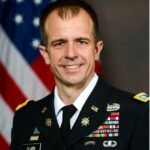
In keeping with our tradition of interviewing leaders from the federal government, we spoke with a West Point professor, Col. Nicholas Clark, who specializes in teaching statistics to military personnel.
Additional Features
Jennifer Hill

Jennifer Hill developed an early interest in math and pursued economics in college. However, after working in the corporate world, she went back to school for graduate degrees from Rutgers and Harvard that allowed her to focus on causal inference and social policy. Currently professor of applied statistics at NYU Steinhardt, Hill has created software that makes it easier for applied researchers to use sophisticated methods in a way that helps them have a deeper understanding of what methods they are using and why. She notes, “Answering real questions with real data is the best and biggest challenge there is.”
Ginger Holt

Ginger Holt’s journey into the world of statistics and data science began in Fort Worth, Texas, fueled by a family passion for education. She pursued an undergraduate degree in industrial engineering at Texas A&M University and eventually earned a PhD in statistics from Rice University. She loved her first job as assistant professor at the University of Virginia but did not love pursuing research funding, so she transitioned into industry work. Currently at DataBricks, Holt plays a pivotal role in unifying forecasting processes across different domains. Leading her team, she focuses on building tooling in data engineering and data science, aiming to make these processes scalable not only for DataBricks but also for its customers. Her favorite aspect of a career in data science is its ability to foster new learning opportunities.
Nancy Reid
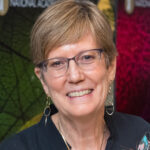
Nancy Reid initially intended to become a computer scientist because it was rumored to be the “future.” Instead, during her undergraduate years, she discovered she enjoyed statistics. She went on to pursue an MSc at the University of British Columbia, after which she expected to find a ‘real job.’ However, when she did her research thesis, she became hooked on research. In fact, the research environment was so exciting to her she has dedicated her entire career to academia. Still, Reid said she values the influence she has on her students the most.
ASA GivesBack: Stories of Giving Back
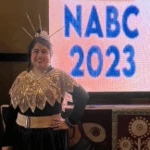
The ASA GivesBack group chose to focus their first project of 2024 on the generosity of ASA members. Read the selection of the stories submitted from ASA members about how they chose to give back in 2023.
Celebrating Women in Statistics and Data Science 2024
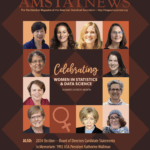
In honor of Women’s History Month, we are once again celebrating ASA women who work in statistics and data science. These 11 accomplished women were chosen because they are leaders and mentors to many in their field.
Authenticity, Communication Key to Collaborating as Women in Statistics and Data Science
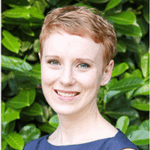
Elinor Jones, Lucia Barbone, and Kelly H. Zou discussed their experiences as women collaborating with researchers and stakeholders during an hour-long panel as part of the International Day for Women in Statistics and Data Science celebration on October 10, 2023.
Millennia Young

Millennia Young’s favorite subject while growing up was math. She loved solving problems and knowing she had the correct answer, even if the answer was “does not exist.” After high school, she went on to study applied mathematics at the New Jersey Institute of Technology, and it was there she was introduced to statistics. “Although both disciplines use math to model what is happening in the world,” she wrote, “statistics provided unique insights.” Before she started her PhD, she had two children, and by the time she defended, she had three. Although she struggled, she kept going. Eventually, she landed her dream job—leading the biostatistics lab for human health and performance at NASA.
From Inspired to Inspiring: Women Take ASA Helm

In honor of Women’s History Month, three former ASA presidents share career highlights, role models, and invaluable advice.
Mary Ellen Bock
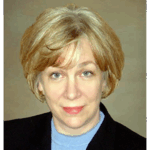
Mary Ellen Bock began her academic career at the University of Illinois at Urbana-Champaign, where she earned her bachelor’s degree in German in 1967. She shifted her focus to mathematics for her graduate studies at the same university and earned her PhD under the guidance of Robert B. Ash. In 1995, she made history as the first female full professor of statistics and inaugural female chair of the statistics department at Purdue. Under her leadership, Purdue added courses in areas of application such as bioinformatics, genomics, massive data, machine learning, visualization, and computational finance. She was also instrumental in securing National Science Foundation funding to develop the Pathways to the Future workshops that helped young female faculty succeed. Bock is an ASA founder and fellow.