

Bárbara J. Robles has been applying statistics and economics since grade school as a 4-H member and then a tax examiner for the IRS. She moved onto revenue estimation and forecasting for the Joint Committee on Taxation and sharing research on the Community Reinvestment Act (CRA). She is currently engaged in research exploring data collection methods and survey protocol addressing hard-to-reach populations and neglected communities, digital divide issues in community economic development, economic inclusion, tax and financial education, the gig economy, and entrepreneurship/self-employment.
Additional Features
Alicia Carriquiry

Working on applications has been Alicia Carriquiry’s passion and the reason she was elected to the National Academy of Medicine. Today, she leads CSAFE, a National Institute of Standards and Technology Center of Excellence with a focus on forensic statistics.
Miguel Marino
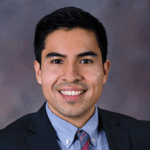
As an associate professor of biostatistics at Oregon Health & Science University, Miguel Marino’s work earned him recognition in 2020 when he was selected by the National Academy of Medicine as an Emerging Leader in Health and Medicine Scholar.
Q&A with Hope Cullers, Crystal Grant, and Smita Skrivanek
We interviewed three statisticians who strive to change the world through data. We asked them who inspired them, why they became statisticians, and how data science is changing the world.
Light Sabers, Dr. Pepper, and More
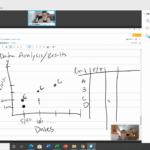
Amanda Malloy, the ASA’s director of development, shares an example of what the ASA is doing to inspire kids and improve statistics education by providing innovative resources to educators.
Legislative Advocacy and Data Science
Sarah Warner offers up tips to help Data for Good statistician-advocates.
Beimar Iriarte
Beimar Iriarte applies statistics to biochemical assays, marker discovery, development, and diagnostic and analytical performance evaluation, integrating laboratory science, statistics, and metrology.
BASS Goes Virtual
The 27th meeting of the Biopharmaceutical Applied Statistics Symposium (BASS XXVII) will be held virtually September 9–10.
HRDAG Answers Human Rights Questions on Large Scale
The Human Rights Data Analysis Group (HRDAG) uses data science to answer questions about human rights on a large scale, from determining chain of command and accountability in international cases of genocide to evaluating whether artificial intelligence–based tools used by the US criminal justice system are fair.
Peace-Work: Crowd-Sourcing Statistical Volunteering for the Greater Good
Peace-Work is an all-volunteer cooperative of statisticians, data scientists, and other researchers applying analytics to issues in issue-driven advocacy and social justice.