
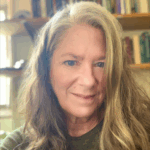
Growing up, Merlise Clyde loved science, math, and the outdoors but really had no idea about careers in mathematics, let alone statistics. She discovered statistics while at Oregon State University studying forestry ecology. There was no major in statistics then, but she took every statistics course she could fit into her degree. Clyde ultimately earned her PhD in statistics from the University of Minnesota. She is best known for her research in Bayesian model selection/model averaging with mixtures of g-priors (and the associated R package BAS); however, her greatest accomplishment has been in Bayesian nonparametric regression using Lévy processes for Lévy adaptive regression kernels.
Celebrating Women in Statistics
Amanda Koepke

Amanda Koepke knew from an early age she loved math and was introduced to statistics in high school. Despite loving statistics, she didn’t know what careers would be available to her upon graduation, so she majored in accounting at Texas Tech University. Eventually, she switched her major to psychology and mathematics and statistics. After finishing her undergraduate work, becoming a statistician seemed like the perfect way to merge her love of math and the social sciences, so she pursued her PhD in statistics from the University of Washington. Today, she is a mathematical statistician at the National Institute of Standards and Technology, where she works side-by-side with scientists doing cutting-edge research.
Celebrating Women in Statistics and Data Science 2023
In honor of Women’s History Month, we are once again celebrating ASA women who work in statistics and data science. These accomplished women were chosen because they inspired other women in their field. Read their biographies and find out why they chose statistics, who influenced them, and what they have accomplished.
Becky McNeil
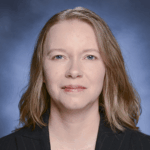
Becky McNeil’s enchantment with statistics and mathematical modeling began during her undergraduate studies, when she learned about ecological models and population dynamics. After completing her undergraduate degree in mathematics and biology, she took a job in billing at a pharmacy that served long-term care facilities. This was her first exposure to raw data—the stories of health told by billing records—and those stories sparked a deep interest in using mathematical tools to improve health. Eventually, McNeil earned her graduate degree in biostatistics and additional training in epidemiology and bioinformatics. She is now a research statistician at RTI international.
Jill A. Dever

Jill Dever spent the first 22 years of her life in the suburbs of Louisville, Kentucky. Her interest in statistics started with her parents and math flashcards at the kitchen table. Later, her brother heightened her interest in math and taught her computer programming logic by sharing fun facts and projects from school. However, it was her University of Louisville professor who encouraged her to investigate biostatistics, owing to her interest in medical-based TV shows. So, off to The University of North Carolina at Chapel Hill she went to earn her MS in biostatistics and later the University of Maryland to earn her PhD. She ended up at RTI International, where she has been for 25 years. One of her greatest achievements is coauthoring two books, including Practical Tools for Sampling and Weighting.
Rosemary Bailey
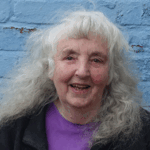
Rosemary Bailey grew up in the countryside northwest of London. In primary school, her classmates mocked her for being good at arithmetic, but her parents told her she should decide for herself who she wanted to be and ignore such comments. She did and earned both her first and second degrees in mathematics from Oxford University. She was president of the British Region of the International Biometric Society from 2000–2002 and is a fellow of the Royal Statistical Society and mathematics and statistics professor at the University of St. Andrews, Scotland.
Virtual Conference to Celebrate Women in Statistics, Data Science
The Caucus for Women in Statistics and Portuguese Statistical Association will host the International Day for Women in Statistics and Data Science October 11.
Stacy R. Lindborg
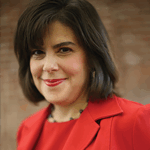
Stacy R. Lindborg’s interest in statistics came from a strength in mathematics, a biproduct of having an engineer as a father who thought studying math in the summer was cool. After earning her PhD, she took a job working for Eli Lilly & Company. As she began working on data, she learned one of the greatest strengths as a statistician lies in the depth of knowledge of the data. Since then, Stacy has worked on drugs targeting serious neurological and neurodegenerative diseases in addition to cancer, cardiovascular disease, diabetes, immunology, and pain. She has also served in numerous leadership roles, including head of R&D strategy, general product management leadership, and her current role as chief development officer.
Jonaki Bose

Jonaki Bose has been a federal statistician for 27 years. She’s worked in the Education, Transportation, and Health and Human Services departments. Now, as a senior adviser, she works on interesting production challenges, mentors, and performs methodological work with like-minded colleagues interested in furthering the production and use of health statistics.
Tamara G. Kolda
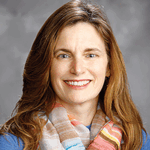
Tamara G. Kolda’s career began at the dawn of the internet, in the pre-Google era. Since then, she has worked at the intersection of mathematics, computing, and data. She was awarded the Alston S. Householder Postdoctoral Fellow in Scientific Computing at Oak Ridge National Labs in Tennessee after completing her doctorate and worked for two decades at Sandia National Labs in California. She has benefitted from the advice and guidance of many statisticians along the way and finds the community to be highly collegial. She helped launch and serves as founding editor-in-chief of the SIAM Journal on Mathematics of Data Science, an academic journal focused on the mathematical and statistical foundations of data science methods.