
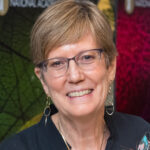
Nancy Reid initially intended to become a computer scientist because it was rumored to be the “future.” Instead, during her undergraduate years, she discovered she enjoyed statistics. She went on to pursue an MSc at the University of British Columbia, after which she expected to find a ‘real job.’ However, when she did her research thesis, she became hooked on research. In fact, the research environment was so exciting to her she has dedicated her entire career to academia. Still, Reid said she values the influence she has on her students the most.
Celebrating Women in Statistics
Celebrating Women in Statistics and Data Science 2024
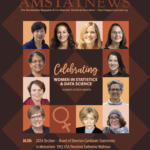
In honor of Women’s History Month, we are once again celebrating ASA women who work in statistics and data science. These 11 accomplished women were chosen because they are leaders and mentors to many in their field.
From Inspired to Inspiring: Women Take ASA Helm

In honor of Women’s History Month, three former ASA presidents share career highlights, role models, and invaluable advice.
Millennia Young

Millennia Young’s favorite subject while growing up was math. She loved solving problems and knowing she had the correct answer, even if the answer was “does not exist.” After high school, she went on to study applied mathematics at the New Jersey Institute of Technology, and it was there she was introduced to statistics. “Although both disciplines use math to model what is happening in the world,” she wrote, “statistics provided unique insights.” Before she started her PhD, she had two children, and by the time she defended, she had three. Although she struggled, she kept going. Eventually, she landed her dream job—leading the biostatistics lab for human health and performance at NASA.
Mary Ellen Bock
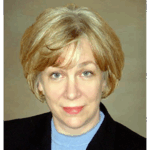
Mary Ellen Bock began her academic career at the University of Illinois at Urbana-Champaign, where she earned her bachelor’s degree in German in 1967. She shifted her focus to mathematics for her graduate studies at the same university and earned her PhD under the guidance of Robert B. Ash. In 1995, she made history as the first female full professor of statistics and inaugural female chair of the statistics department at Purdue. Under her leadership, Purdue added courses in areas of application such as bioinformatics, genomics, massive data, machine learning, visualization, and computational finance. She was also instrumental in securing National Science Foundation funding to develop the Pathways to the Future workshops that helped young female faculty succeed. Bock is an ASA founder and fellow.
Pamela McGovern
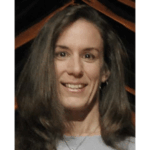
Pamela McGovern grew up in Connecticut and majored in mathematics in college while working as an actuarial intern during the summer. Being an actuary seemed like a good fit for a math major, but the job also exposed her to statistics and she changed course. McGovern went on to earn a master’s degree at the University of Connecticut. Through the ASA, she learned about career opportunities in the federal government and decided to pursue a mathematical statistician position. After graduating, she began her career in the federal statistical system at the US Census Bureau. She currently works as a senior mathematical statistician at the US Department of Agriculture National Agricultural Statistics Service. Throughout her 27-year career as a federal statistician, her work has focused on survey statistics and methodology.
Leah Jager

Leah Jager was born and raised in Grand Rapids, Michigan. Her dad was a college mathematics professor and her mom taught middle-school math and English. From a young age, she liked playing school and hoped to someday be a professor like her dad. Jager’s first encounter with statistics occurred during a summer internship in a food lab within the R&D division at Amway Corporation. The goal of her project was to improve the taste of a beverage using varying concentrations of a flavor additive. She never succeeded in making the drink taste better, but she did become interested in statistics. Today, as a statistics and biostatistics professor at Johns Hopkins, she is inspired when she sees a student realize the relevance statistics has in their life.
Cathy O’Neil

Cathy O’Neil grew up in Lexington, Massachusetts, and was always interested in both music and math. She entered finance in 2007, right before the credit crisis, and became alarmed by what she saw as the misuse of mathematics as an intimidating cover used to exploit less sophisticated investors. In 2011, she became a data scientist and joined Occupy Wall Street. It was there she saw how data science was being used to make lucky people luckier and unlucky people unluckier. The result was the book Weapons of Math Destruction and the formation of her algorithmic auditing company, ORCAA. The mission of ORCAA is to develop standards around algorithmic accountability in general and algorithmic fairness towards individuals in protected classes specifically.
Kathy Ensor
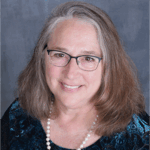
As an undergraduate, Kathy Ensor was fascinated by probability, statistical graphics, statistical theory, and computers. At age 19, she wrote a Fortran program that could play chess and optimize the next move based on a simplistic probabilistic algorithm and data gleaned from the user of the program. She was thrilled to eventually land in a statistics career, though, as it captured all her interests. Hired at Rice University, she built the statistics department from the ground up and served as chair from 1999–2013. In 2021, she was elected president of the ASA and established the IDEA Forum to showcase how statisticians improve lives. While Ensor believes all these accomplishments are important, she says she derives her energy and continued commitment to the profession from the amazing community of statisticians and data scientists, her collaborators, doctoral alumni, and students whom she mentored throughout the years.
Denise A. Abreu

Growing up, Denise Abreu’s favorite subject was math. Thinking math and computer science were the same thing, she attended the State University of New York at Stony Brook to major in computer science. To her amazement, she genuinely enjoyed deriving maximum likelihood estimators, finding means and standard deviations, and doing matrix algebra more than she did programing, thus she switched majors. Today, Abreu is a mathematical statistician who has served within the federal statistical system for more than 23 years, first at the Census Bureau and then at the US Department of Agriculture National Agricultural Statistics Service.