
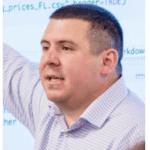
As one of the team members charged with working with data during the COVID-19 pandemic in West Virginia, Brad Price noticed there was one overall theme: Communicate and share the necessary information to keep the 1.79 million residents, health care facilities, and economy of West Virginia protected. This wasn’t as easy as it might sound.
Special Features
Supporting Community-Engaged Research Ethical Challenges and Plausible Responses in Statistics, Data Science Practice

Rochelle Tractenberg shows that when practitioners do not follow ethical practice standards, all those who make decisions based on the results of quantitative practice may find their decisions or scholarly work undermined.
Data Literacy as a Tool for Community Health and Social Justice

Data is one of the world’s most valuable resources and an important tool for improving community health. Therefore, knowledge of how to understand, interpret, and share data is necessary for personal and professional success, most importantly for the work of changemaking and improving well-being of low-income and/or predominately minority communities. Understanding these realities, Melody S. Goodman and Janice Johnson Dias have spent the last decade working collaboratively with community members to train and find innovative, time bound, relevant solutions to some of the most intractable health issues facing communities. They have also been training and equipping community members with the language and skills to understand, interpret, design, collect, and share data.
Stephanie Shipp: ‘Democratizing’ Data Science to Serve the Public Good

Shipp is the interim director and a professor at the Social and Decision Analytics Division within the Biocomplexity Institute at the University of Virginia. Working with Sallie Keller, the founding director, she built and developed the division for “democratizing” data science to serve the public good.
Xihong Lin: On the Front Lines of COVID-19 Research
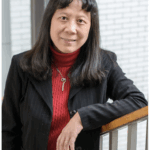
Xihong Lin, biostatistics and statistics professor at Harvard University, and her former post-doctoral fellow, Chaolong Wang, worked day and night to help the world understand COVID-19, what happened in Wuhan, and the steps it took to control the outbreak—including the use of personal protective equipment, which became life-saving.
Prescribing Privacy: Human and Computational Resource Limitations

Jingchen (Monika) Hu and Claire McKay Bowen look at how statisticians and data scientists can improve data privacy and confidentiality in our local—as well as federal—government and why they should.
Stacy R. Lindborg

Stacy R. Lindborg’s interest in statistics came from a strength in mathematics, a biproduct of having an engineer as a father who thought studying math in the summer was cool. After earning her PhD, she took a job working for Eli Lilly & Company. As she began working on data, she learned one of the greatest strengths as a statistician lies in the depth of knowledge of the data. Since then, Stacy has worked on drugs targeting serious neurological and neurodegenerative diseases in addition to cancer, cardiovascular disease, diabetes, immunology, and pain. She has also served in numerous leadership roles, including head of R&D strategy, general product management leadership, and her current role as chief development officer.
Jonaki Bose

Jonaki Bose has been a federal statistician for 27 years. She’s worked in the Education, Transportation, and Health and Human Services departments. Now, as a senior adviser, she works on interesting production challenges, mentors, and performs methodological work with like-minded colleagues interested in furthering the production and use of health statistics.
Tamara G. Kolda
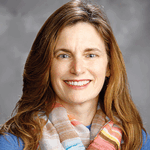
Tamara G. Kolda’s career began at the dawn of the internet, in the pre-Google era. Since then, she has worked at the intersection of mathematics, computing, and data. She was awarded the Alston S. Householder Postdoctoral Fellow in Scientific Computing at Oak Ridge National Labs in Tennessee after completing her doctorate and worked for two decades at Sandia National Labs in California. She has benefitted from the advice and guidance of many statisticians along the way and finds the community to be highly collegial. She helped launch and serves as founding editor-in-chief of the SIAM Journal on Mathematics of Data Science, an academic journal focused on the mathematical and statistical foundations of data science methods.
Ni Zhao

Ni Zhao’s career as a biostatistician followed a convoluted path. When she was a kid, her parents dreamed she would become a medical doctor. She partly had the same wish—she wanted to work toward improving human health and well-being. Yet, she was also fascinated by the beauty of mathematics and didn’t think there was a way to combine math and medicine until she discovered biostatistics. Now, as an assistant professor of biostatistics at The Johns Hopkins University, she collaborates with top-notch researchers and participates in frontline research.