
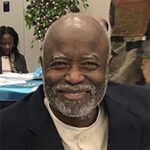
Bill Jenkins began his career as a statistician in the National Center for Health Statistics. He was a biostatistician by day and an activist by night. During his early 20s, he learned of the infamous, unethical Tuskegee syphilis study and worked to expose it. He helped extract an official apology from the federal government and produced a documentary with the survivors. Sadly, he passed away in February 2019 at the age of 73.
Special Features
Charlotte Baidoo

Charlotte Baidoo loved how statistics told a story from data when she was in high school and, while she was an undergraduate, a professor inspired her to pursue a career in biostatistics. It was an opportunity to combine her love of applied math with helping others. Now, she aids the development of medicines to transform patient’s lives. A child of Ghanaian immigrants, she is also passionate about inclusion and diversity and co-leads EMBRACE, GSK’s first multiethnicity-focused employee resource group.
Neal Jeffries
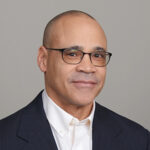
Even though Neal Jeffries’s father was a high-school math teacher, he studied only enough mathematics to earn a degree in economics. However, while working as a policy analyst, he realized statistics was necessary to critically evaluate the data that provides the basis for sound public policy—and that understanding led him to want a formal statistics education. Now, at the National Institutes of Health, Jeffries’s work involves advances in treating sickle cell anemia by expanding the pool of those who can receive curative stem cell transplants and developing new avenues of therapy.
Amanda F. Mejia

Amanda F. Mejia started with limited financial resources at her disposal, but pursued scholarship and fellowship opportunities and earned her master’s as an industrial engineer. She soon discovered she wanted to learn more advanced analytical techniques and work toward a positive societal impact, so she returned to graduate school. As a professor today, she strives to emphasize the “why” of statistics before the “how” and to bring research problems into the classroom.
Stephanie S. Shipp

Stephanie started out wanting to be a lawyer, but quickly found that economics and statistics were what she preferred. Upon graduation, she applied for and accepted a full-time job at the Bureau of Labor Statistics and built on a federal career from there. Currently, she is developing an interdisciplinary team of statisticians and social and behavioral scientists to create and advance data science for the public good.
Jeri Mulrow
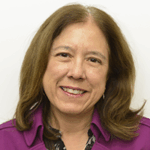
Jeri Mulrow turned in her first statistics book after the semester thinking it was boring. Her college adviser insisted she take more statistics classes, however, including regression, analysis of variance, and design of experiments. She was hooked after that. Today, Mulrow has more than 30 years of experience in applied statistics, working in various occupations and for several federal agencies. She and her husband recently set up a scholarship fund in statistics and data science at Colorado State University, their alma mater.
Laura Hatfield
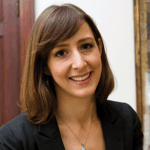
Laura Hatfield grew up in Kansas City, Missouri, as a classic nerdy kid interested in math and science. She began college on a pre-med route, but while doing medical research at Johns Hopkins, she learned she wanted to design studies and analyze data. After several years immersed in health policy research, she co-founded the Heath Policy Data Science Lab with Sherri Rose at Harvard.
Emily H. Griffith
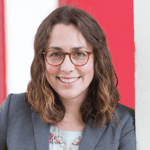
Emily Griffith took statistics in high school to avoid taking a “real” math class. Unfortunately for her plan to avoid math, she fell in love with statistics and ended up finishing college with a degree in statistics and a minor in math. She eventually earned her PhD, completed a postdoc at the Patuxent Wildlife Research Center, and then worked as a survey statistician for the FBI. She was recently named director of the North Carolina State University’s Statistical Consulting Core.
Karen Bandeen-Roche
Karen Bandeen-Roche was inspired by her dad’s life as a NASA scientist and studied mathematics in college and graduate school. She wasn’t exposed to statistics until she attended Cornell and it was there, while mentored by David Ruppert, that she found joy in analyzing data. She now fosters trainees and co-founded a National Institutes of Health–funded training program in the epidemiology and biostatistics of aging.
Polly Phipps

Polly Phipps fell in love with statistics when, as a student, she designed and carried out a probability survey from beginning to end. She trained as a survey methodologist and joined the federal government in the late 1980s. Ultimately, she developed tools to evaluate quality at early and late stages of questionnaire development and put into place a model for instrument design that incorporated qualitative and quantitative methods.