

Cynthia Rudin became interested in machine learning because she wanted to predict the future. She is now associate professor of computer science, electrical and computer engineering, and statistics at Duke University and directs the Prediction Analysis Lab. In 2015, she was named one of the “Top 40 Under 40” by Poets and Quants and one of the 12 most impressive professors at MIT by Businessinsider.com.
Special Features
Nancy L. Geller

Nancy Geller’s interest in biostatistics developed at Memorial Sloan-Kettering Cancer Center and, more recently, at the National Heart, Lung, and Blood Institute. Currently, she leads a group writing many papers in biomedicine and biostatistics.
Karen Kafadar

Karen Kafadar had the great fortune to heed the council of her master’s adviser, Bradley Efron, and earn her PhD in statistics. It was during her studies she learned from some of the best, including John Tukey. Her career is living proof of the influence others can have on a career. Besides her service to the ASA, she has worked in applications such as forensic science and randomized cancer screening trials.
Nancy Potok
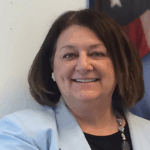
Nancy Potok couldn’t decide if she wanted to be a forest ranger or a librarian when she grew up. Eventually, it was her love for reading that led to an interest in research, analysis, and data. She has since worked as a statistician for the public, private, and non-profit sectors and has experience in all three branches of the federal government—including being the first female deputy director at the US Census Bureau.
Amanda L. Golbeck
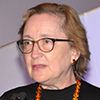
Amanda Golbeck was a first-generation college student, who attended Grinnell College on scholarships. It was at Grinnell she taught herself how to conduct a cluster analysis using SPSS, analyzed the results, and became hooked on quantitative research. She earned her graduate degree and studied a broad array of subjects—finally settling on biostatistics. In 2017, she authored a book on the life and work of Elizabeth Scott: Equivalence: Elizabeth L. Scott at Berkeley. It includes a microhistory of Scott’s use of statistics to promote the status of women in science.
Stephanie C. Hicks
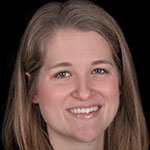
Stephanie Hicks began her college career majoring in chemical engineering but learned that what she loved about chemistry was mathematics. Currently, she is an assistant professor in the department of biostatistics at Johns Hopkins Bloomberg School of Public Health and co-founder of R-Ladies Baltimore, a local chapter of a global organization to promote gender diversity in the R programming community. She is also working on creating a children’s book about women in statistics and data science.
Aarti S. Shah

Aarti Shah began her tenure at Eli Lilly in 1994 as a senior statistician and rose among the ranks to become senior vice president and chief information officer. She is accountable for setting the company’s strategic direction so it can deliver on its mission to make medicines that help people live longer, healthier, and more active lives. In 2016, she was named one of the “Fierce Women in Biopharma” by Fierce Pharma.
Celebrating Women in Statistics and Data Science 2019
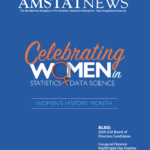
In honor Women’s History Month, we are once again celebrating more than 20 ASA women who work in statistics and data science. We have also included some trailblazers. These accomplished women were chosen because they inspired and influenced other women in their field. Read their biographies and find out why they chose statistics, who influenced them, and what they have accomplished.
Dionne L. Price
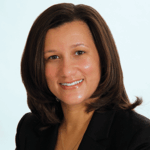
After being awarded a scholarship to Norfolk State University, Dionne Price earned a summer internship at the National Institute for Neurological Disorders and Stroke. It was there she fell in love with biostatistics. Currently employed at the US Food and Drug Administration, her statistical expertise contributes to ensuring the efficacy and safety of drugs and therapeutic biologics for the public.
Simone Gray
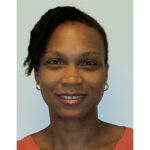
Simone Gray grew up on the island of Trinidad and enjoyed being challenged by mathematical problems. After graduating from the University of Miami, she became aware of the critical shortage of math and science teachers in high schools across the US and became a tutor and mentor. Recently, Simone was the co-chair of the Fostering Diversity in Biostatistics Workshop hosted by the Eastern North American Region of the International Biometric Society at JSM.