
The Conference on Statistical Practice in February included a panel session on data-driven leadership featuring Kimberly Sellers from North Carolina State University and Talithia Williams from Harvey Mudd College, two outstanding African American female leaders in statistical science.
Emma Benn
Participation High for StatFest 2022
The ASA’s Committee on Minorities in Statistics held its 22nd annual—and third virtual—StatFest on September 17. The virtual conference hosted high-school, undergraduate, and graduate students.
Suzanne Thornton

Suzanne Thornton’s interest in statistics blossomed when she took her first course in college. While attending JSM, she discovered a program covering interesting research and topics that she, as a queer woman, had never felt welcome to discuss with her predominantly straight, male instructors. Now a professor of statistics at Swarthmore, she works on ways statistics education can be modernized and brought to a wider population and ultimately increase the diversity of the field.
Significance Considers Francis Galton’s Legacy
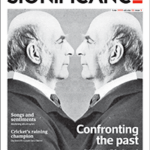
The June issue of Significance is out in digital format and focuses on the legacy of Francis Galton, statistical pioneer and eugenicist. How should we best commemorate Galton’s statistical achievements while not downplaying or overlooking his disturbing views on race?
ASA Task Force on Sexual Harassment and Assault Provides Summary Report
In an effort to proactively address issues around sexual misconduct and gender discrimination, the ASA Board of Directors approved the formation of the Task Force on Sexual Harassment and Assault at their November 2017 meeting and appointed members from a cross-section of the ASA membership. This is a summary of the task force’s findings.
#Success! WSDS a Celebration of Knowledge Once Again
Approximately 400 WSDS participants had the opportunity to engage with colleagues during concurrent sessions, panel discussions, and speed sessions. Once again, the scope and quality of the presentations were incredible.
Emma Benn

Emma K. T. Benn questioned why racial/ethnic minorities were not adequately represented in the field of biostatistics. Eventually, she co-founded the BEST Diversity Program, a summer program to expose under-represented minorities, economically disadvantaged students, and students with disabilities to biostatistics and its applications to cardiovascular research and public health more generally.