

The December deal to fund the US government for the current fiscal year included an increase of 14% for the National Science Foundation and 6% for the National Institutes of Health, along with double-digit percent increases for several statistical agencies. Released in March, the president’s requested budget for fiscal year 2024 (FY24) also has favorable increases for the agencies but will face the new Republican majority in the US House of Representatives, where there is a desire to reduce federal government spending to FY22 levels.
National Center for Science and Engineering Statistics
Statistics, Biostatistics Degree Growth Continued in 2021
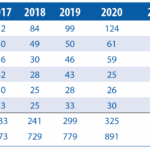
The number of master’s degrees in business statistics awarded annually increased from 37 in 2010 to nearly 3,000 in 2021, paralleling the growth in bachelor’s and master’s degrees in statistics and biostatistics over the last couple decades. Similarly, the number of universities awarding the business statistics degree increased from 4 to 55 in the same period, according to the latest preliminary data release for 2021 degree completions from the National Center for Education Statistics.
Biden Administration’s First Budget Request Favors NIH, NSF; Flat Funds Education, Energy, Health, Justice Statistics

The Biden administration’s fiscal year 2022 (FY22) budget request sends a strong signal for its support of research funding, proposing 20 percent increases for the National Institutes of Health and National Science Foundation. Many of the federal statistical agencies also see strong support through increases of 5–10 percent.
State of the Science and Engineering Data Infrastructure: National Center for Science and Engineering Statistics

Three experts discuss the National Center for Science and Engineering Statistics, which provides data on science and engineering enterprise; collects essential data on STEM education; provides research and development activities, funding, and infrastructure; and supports data innovations.
ASA, COPAFS, Partners Urge Bolstering of Federal Statistical Agencies

Federal statistics have undergirded our democracy, society, and economy since the nation’s founding. Even as their importance has increased over the centuries—especially recently with the focus on evidence-based policymaking—the agencies producing the data have been neglected, lost important autonomy and statutory protections, and been pushed deeper into the federal bureaucracy.
FY21 Federal Budget Finalized
![Figure 1 shows the budgets of the seven mid-sized statistical agencies normalized to their FY09 levels, along with the GDP deflator to account for inflation. Budget restructuring for ERS in FY15 and ORES in FY19 are accounted for in the graph to allow for comparison over this time period. One-time moving costs in FY16 for BEA are also omitted. [Key: BEA, Bureau of Economic Analysis; BJS, Bureau of Justice Statistics; BTS, Bureau of Transportation Statistics; ERS, USDA Economic Research Service; NCSES, NSF National Center for Science and Engineering Statistics; ORES, Social Security Administration Office of Research, Evaluation, and Statistics; SOI, IRS Statistics of Income Division]](https://magazine.amstat.org/wp-content/uploads/2021/02/FY_Figure1_-150x150.jpg)
The NIH, NSF, and several federal statistical agencies received increases, but many are facing fiscal challenges after years of purchasing power loss.
Large Budget Increases for Agency Survey Mask Budget and Staff Challenges
ASA Science Policy Director Steve Pierson responds to a critique of his April Amstat News article about the federal statistical agencies’ FY20 budgets.
How (In)Visible Is Science in ASA?
John Gardenier says an April Amstat News article needed more information about the FY20 budget for the National Center for Science and Engineering Statistics.
Meet Emilda B. Rivers, Director of the National Center for Science and Engineering Statistics

Emilda Rivers directs NCSES, the principal statistical agency housed as a division within the National Science Foundation’s Social, Behavioral, and Economic Directorate. We asked her why this position appealed to her, what she views as the biggest challenges facing the agency, and what she believes are the agency’s greatest accomplishments.
FY17 Requests for NIH, NSF, Federal Statistical Agencies Largely Positive
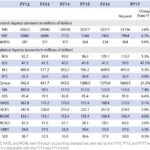
President Barack Obama’s requested budget for Fiscal Year 2017 maintains his record of proposing generally healthy increases for the NIH, NSF, and many federal statistical agencies, but realizing increases of any amount will be challenging.