

The Biden administration’s fiscal year 2022 (FY22) budget request sends a strong signal for its support of research funding, proposing 20 percent increases for the National Institutes of Health and National Science Foundation. Many of the federal statistical agencies also see strong support through increases of 5–10 percent.
NIH
FY21 Federal Budget Finalized
![Figure 1 shows the budgets of the seven mid-sized statistical agencies normalized to their FY09 levels, along with the GDP deflator to account for inflation. Budget restructuring for ERS in FY15 and ORES in FY19 are accounted for in the graph to allow for comparison over this time period. One-time moving costs in FY16 for BEA are also omitted. [Key: BEA, Bureau of Economic Analysis; BJS, Bureau of Justice Statistics; BTS, Bureau of Transportation Statistics; ERS, USDA Economic Research Service; NCSES, NSF National Center for Science and Engineering Statistics; ORES, Social Security Administration Office of Research, Evaluation, and Statistics; SOI, IRS Statistics of Income Division]](https://magazine.amstat.org/wp-content/uploads/2021/02/FY_Figure1_-150x150.jpg)
The NIH, NSF, and several federal statistical agencies received increases, but many are facing fiscal challenges after years of purchasing power loss.
To Get a PhD or Not to Get a PhD? Part 3

The ASA Committee on Applied Statisticians is giving you the experiences of four statisticians who took different paths after their master’s degrees. This month, Allison Florance explains why she found a master’s degree to be right for her.
Miguel Marino
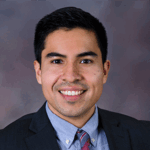
As an associate professor of biostatistics at Oregon Health & Science University, Miguel Marino’s work earned him recognition in 2020 when he was selected by the National Academy of Medicine as an Emerging Leader in Health and Medicine Scholar.
Rajeshwari Sundaram Honored with 2020 Jeanne E. Griffith Mentoring Award

Rajeshwari (Raji) Sundaram was honored June 10 during a virtual ceremony for being exceptionally generous with her time spent mentoring and training staff at all levels.
Neal Jeffries
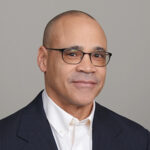
Even though Neal Jeffries’s father was a high-school math teacher, he studied only enough mathematics to earn a degree in economics. However, while working as a policy analyst, he realized statistics was necessary to critically evaluate the data that provides the basis for sound public policy—and that understanding led him to want a formal statistics education. Now, at the National Institutes of Health, Jeffries’s work involves advances in treating sickle cell anemia by expanding the pool of those who can receive curative stem cell transplants and developing new avenues of therapy.
Karen Bandeen-Roche

Karen Bandeen-Roche was inspired by her dad’s life as a NASA scientist and studied mathematics in college and graduate school. She wasn’t exposed to statistics until she attended Cornell and it was there, while mentored by David Ruppert, that she found joy in analyzing data. She now fosters trainees and co-founded a National Institutes of Health–funded training program in the epidemiology and biostatistics of aging.
A Look Back at My Career as a Biostatistician in Aging and Dementia Research

Chengjie Xiong looks back at his 17 years as a biostatistician in aging and dementia research and hopes to see biostatisticians playing a leading role in the design and analysis of this research.
Census, NIH, NSF Among Winners in FY18 Federal Budget

Steve Pierson, ASA director of science policy, breaks down the federal budget and how it will affect research-funded agencies.
The Important Role of the Master’s Statistician in Clinical Trials

Master’s statisticians make invaluable contributions to projects at the Data Coordination Unit, the data coordinating center for several multicenter clinical trials and clinical trial networks.