
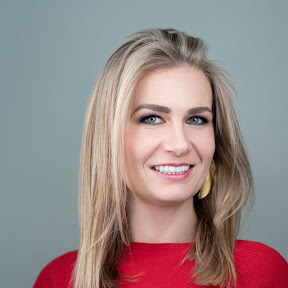
Veronika Rockova is a professor of econometrics and statistics and the James S. Kemper faculty scholar at the Booth School of Business at The University of Chicago. She joined Booth after completing her postdoctoral training in statistics at the Wharton School at the University of Pennsylvania. She earned a bachelor’s degree in mathematics and a master’s degree in mathematical statistics from Charles University in Prague. Subsequently, she pursued a master’s degree in biostatistics at Hasselt University in Belgium and later completed her doctoral degree in biostatistics at Erasmus University in Rotterdam. Her research interests lie at the intersection of statistics and machine learning, with a primary focus on creating innovative decision-centric tools for extracting insights from extensive data sets. She specializes in Bayesian computation, variable selection, high-dimensional decision theory, and hierarchical modeling.
Citation: For pathbreaking contributions to theory and methodology at the intersection of Bayesian and frequentist statistics in the areas of variable selection, factor models, nonparametric Bayes, tree-based and deep-learning methods, high-dimensional inference, generative methods for Bayesian computation; for exemplary service to statistics; and for generous mentorship of students and postdoctoral researchers.
The Committee of Presidents of Statistical Societies’ Presidents’ Award citation recognized Rockova for pathbreaking contributions to theory and methodology at the intersection of Bayesian and frequentist statistics in the areas of variable selection, factor models, nonparametric Bayes, tree-based and deep-learning methods, high-dimensional inference, generative methods for Bayesian computation; for exemplary service to statistics; and for generous mentorship of students and postdoctoral researchers.
What was your first reaction to winning the prestigious COPSS Presidents’ Award?
I was at a black-tie dinner event when I received a phone call from an unknown number. I did not answer, thinking it was spam. I then received a text message from Bo Li saying she had some important news for me. It was not until much later in the evening when it dawned on me that it might be COPSS. But this was the last thing I expected. The next day, Bo called me again and I cried on the phone. How could it be me?
What part of your job do you like the most?
The eureka moment of discovery. I like the confirmation of my intuition when research ideas work out the way I had anticipated. The best part is sharing such moments with my collaborators and students. Working alone is not nearly as much fun. I enjoy exchanging ideas and mentoring. The progress and gratitude of my students/postdocs are the most rewarding.
What advice would you give young people entering the profession as PhD students and assistant professors?
I would advise them not to follow any advice. Just be yourselves and develop your own personal brand and style. Do not try to follow in someone’s research footsteps. Create your own path, building on your own ideas despite what others may think.
Who are your most significant mentors? How did/do they impact your career?
My postdoc adviser Edward George has been my academic father. I do not think I would have turned out to be a professional academic if it had not been for him. He believed in me when others did not, including myself. He gave me a postdoc opportunity and provided me with a very encouraging environment. His mentorship included navigating tough academic waters as well as tenure pressure. I am trying to pay it forward with my advisees now. It is so important to be encouraging and to bring out the best in people. Ed taught me that. Besides Ed, my former PhD adviser Emmanuel Lesaffre who gave me my thesis topic “Bayesian Variable Selection.” He triggered my interest in Bayes, advised my master’s thesis in Belgium, and offered me a PhD position.
Why were you drawn to Bayesian statistics?
I took my first Bayesian class at Charles University in Prague while I was studying for my master’s degree in mathematical statistics. That class was taught more as an obligation rather than as an integral component of the statistics curriculum. It was not until my Bayesian course at Universiteit Hasselt in Belgium (taught by Emmanuel Lesaffre) when I started appreciating the intuitive appeal of Bayes. It always felt to me like the most natural way of thinking. I lean towards things I understand more effortlessly. Bayes is still underrepresented, and I am particularly proud of being one of the few Bayesians to have won the COPSS Presidents’ Award. Go Bayes!
How would you describe your statistics journey?
I love statistics. However, my path forward has not always been easy. Initially, I had to face challenges being one of the very few women in a mathematics (statistics) program at Charles University in Prague. I always felt like people, for some reason, did not expect much of me. I remember our mathematical analysis professor in the first semester starting off his first lecture with the statement: “At the end of the semester, most of you won’t be here, especially women.” I internalized this comment by assuming I was not supposed to be there. This feeling has never truly gone away.
Before I left to study for my second master’s degree at Universiteit Hasselt in Belgium, one of the professors in Prague told me, “We hope we won’t have to be ashamed of you,” even though I was a straight A student. I may have looked for an escape and found the field of biostatistics as a viable alternative to mathematics.
At Universiteit Hasselt, and later during my PhD in biostatistics at Erasmus University in Rotterdam (the Netherlands), I felt like I had to overcome social integration challenges because I was born in Eastern Europe. Once again, I felt like people were making assumptions, which I had to try hard to dissolve.
Moving to the US was yet another challenge. I became a US citizen only a few months ago, but my social assimilation is still ongoing. I think the field of statistics (and econometrics) could be a bit less tribal and more open-minded. We are all trying to advance knowledge in the best way we can. I am happy that the Bayesian community quickly adopted me—I felt like I was accepted from the beginning. I do not think I can easily say that about many other academic environments I have been in. I like to think that regardless of who you are and where you come from, talent is universal. In my experience, statistics has a more supportive culture compared to other disciplines (such as economics or econometrics), however I think that there is still an unnecessary elitism with cellophane barriers to entry.
Finally, what are your hobbies/interests beyond statistics?
I have been playing classical piano since I was six and I still take lessons. Music is my creative outlet and a subtle mode of communication. I like that—unlike statistics—playing music involves not only good memory and brain acuity, but also emotional connection and expression. I feel more human when I play the piano. I am also an avid tennis player and a golf neophyte.
More about Veronika Rockova
Rockova was born in a small town in Czechoslovakia between Prague and Vienna. Growing up in a village of 1,600 people, she attended a small high school (there were two classes of 24 people each year) from which a prominent academic career would seem unlikely. Despite the odds, she was admitted to the top Czech program in mathematics at Charles University in Prague, where she pursued a degree in general mathematics. After several introductory probability and statistics classes, she realized she was predestined for the “mathematics of chance.”
Completing a bachelor of science degree in mathematics served as a springboard for her further studies (a master’s degree in mathematical statistics at Charles University and a master’s degree in biostatistics at Universiteit Hasselt). Collaborating with the department of hematology on acute myeloid leukemia research while she earned her PhD in biostatistics at Erasmus Medical Centre in Rotterdam, she developed an interest in applied statistics which led her to the main thrust of her doctoral thesis; methodological research in Bayesian variable selection. During her postdoctoral training at the Wharton School at the University of Pennsylvania, she deepened her interest in the development of new Bayesian methodology for dimension reduction (including factor analysis and sparse linear models).
After joining the Booth School of Business at the University of Chicago as an assistant professor in 2016, she broadened her research agenda to include theoretical aspects of popular Bayesian machine learning methods (such as Bayesian CART and BART). Leveraging machine learning for Bayesian computation has become a major theme in her more recent work. She was recognized by the National Science Foundation’s Faculty Early Career Development Program (CAREER) Award in 2020, the same year she was promoted to associate professor. In 2022, she became a full professor and was recognized again in 2023 with the COPSS Emerging Leader Award.
In her work, Rockova continues to champion Bayes on various fronts: (1) tackling computational challenges by developing new, faster algorithms; (2) providing much needed theoretical justifications; and (3) creating new methodology using the most current machine learning constructs. She currently serves on the editorial boards of the Annals of Statistics, Journal of the American Statistical Association, and the Journal of the Royal Statistical Society: Series B. At the University of Chicago, she participates in several initiatives that promote the role of statistics in society (Centre of Applied AI at Booth, Committee on Quantitative Methods in Social, Behavioral and Health Sciences, Data Science Institute). She is also an affiliate faculty at the department of statistics at The University of Chicago.
Leave a Reply