
Beth Ann Griffin, Lane Burgette, Staci Hepler, Sarah Lotspeich, and Mousumi Banerjee
Photos by Staci Hepler and Sarah Lotspeich

The meeting kicked off with a welcome from Madhumita (Bonnie) Ghosh-Dastidar, 2024 ASA president and senior statistician at RAND. This was followed by the opening keynote from Whitney Robinson from Duke University School of Medicine. Robinson discussed the big mistakes researchers can make in causal inference, with solutions including thinking about the nature of the problem incorrectly and letting the data drive the research. She argued that recognizing these patterns and emulating creative, interdisciplinary work offer opportunities to innovate and sharpen work.
Serving as the discussant, Susan Paddock—executive vice president and chief scientist at NORC—encouraged attendees to continue engaging in efforts to ensure data is measured correctly and addressing well-specified problems using high-quality research paradigms.

Serving as discussant, Elizabeth Stuart—chair of biostatistics at Johns Hopkins University Bloomberg School of Public Health—reflected on how the role of methodologists is changing and how we need to find ways to ensure people understand the value statisticians bring to research.
Between the keynotes was a “meet the editor” session that brought together editors from medical and applied statistics journals to share their experiences, discuss the characteristics of successful submissions, and define what researchers should take care to do (and not do) as they seek to disseminate their work in high-impact applied and methods journals. The editors included Elizabeth Stuart from JAMA Health Forum, Layla Parast from Medical Care, Nandita Mitra from Observational Studies, and Beth Ann Griffin from Annals of Applied Statistics.
ICHPS also included a special town hall session titled “Health Policy and Health Equity for Local Populations.” This session highlighted talks by two speakers from the University of California at San Diego who are performing research at the intersection of health policy and health equity for residents in and around the San Diego community. Elena Martinez, a professor in the department of family medicine and public health, highlighted findings and insights from a recent pragmatic randomized trial to increase colorectal cancer screening among low‐income and minoritized populations in San Diego County. Aladdin Shadyab, associate professor of public health and medicine, discussed the design of a future study to assess a comprehensive health care intervention to reduce health care costs and improve health outcomes in older adults at risk of nursing home admission and homelessness.
There were several invited and contributed sessions covering diverse topics centered on this year’s theme of “Statistical Innovations to Improve Health Equity.” The 15 invited sessions focused on topics including methodological challenges such as complex study and survey designs, measurement error, data, and fusion. Many areas of real-world applications were also discussed, from the overdose epidemic to mental health to LGBTQIA+ health.
The conference featured 11 training workshops on a diverse range of topics, including heterogeneous treatment effect estimation, record linkage, Bayesian tree ensembles and nonparametrics, complex survey data, policy intervention design and evaluation, and power analysis with planned error control for multiple outcomes. Additionally, the Alan Alda Center for Communicating Science offered a workshop on effective communication.
The Long-Term Excellence Award is given to an individual who has made significant contributions to health care policy and health services research through mentoring and/or service that advances the aims of the Health Policy Statistics Section. This year’s award recipient was Lisa Lix, a professor of biostatistics in the department of community health sciences at the University of Manitoba, Canada. Lix is a tier 1 Canada research chair in methods for electronic health data quality and director of the data science platform in the George & Fay Yee Centre for Healthcare Innovation at the University of Manitoba. The award recognizes her multifaceted talents and contributions, dedication, leadership, and research acuity but, more importantly, her generosity in mentoring, collaboration, and service to further the mission of the Health Policy Statistics Section.
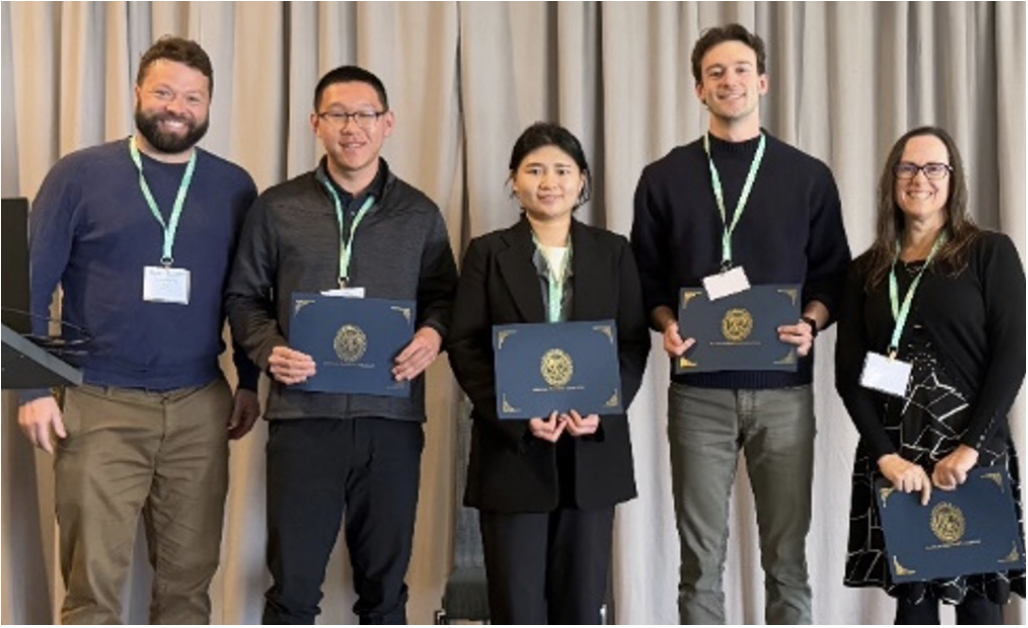
ICHPS also provides learning and networking opportunities for those new to health policy. In addition to honoring five students with travel awards, the conference provides a venue for students and developing scholars to network and engage with leading methodologists via poster sessions and a student networking event. The student speed networking event brought together dozens of students and mentors drawn from academia, government, and industry. Mentors shared their candid experiences and thoughts about career development. Students received a reduced conference registration rate, and all workshops were free for them.
The next ICHPS is expected to take place in 2027.
Leave a Reply