
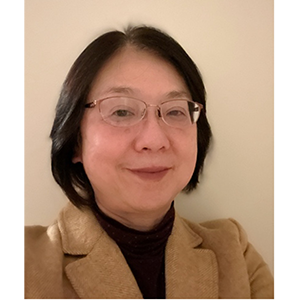
 Professor, Johns Hopkins Bloomberg School of Public Health Department of Biostatistics
Mei-Cheng Wang grew up in Taiwan, a small island home to numerous higher education institutions offering education in mathematics and science. She earned her BS in mathematics from one such university—National Tsing Hua University.
Wang studied statistics at the University of California at Berkeley from 1981–1985. In the 1980s, the statistics department at UC Berkeley boasted a group of world-renowned statisticians, most of whom focused their research on advancing probability or statistical theory. However, Wang thought the quality of teaching in the department did not match its research reputation and therefore compelled students to develop independence. This proved beneficial for those who were able to persevere and graduate, and Wang counts herself among them, as this experience prepared her for her later career.
After completing her PhD, Wang joined the department of biostatistics at Johns Hopkins University as an assistant professor and has remained a faculty member there to this day. With a limited background in public health, she devoted considerable time and effort in her earlier years to adapting to an environment rich in complex challenges related to public health and medicine. She was one of the first to study truncation, length-bias, and prevalent sampling and has contributed substantially to analytical methods for recurrent marker process data with applications to prospective follow-up or longitudinal studies.
Wang’s scientific collaborations include considerable experience in aging studies and Alzheimer’s Disease, HIV-AIDS, and cancer research. She also leads a survival, longitudinal, and multivariate data working group. Established in 1997, it has one of the longest histories in the department of biostatistics at Hopkins.
Teaching is a vital component of Wang’s academic career. She has taught foundational courses such as probability, statistical theory, and survival analysis at various levels, as well as a specialized course on prediction and precision medicine. In addition, she has served as a thesis adviser to more than 20 PhD students, many of whom have gone on to become distinguished scholars, biostatisticians, or data scientists.
Wang is an elected fellow of the American Statistical Association, an elected member of the International Statistical Institute, and an elected fellow of the Institute of Mathematical Statistics.
Leave a Reply