
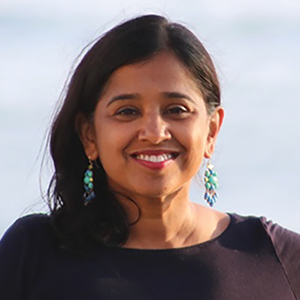
I attended the department of statistics at Penn State University. My thesis adviser was J. L. Schafer, whose methodological research was motivated by real-world problems often in the federal government (e.g., National Center for Health Statistics, Census Bureau). My dissertation focused on extending the multiple imputation paradigm to address both measurement error and missing data at once in the National Health and Nutrition Examination Survey, collected by NCHS. This experience increased my desire to apply my skills to solving real problems. Upon graduation, I joined RAND, a nonprofit organization focusing on research and analysis to inform policy and decision-making. Many of the problems I work on today are centered on improving public health.
I joined the American Statistical Association as a graduate student. I recognized the Joint Statistical Meetings offered a unique opportunity to present my research, get feedback, and develop public speaking skills while building a network of professional contacts. I was also amazed by the breadth of statistics on full display at JSM. Through the years, I have met smart, generous colleagues and learned about new methods and applications. I also participated in the job fair at JSM.
My entry to the association in a meaningful way was through the ASA Health Policy Statistics Section. I joined HPSS right after I started working at RAND primarily in health policy. This section was a perfect fit for my professional role. I started by organizing sessions for the HPSS program. My first official position was to serve on the International Conference on Health Policy Statistics scientific planning committee, and then I ran for HPSS program chair. As JSM program chair, I worked on the program and helped re-energize the HPSS mixer with Anirban Basu (HPSS program chair-elect).
My highest leadership position has been as the 119th president of the ASA in 2024. I am serving a three-year term on the ASA Board of Directors. This experience has provided me with tremendous growth and opportunity. I have gained valuable leadership skills through decision-making, communication, and community building. Reflecting on my long association with the ASA, I have received more than I have given.
Thinking back to a specific experience, I had a wonderful six years serving on the Committee on Women in Statistics with Dalene Stangl as the chair. The meetings were collegial, productive, and supportive. One of my contributions was to reproduce an earlier report (by Mari Palta of the University of Wisconsin) about gender balance in ASA activities that demonstrated leadership or recognition. Activities included serving on the ASA Board, editorial boards, and JSM program committee, as well as being JSM plenary speakers. We also looked at the gender balance among ASA award recipients. We learned some interesting things. For example, none of the plenary speakers during JSM 2012 were women. Also, the percent of Fellow nominations for women was higher in years when CoWiS took extra steps to encourage nominations. And, if nominated, the chance of being elected an ASA Fellow was similar for men and women.
I’ll never forget the moment former ASA president Nancy Geller stopped me at the Joint Statistical Meetings to say the report was discussed at the board meeting and to thank me for it. I was both honored and flattered to be speaking with the then-ASA president—and utterly surprised that this report (including simple data analysis) had generated buzz. Fast forward to JSM 2024 in Portland, Oregon … I had the honor of addressing the ASA as its president and the number of female plenary speakers was five (out of nine). As a society, we have made progress in improving gender balance across activities. And life is such a mystery—you never know what awaits you.
This series features ASA members who share their ASA stories. Our mission is to collect authentic and meaningful accounts of member experiences. If you have a story you would like to share, email the ASA’s marketing project manager, Kim Gilliam.
Leave a Reply