
Stephanie DeHart, Anne Driscoll, David Edwards, and Theresa Utlaut
The 66th Annual Fall Technical Conference, themed “Harmonizing Quality, Statistics, and Data Science,” took place October 9–10, 2024, in Nashville, Tennessee. The conference provided a forum for professionals, academics, and students to explore advances and applications connecting academic knowledge with industry practices. With a strong focus on collaboration and knowledge-sharing, FTC continues to be an event for bridging the gap between academia and challenges in industry.
The conference featured a comprehensive program, beginning with short courses offered the day prior to the main conference. The program featured an array of presentations and panel discussions, covering topics such as artificial intelligence, quality by design, uncertainty quantification, design of experiments, process control, and machine learning.
The plenary session featured Fred Faltin, the Gerald J. Hahn Achievement Award recipient. His talk examined the evolution of statistics and the shifting role of statisticians in an era in which ‘experimental mathematics’ sometimes overshadows foundational statistical modeling principles.
Former ASA President Madhumita (Bonnie) Ghosh-Dastidar delivered a lunchtime presentation on the critical role statisticians play in interdisciplinary collaborations, emphasizing the importance of maintaining scientific rigor.
Adam Pintar from the National Institute of Standards and Technology delivered the Youden Address, highlighting Youden’s extensive contributions to the National Bureau of Standards and its lasting impact on its successor organization, NIST.
To add local flavor to the event, Kevin White reflected on his career at Eastman Chemical, one of Tennessee’s largest employers, and the history and evolution of quality and statistics within that organization.
A panel discussion, “How to Attract and Prepare Students for Careers in Industrial Statistics,” included experts from both academia and industry: Maria Weese (Miami University); Yeng Saanchi (JMP); Peter Parker (NASA); and Kade Young (Eli Lilly & Co.). They shared insights into aligning academic curricula with industry needs, providing strategies to help students develop relevant skills and transition confidently into the workforce.
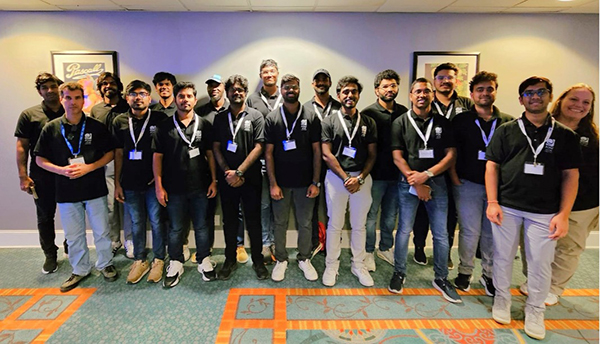
The conference also saw student participation, thanks to the support of FTC sponsoring organizations and the coordination efforts of faculty sponsor Marietta Watson. A contingent of students from the University of Central Missouri attended the event, bringing energy and valuable perspectives. Overall, students highlighted the following several key takeaways from the conference:
- Learning & Professional Growth: Exposure to real-world statistical challenges expanded their knowledge and helped them understand how to apply statistical methods in industry settings.
- Networking & Industry Exposure: The opportunity to interact with professionals from diverse industries allowed them to build connections and engage in meaningful discussions with experts from both academia and industry.
- Professional & Career Development: By learning how to ask insightful questions, engage professionally, and represent themselves and their university effectively, students strengthened their critical thinking skills and gained a clearer understanding of potential career paths in statistics and data science.
Through its program and focus on integration, the FTC bridged the gap between academia and industry. By harmonizing quality, statistics, and data science, the event not only advanced professional knowledge but also played a role in preparing the next generation of statisticians and data scientists for the evolving demands of the industrial sector.
The 67th FTC, themed “Big Data, Big Energy: Innovations in Quality, Statistics, and Data Science,” will take place October 7-9 in Houston, Texas. A new addition is a poster session, which will provide attendees with a platform to showcase their work, gain exposure to cutting-edge research, and engage with others in a more interactive format.
Leave a Reply