

Amherst College recently launched a new statistics department. To learn more, we spoke to Amy Wagaman, professor and chair of statistics at Amherst, about the school’s vision and goals for the department.
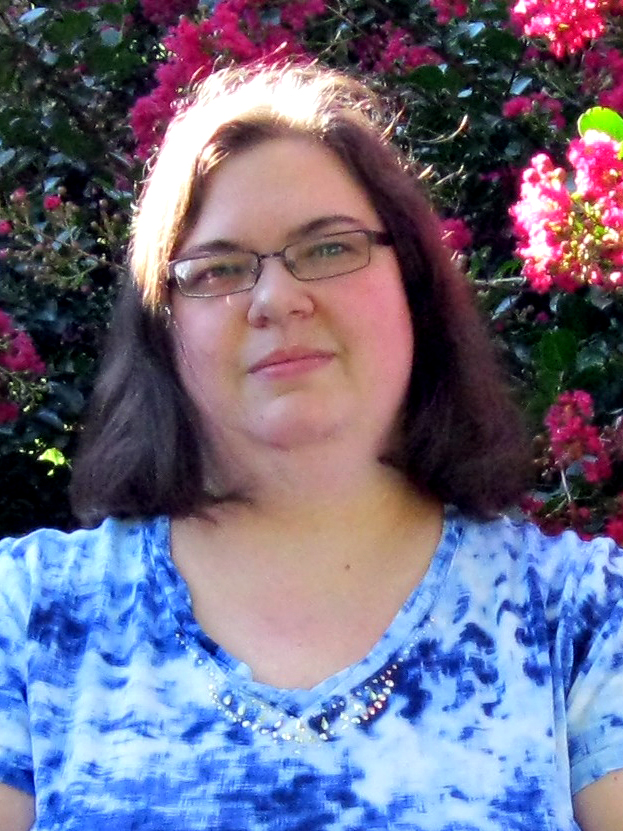
Amy Wagaman
Professor of Statistics and Department Chair of Statistics, Amherst College
What was your primary reason for creating a statistics department?
Functionally, statistics had been operating separately from mathematics for several years, with rare joint department meetings, so this was a natural evolution that formally acknowledged a practical split. Coincidentally, it also came up as a recommendation from a recent external review that suggested the time was right.
What programs do you offer, and what are some of the basic elements of the programs? How were they developed?
Amherst College has an open curriculum and no minors, so we offer, simply, a major in statistics. This became official in 2014, with the first majors graduating in 2015. Students who major in statistics engage in a range of coursework encompassing the fields of statistics, mathematics, and computer science, culminating in a capstone experience. The major was developed slowly over time as we were able to offer more statistics courses.
Students who are interested in engaging with the department can be graders for courses or apply to be statistics and data science fellows. Fellows assist peers by holding drop-in hours for our introductory and intermediate courses and work on a project that often supports an office on campus. For instance, last year’s fellows provided statistical support to our offices of sustainability and advancement. It’s a great opportunity for students wanting to put their knowledge to use.
What were the biggest challenges to establishing the department?
We’ve been fortunate and faced few big challenges, largely due to the careful groundwork laid out over several years before the department was established.
Both departments (mathematics and statistics) had grown over time. It was challenging to keep us together (even finding a room for a department meeting where we would all fit meant using a modest-sized classroom), so a split seemed reasonable from an organizational perspective. In addition, statistics was operating independently already—separate major, separate capstone experience, separate honors/thesis process—for more than 10 years.
Everyone in both departments was onboard with the split, and the college advisory committees were in favor, as well. Additionally, the external review suggested the time had come, so we just had to file the paperwork.
What are you doing to attract and retain diverse students to your program?
Within statistics, we offer multiple pathways into our program. There are two ‘flavors’ of introductory statistics, and students with more advanced preparation (such as a score of 5 on the AP Stat exam) can enter our 200-level courses. We offer a variety of electives to engage diverse student interests, such as STAT 108: Statistical Ethics, taught by Andreas Georgiou and running this fall.
Our fellows program offers peer support for students starting out in our courses, which can make students feel more comfortable taking our classes. Students in our courses often pair their interests in other subjects with their statistical knowledge for course projects, including in their capstone experience.
What advice do you have for students considering data science/analytics studies at a liberal arts college?
Look throughout the curriculum for opportunities to combine statistics/mathematics/computer science/data science and a field of your choice. You can find courses that allow you to engage in statistics/data science in many places. For example, Amherst has data-science-related courses in astronomy and political science, and students do statistical analyses in biology, psychology, and even anthropology classes in addition to our offerings in statistics and computer science.
Be sure to build your foundational skills (mathematical preparation, statistical knowledge, computational expertise) and embrace opportunities to apply those skills to issues that matter to you.
Visit the department website for more information.
Leave a Reply