

On December 5, the University of Nebraska Board of Regents voted 7–1 to eliminate its department of statistics, resulting in likely all faculty losing their positions. The board of regents also voted to eliminate three other departments on the same day. We wanted to find out more about this change and reached out to Chris Bilder and Susan Vanderplas, who are statistics professors at the University of Nebraska-Lincoln, to learn more about the elimination:
Can you describe the role and structure of the statistics department prior to the proposed closure?
The department of statistics had 13.4 faculty positions. Its academic home at the University of Nebraska-Lincoln was in the Institute of Agriculture and Natural Resources, which is equivalent to a college of agriculture at other universities. Many of the faculty performed consulting and collaborative research with other IANR faculty as part of their appointments. Faculty also supported the research for the whole university, along with having their own statistical research programs. Since the founding of the department in 2003, we have offered master’s and doctoral programs in statistics. We started our first undergraduate major in statistics and data analytics in 2022. This was followed with a data science major (joint with the department of mathematics and the school of computing) in 2023.
What metrics were used to evaluate the department? You mentioned on LinkedIn that the decision was based on what you described as ‘flawed data.’ What were the main issues you saw with that analysis?
The university administrators’ analysis was based on a set of research and instructional metrics. The research metrics were relatively standard assessment measures—like number of papers, awards, citations, and books for each faculty member—and then aggregated by department. However, the data was incomplete. One of us, Chris, identified four of 14 publications, four of 7 awards, 911 of 1,264 citations, and one of one book were omitted for him over the specified time frames. Administrators deemed many types of research contributions as not important enough to include in the data. Contributions noteworthy to mention for statisticians include co-investigator or consultant for grants, R packages, and Shiny apps.
The instructional metrics included measures like number of student credit hours, first-year retention, and graduation rate. This last metric was particularly problematic for our department. The actual calculation involved a ratio of the number of graduations in the 2023–2024 academic year to the total number of majors across all degree programs. This metric was then converted to a z-score. No attempt was made to account for expected time-to-degree completion (e.g., BS, MS, and PhD programs each take different lengths of time). Our undergraduate majors did not contribute to the numerator (number of graduates) of the ratio but did contribute to the denominator (number of majors). The reason was simple: Our four-year undergraduate programs had not been around for four years. The end result was a numerator much smaller than the denominator and a z-score value of -1.38. While this would still not be an unusual value for statisticians, administrators created their own definition of an outlier:
Outlier for this purpose defined as +/-1 z-score – may not align with a statistical definition
As a result, our department was flagged as having an “instructional outlier.”
Administrators used z-scores with all research and instructional metrics to compare departments. Any z-score that was negative ended up being flagged as a sign of “under performing” for a department. In total, eight of our 16 metrics were negative, with all but the graduation rate metric within ±1 of 0. While these metrics are not necessarily independent of each other, their values would still generally not be alarming to statisticians. Much, much more can be said about these z-scores, but it would fill up the entire issue of Amstat News. We intend to write a paper detailing these problems.
The metrics failed to include some of the university’s most prestigious awards. Erin Blankenship, statistics faculty member since 2003, has an Outstanding Teaching and Instructional Creativity Award. This award is given to the best teacher across the 50K-student University of Nebraska system, but it was not important enough to be included in any metric.
We were informed about our proposed elimination on September 11. On September 16, we began communicating with administrators about problems we were finding with the data and metrics. We soon learned they either did not believe us or did not want to believe us. This led us to request multiple times in October that they obtain an external, independent evaluation by statisticians, but they would not respond to our requests directly. We even went as far as organizing a campus-wide seminar in November to discuss the metrics, where both the administrators and statistics faculty would participate. The administrators declined to participate. We presented the seminar, ourselves, with approximately 200 members of the UNL community in attendance. A recording of this seminar and associated materials are available at SaveOurStats.com. This webpage also provides recordings of an additional presentation given by us and our testimony at three University of Nebraska Board of Regents meetings.
What surprised you most about this process?
After being notified about the proposed elimination, administrators we previously had good working relationships with became adversarial to us. We were no longer on the same team. A common phrase we heard from administrators was “based on the advice of counsel.” They provided little help to find alternatives to elimination. We were told to find $1.75M ourselves, which was the amount administrators calculated would be saved per year by the department’s elimination (the dollar amount is disputed by us). We actually did find this money through savings and revenue generation, but these solutions were largely ignored. The Department of Educational Administration, another eliminated department, proposed a plan to save all departments, but this was ignored, as well.
UNL has eliminated departments and laid off tenured/tenure-track faculty in the past. Its bylaws and related procedures attempt to make the process fair and transparent. However, for this round of eliminations, administrators did not conduct the process in good faith and did not abide by the spirit of the rules and principles of shared governance. For example, administrators are required to provide information used in the process to the affected departments before public release of the proposal, ensuring time for corrections and explanations and an opportunity to jointly explore alternatives. The department of statistics was notified less than 24 hours prior to the elimination plan becoming public. And this notification was without the data needed to provide any meaningful feedback. Given the faulty data and analyses eventually uncovered by the faculty, a good-faith adherence to the rules could have dramatically changed the course of events.
How is the situation affecting current students? What risks or disruptions are they facing?
Our students are devastated. This is particularly difficult for new students, especially international students who just arrived here in August. Students who recently learned they passed the PhD qualifying exam went from an extreme high to the lowest of lows in just a few months. When our first cohort of undergraduate majors graduates this academic year, it will be difficult to celebrate because it may be our last.
While administrators provide assurances that all current students will be able to finish their degree programs, there are still no “teach-out plans” available for these students. Because faculty are looking for new positions, few statistics faculty likely will be available to teach them after May. Administrators have openly said they may need to rely on emeriti or nonstatistics faculty to teach statistics courses. We doubt this will work.
What has this meant, professionally, for you?
Faculty are heartbroken by this news, especially because a misuse of statistics played a critical role. Below are our individual responses:
Chris: I am a native Nebraskan. I came back to Nebraska in 2003 when the department was formed so I could help reverse the brain drain that has afflicted our state for generations. I was very proud to be a Husker. Now, what has happened is like being exiled from my family.
Susan: I came to UNL from Iowa State and was encouraged to go up for tenure early. I was promoted in August of 2024 and got an NSF [National Science Foundation] CAREER award in August of 2025. I was planning to spend the rest of my career at UNL, and then UNL told me I wouldn’t have a career here. I fell in love with this place—a department that took a big tent view of statistics but was small enough that we didn’t have competing factions; administration that was supportive and helpful; and an undergraduate program that I helped build and placed a lot of value on statistical computing, collaboration, and communication. Eliminating the department and our programs felt like the administration was strangling a baby in the cradle. I developed five new courses for this major, with no course releases or summer pay, and all that work has been thrown away.
What gives you hope about the future of statistics, despite this challenge?
Statistics and data science are growing everywhere else. Programs that help students develop both statistical sophistication and the ability to communicate results are more important than they ever have been.
What can individual ASA members and departments do right now to support affected faculty and students? Who can they contact if they have jobs, research collaborations, or mentoring support?
We are incredibly grateful to everyone who participated in a letter-writing campaign that overwhelmed our administrators with the sheer volume of support and the eloquence of the arguments. Supporters submitted more than 450 comments through an online form and another 100 pages of direct emails. These comments and emails buoyed our spirits in an otherwise devastatingly dark period.
For those who can provide a new home for our students, please contact our undergraduate (Erin Blankenship) and graduate (Souparno Ghosh) committee chairs. Our faculty are also on the job market. If their CV comes your way, please give it a look. These faculty are both excellent teachers and researchers.
If your institution is looking for a ready-made statistics undergraduate program in a box, please reach out—we can provide not only our program but also qualified faculty who have designed and taught it for a few years. This program was very highly lauded in our last academic program review that was performed by statistics faculty from other Big 10 universities.
Faculty are ready to take their research elsewhere. In addition to Susan’s NSF CAREER grant, faculty are principal investigators for other grants, including NSF DMS [Division of Mathematical Sciences] and NIH R01 [National Institutes of Health Research Projects]. Our department as a whole is at the 76th percentile for overall research productivity when compared to other statistics programs, according to the company that provided administrators with research metrics. This overall research productivity level puts us right in the middle of other Big 10 Statistics programs. With UNL’s stated goal of rejoining the Association of American Universities, eliminating a highly ranked department makes no sense.
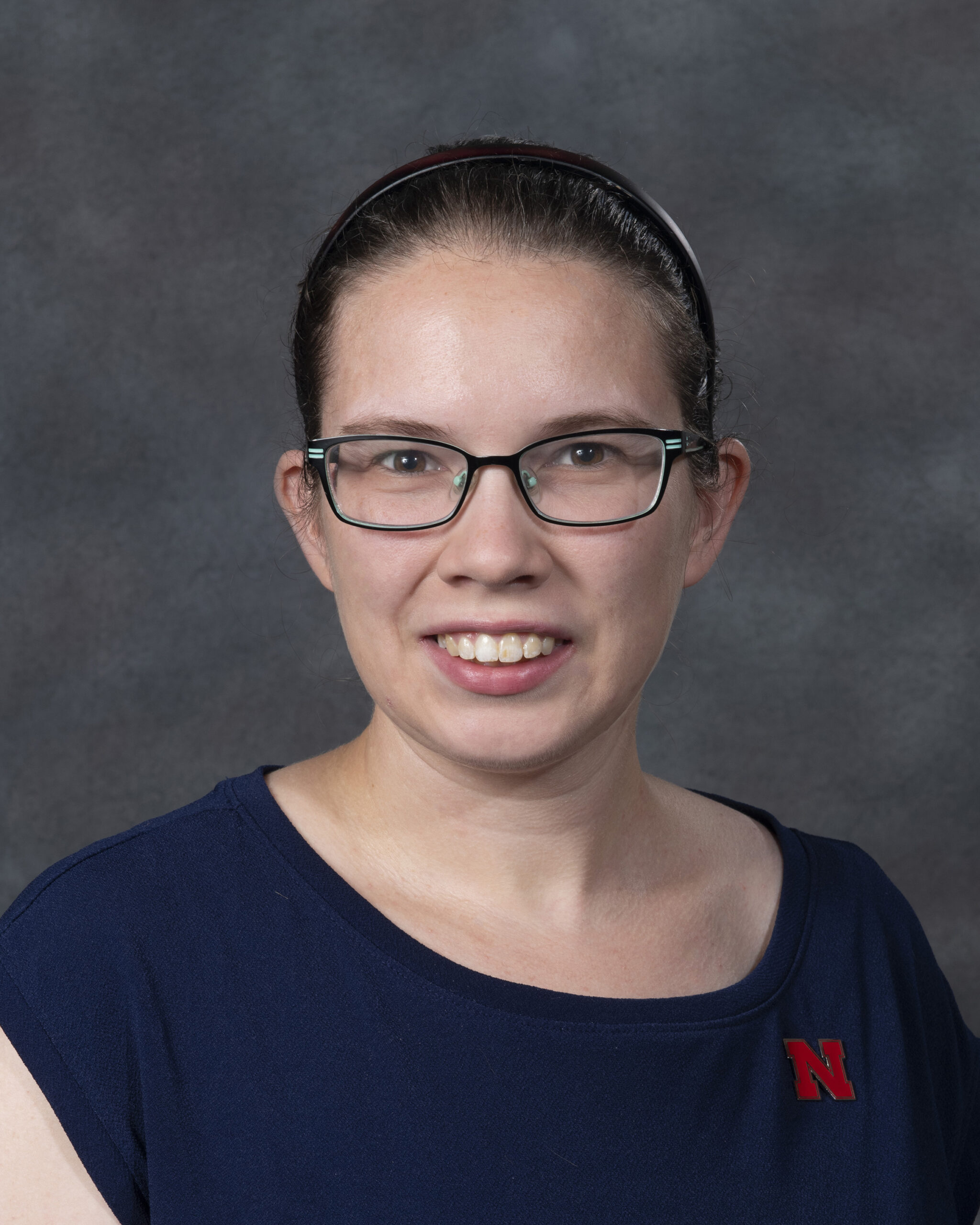
Susan Vanderplas

I think your administrators are biased and narrow minded without having any knowledge about the ongoing developments in Statistics and Data Science. Please try to convince them that the foundations of Biostatistics, Industrial Statistics, Machine Learning, Deep Learning, Artificial Intelligence, Big Data Analytics etc are based on the rich theory which Statisticians have developed and practised. Now Computer Science, Programs, Algorithms, Python, R Program etc are used to deal with Big data.