
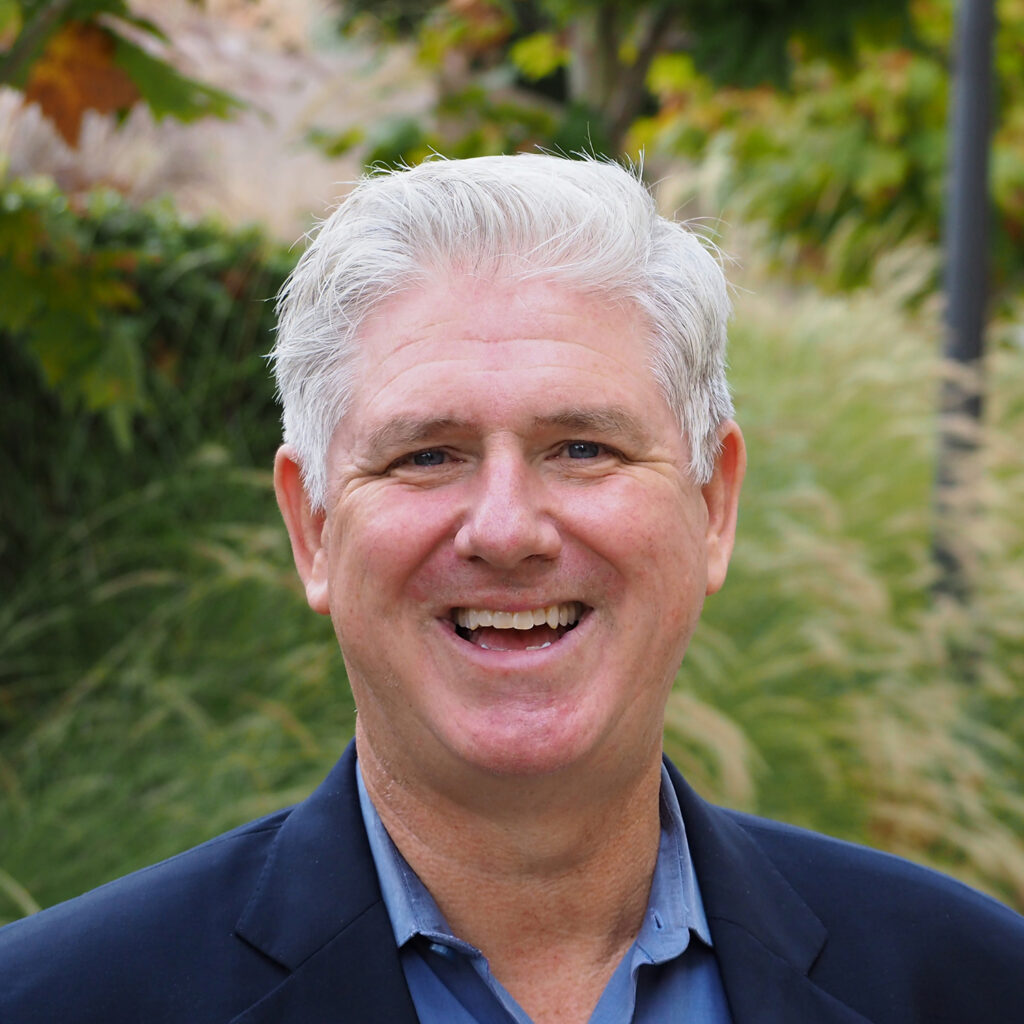
Rob Gould has spent his career encouraging, influencing, and inspiring statistics students and educators. A teaching professor at the University of California, Los Angeles, Gould has shaped how statistics is taught from high school to college and within the larger international statistics and data science communities.
As founder of the American Statistical Association DataFest, Gould created an experience for students that made data come alive. Each spring, DataFest unites more than 4,000 undergraduates—majoring in statistics, engineering, computer science, and related fields—to tackle complex data sets ranging from the play of a national sports team to online textbook use.
Reflecting on his impact, Johanna Hardin, professor of mathematics and statistics at Pomona University, wrote, “Not only has he [Rob] continued to vociferously state that statisticians all *do* data science, but through DataFest every year, he gets undergraduate students excited about working with large data sets to answering complicated and interesting problems.”
Gould is also a leader in the statistics education community. He is director of the Data Science Education Center at UCLA, which developed the Introduction to Data Science curriculum, the country’s first year-long high school data science course. He has served as chair of the ASA/American Mathematical Association of Two-Year Colleges and ASA/National Council of Teachers of Mathematics joint committees. Additionally, Gould has served as chair of the ASA Statistics and Data Science Education Section and president of the ASA Southern California Chapter.
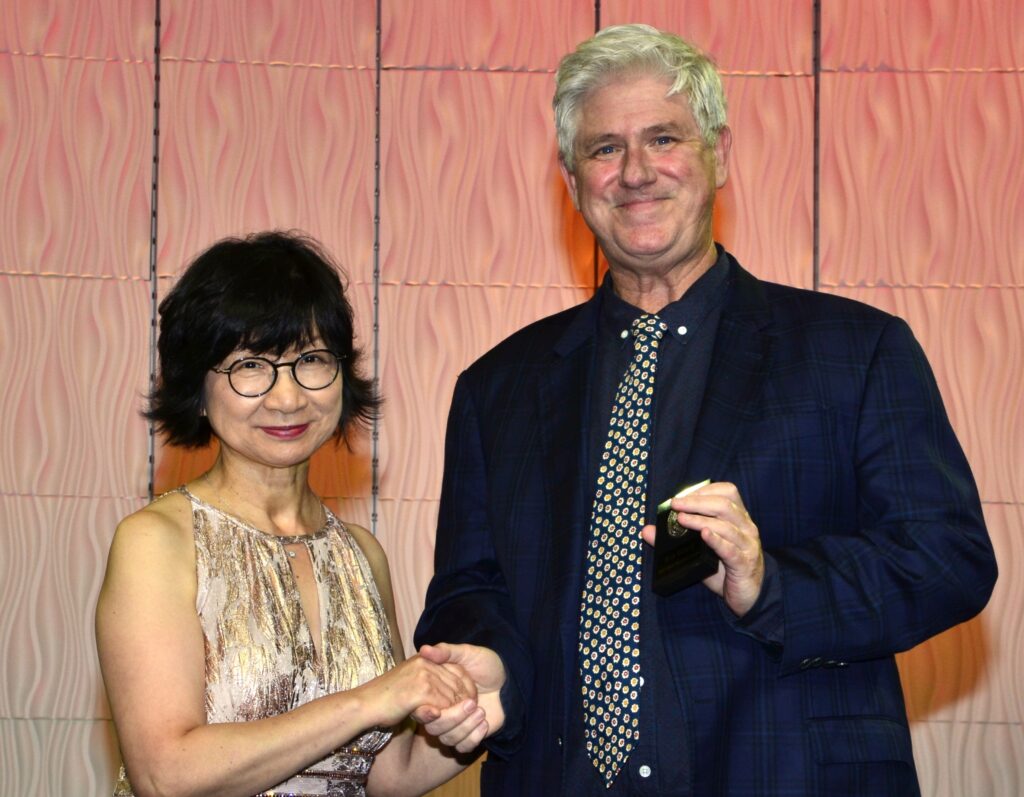
Gould has won many awards, including the CAUSE Lifetime Achievement Award and the ASA Waller award. This year, he was elected an ASA Founder. We wanted to know what drives his passion for education and what else he is enthusiastic about.
Background
Where did you grow up?
I grew up in Whittier, California, a suburb of Los Angeles. At the time, it was a slightly more distant suburb than it is now.
What or who influenced your passion for statistics education?
My mother was a K–6 educator, so I grew up around teachers. My professors at Harvey Mudd College inspired me in many ways, particularly Stavros Busenberg, Courtney Coleman, and Robert Borrelli. I wanted to be like them someday. In graduate school, I developed a passion for statistics through my thesis adviser, Ian Abramson, and realized I also had a strong passion for teaching.
Career Journey
You earned a BS in applied math from Harvey Mudd College and, in your words, “after a brief stint in the ‘real world,’ a PhD in math (statistics) from UC San Diego.” Can you explain what that brief stint was? What made you return to school to earn your PhD?
The stint was boring—documenting code in a classified defense-related project. After a year, I was quite eager for a change.
What do you love most about teaching?
Easy. The students.
What do you find most challenging about teaching?
I think all of us in education face the problem of dwindling resources. We’re fortunate at UCLA to have our student enrollment in statistics increase, but that increase is not met with additional resources. It is a real challenge to continue to provide the same high-quality education with fewer resources.
How has statistics education changed since you started teaching?
In every possible way and for the better. If you read the statistics education literature of the 1980s and ’90s, there’s a common theme that statistics is the “most hated” class in the college curriculum. Thanks, I believe, to the “real data” movement and a trend of focusing on applications in the early stages, the relevance, importance, and joy of statistics is communicated to more students than ever before.
But other trends have also been impactful. Most obviously, the ubiquity of computers and the internet, the availability of (very) inexpensive statistical software, and the accessibility of real and complex data. (Although, very sadly, that is one positive trend that is in retreat.) The advent of the AP Statistics exam made a tremendous change; suddenly, students were choosing to take statistics before they came to college and didn’t see it as a course they were forced to take.
Under the name of “data science,” more and more states and more districts are adding statistics-oriented courses to their curricula. The course I helped design, Introduction to Data Science, has been taken by more than 80,000 high school students. But these are trends. I fear that, still, too many students learn statistics as a rote set of formulas to be plugged into and not a means for learning more about the world around them.
Can you share a story or lesson you learned that changed the way you teach?
In 2003, I was invited by Joan Garfield to join the Statistical Reasoning, Thinking, and Literacy conference, held in Lincoln, Nebraska. SRTL differs from other conferences I’ve attended, in that researchers—most of whom used qualitative methodologies—shared work-in-progress, rather than presenting final results. These presentations included rich and long discussions, which were illuminating for me. I had fallen into a habit of blaming the students for their mistakes and privately bemoaning their lack of preparation. Working with these researchers, however, completely changed my way of thinking. For them, a student’s error was illuminating and revealed a problem with their curriculum or pedagogy or gave insight into students’ thought processes. Even more, SRTL showed me that these problems could be addressed and improved. Since then, when students don’t perform as I expect, I look first at my own practice and reflect on what I can change and never blame the students.
What skills do you think are most important to have as a statistics professor?
Based on my admittedly biased perspective, statisticians make good educators. The skills needed to be a good statistician—communicate to lay audiences, approach problems from different angles, understand concepts from a variety of perspectives—make for good teachers. That said, another important lesson I’ve learned is that teaching skills can be improved. There might be “natural” teachers, but we can all improve and reach exceptional standards.
Improving Statistics Education
You have worked with numerous educators, from high school teachers to professors at two-year colleges, to help guide their statistics curricula. In 2005, you worked with a team of writers to produce the Guidelines for Assessment and Instruction in Statistics Education (GAISE) Report. What’s the most surprising thing you’ve learned from working with educators at different levels?
I’m not sure “surprised” is the right word. When I think about these interactions, the word that comes to mind is “inspired.” I met so many extraordinarily creative and talented high school teachers and two-year college professors. And they were all the more inspiring because statistics (usually) wasn’t their original field of study, yet they had a deep-seated passion for teaching statistics. Plus, high school teachers really know how to teach, and so I learned a lot from sitting alongside some while grading AP exams or designing professional development. Through them, I learned a lot about how much statistics has to offer students.
I hate to name names because I know I’ll unintentionally leave out some of my favorites, but I drew great inspiration and learned much from Gretchen Davis, Chris Olsen, Darren Starnes, Dan Teague, Josh Tabor, Suyen Machado, Monica Casillas, Kaycie Maddox, and my textbook co-authors Colleen Ryan and Rebecca Wong.
How do you approach making statistics accessible to students with different backgrounds and goals?
I think the great thing about teaching statistics is almost every discipline and almost anything a student might be interested in produces data. And those data can be used to engage students in class. If a student is from a non-STEM background, I want statistics to be their favorite STEM class.
In 2011, you organized the first DataFest. Was there a specific experience that made you realize students need to work with data outside the classroom? How has DataFest changed the way you teach?
One of the motivators behind DataFest (and there were several) was it was hard to get students to take ownership of projects I assigned them in class. There was an assumption that I had assigned the same project before (sometimes I had) or that there was one way I was expecting them to solve it, and their goal was to figure out what I wanted to see, not what they wanted to do. My colleagues expressed the same feelings. Another motivator was it was challenging to get real data into the classroom.
And yet another motivator was a paper I read by Deb Nolan about the importance of giving statistics students difficult problems. I had just heard an NPR story about hackathons that were creating apps to help rescue workers in international disasters and thought that since students do these projects at the last minute anyway, why not set aside some time where they could work intensely on a hard problem. They would work in teams, but in the same room, so that as we uncovered problems with the data—or gaps in their knowledge—we could address them as a group. And in that way, collectively, we could help the group that donated the data solve their problems.
We’re careful to tell data donors not to expect water-tight solutions from a 48-hour competition. And sometimes, data donors already have their own teams looking closely at data. But even then, the data donors report that while the results might not have been a surprise to them, the methods the students employ are often illuminating and lead to new approaches for the donors’ data scientists.
My colleagues and I learned much from watching students during DataFest. We learned that topics we thought we had covered thoroughly had not, in fact, taken root in our students. Because of this, we’ve made many changes to our curricula over the years. The biggest that comes to mind is greater emphasis, in almost all classes in the core, on data preparation.
If you could change something about how statistics is taught, what would it be and why?
I’ve been lucky to see real and positive changes in the way statistics is taught. My wish for the future is that statistics be taken more seriously in K–12. I wish we could teach statistics systematically and comprehensively throughout the pre-college years. And I hope this teaching is done in such a way that students can use statistics in their own lives to follow their own passions.
What advice would you give someone considering a career as a statistics professor?
Find people with whom you can read and discuss the research literature on teaching statistics, such as those that appear in places such as JSDSE [Journal of Statistics and Data Science Education] and SERJ [Statistics Education Research Journal].
Beyond Statistics
You play the cello. How long have you played? Who is your favorite composer, and what is your favorite song to play?
I played at the cello for a number of years. But once I passed my quals in grad school, I started to take lessons regularly and practice more frequently. I’m still very much an amateur; I feel lucky if I can get two hours a week of practice in. But I love it. I have a trio I play with monthly: piano; flute; and cello. We just played Mendelssohn’s “Piano Trio #2” for a small audience of friends and family. Bach is my favorite composer, and I wish I could play any of his suites for solo cello in such a way that other people enjoyed listening as much as I enjoy playing.
You have traveled extensively for your career. Where would you like to go that you haven’t been, or where would you like to go again and why?
I love traveling and visiting, particularly with statistics colleagues. I love that when I travel for academic conferences, I feel a bit more involved in the local life than I do as a tourist. Seeing new places with old friends and colleagues and visiting a new city with colleagues who are local is a wonderful way to experience a new city or country.
Is there a skill you have always wanted to learn or a topic you’ve wanted to learn about? Do you have plans to pursue it?
Many. But I’d love to dive deeper into the history of statistics and wish I had some skill and training in the methodology of historians so I could explore this further. Plus, I think it would lead to more great travel opportunities.
Learn more about the work and influence Rob Gould has had on both students and educators in the CAUSE Lifetime Achievement Award Tribute Booklet.
I want to express genuine admiration for the Amstat News feature on ASA Founder Robert Gould because it highlights the kind of sustained leadership, creativity, and commitment to statistical education that strengthens an entire profession; as founder of ASA DataFest, one of the most influential experiential events in statistics education, and a recipient of the prestigious ASA Founders Award recognizing distinguished service to the association, Gould’s work exemplifies how passionate individuals can shape both the practice of statistics and the community that surrounds it, reminding us that the science of data thrives not simply through theory but through inclusive, hands-on engagement and collaboration that invites newcomers and seasoned practitioners alike to think deeply and work boldly with data.