
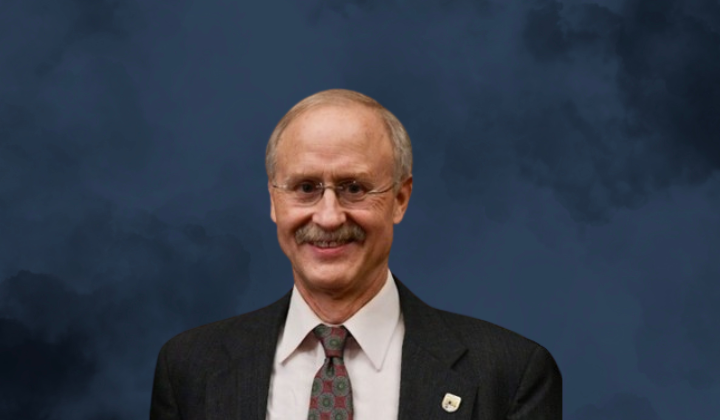
Mark C. Otto
In 1989, I took a small step by volunteering at the Washington Statistical Society for the quantitative literacy project. Wendy Rotz was the chair, and we met monthly at her house. We taught Girl Scouts more about probability using M&Ms than anyone thought possible. I ran booths for the American Statistical Association and WSS at STEM festivals and helped judge science fairs—a good way to meet other statisticians. The WSS 100th anniversary reminded me that my chapter and the ASA have given me more opportunities for collaboration and leadership than I have had in my jobs. Here are some small steps and opportunities I found and took advantage of—something you could try as well.
I tried career talks at schools and created an interactive exhibit for STEM and STEAM festivals, integrating work from the Patuxent Wildlife Research Refuge with statistical experiments using banding data. I conducted sample surveys in elementary school classes, letting students choose the questions they asked their peers. I was scared to find that the average wake time for school commutes was 5:00 a.m. and the average weekly television hours (20) were likely biased high by March Madness and students’ ability to estimate hours. I helped the WSS effort judge science fair projects at several regional fairs around the Washington area.
Judging science fairs was as easy as answering an ad in the WSS newsletter, and then one thing led to another. In 2013, Dhuly Chowdhury and I helped bring the Meeting Within a Meeting to the ASA headquarters. I recruited teachers from around the Washington Metro Area. I met two science teachers at the workshop and began helping teachers and students create better science fair projects using the ASA’s Quantitative Literacy materials. Teachers were already overwhelmed by teaching requirements but were interested in their students doing well in science fairs. I developed materials that presented statistics as a formalization of the scientific method, explained how to manage data, and showed how to write good tables and draw good graphs. I taught these in a research class for teachers at the University of Maryland, Baltimore. I worked with high school year-long research classes at the DC School Without Walls and TC Williams High School in Alexandria, Virginia. In both places, students worked to enter national and international science fairs.
Ana Humphrey, one of my most successful students and one I mentored for three years, won first place and the $250,000 prize in the 2019 Regeneron Science Talent Search. In her junior year, I connected her with Elisa Quintana at the Goddard NASA Space Flight Center. The next summer, Ana worked with Elisa and the exoplanet team. They are writing a paper exploring how more planets might fit into exoplanet systems. Ana graduated from Harvard with a degree in astronomy. Often, the mentor learns more than the mentee.
Although I was unable to develop materials for a professional teachers’ workshop, the ideas were incorporated into ASA Director of Science Policy Steve Pierson’s ThisIsStatistics science fair guidance. I could have used the collaboration skills I was introduced to later.
In 2010, I was appointed to the Committee on Applied Statistics. I helped the committee with its 2012 membership initiative to build and sustain mentoring programs within the ASA. The committee found that programs lasted only two years on average. They developed a system that works by building a program and a committee and by matching mentors to mentees—the small, hard decisions that trip up a budding program. This became The American Statistician article titled “An Eight-Step Guide to Creating and Sustaining a Mentoring Program.”
In September 2014, David Morganstein proposed that the Washington Statistical Society start a chapter mentoring program. I joined the board call to encourage the chapter to use the tools the Committee on Applied Statistics developed. Since introducing the tools, I have been asked to chair both the pilot and official committees. The program, documented in the Amstat News article titled “Washington Statistical Society Builds Community Through Mentoring,” has been given as an example of a chapter mentoring program. In 2015, I won an at-large member position on the WSS board, and much of my term focused on the mentoring program. This is our tenth year.
In 2017, I was selected to serve as ASA vice chair of the Membership Council, overseeing its nine committees. I worked to increase the diversity of committee members, including early-career statisticians, and some of them became our strongest chairs. Many of us older leaders asked what those years of experience bought us.
As vice chair, I learned from the Committee on Applied Statistics and its new chair, Allison Florance, as they put together an ambitious schedule of 10 webinars on various aspects of collaboration. This also included a collaboration workshop with the Council of Sections in 2017. I used the committee’s collaboration initiative to help other committees work more closely with presidential initiatives and foster greater collaboration among committees and other parts of the ASA. Those ideas and skills proved valuable when I later became WSS president.
I also worked with Gary Sullivan’s Ad Hoc Committee on Statistical Leadership Training. I contributed articles to Amstat News: a humorous article about management and another with Gary about leadership journeys. At that time, the ASA was trying to get the ASA chapters to initiate more leadership activities. Jennifer Parker, Eileen O’Brien, and I organized a WSS statistical leadership class. At the end of 2018, Gary taught the two-day course and past ASA presidents Barry Nussbaum and Sally Morton shared their leadership stories. The class was successful for the 34 participants. In 2022, Eileen and I organized Tuesday lunch talks. Some have kept the discussions going in peer mentor groups.
As my wife, Syd, and I were moving to Colorado, I was asked to run for WSS president. She thought I was crazy because we wouldn’t be living in the area, but it would be my last chance to make that kind of contribution. As it turned out, my three-year term coincided with COVID. The board barely realized I wasn’t local. The social committee did a great job hosting a Zoom holiday party and annual awards dinner. I kept Jill Dever’s idea of the three presidents meeting before board meetings to share leadership. Those discussions provided better direction. I learned a lot. My Membership Council work helped me understand what was going on with the ASA and access its resources.
I don’t think members realize how much the WSS board does and how our programs engage so many volunteers. It is amazing to see young statisticians grow in their careers and leadership. I would love to see a study comparing the ASA, American Association for Public Opinion Research, and WSS volunteers with those who focus solely on their careers. I am definitely biased toward my WSS network.
Now we have Jeri Mulrow, another WSS member, as ASA president. She wants to bring our statistical work to our local communities. Look at the ways the WSS already affects our communities, including Quantitative Literacy, science fair judging, professional communities, and the state of our federal data—which affects all our communities and lives. Thank you to Johnathan Auerbach for his project tracking the state of our federal data and statistical agencies and how that integrates with Steve’s ASA policy support. We are at a time when we can expand our work and consider small changes that affect those around us. What small steps could you take to volunteer?
To learn about how the Washington Statistical Society celebrated its 100th anniversary, read “A Century of Statistical Excellence: WSS Celebrates 100th Anniversary.”
Leave a Reply