
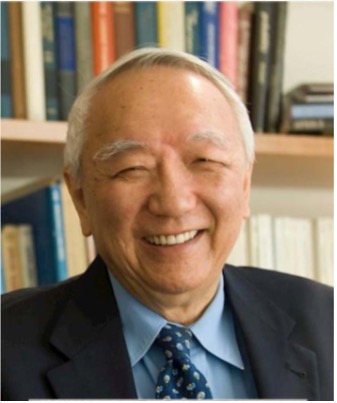
George C. Tiao, a giant of modern statistics and beloved leader of the international statistical community, passed away peacefully in his sleep in Chicago on April 25, 2026, at the age of 92.
Born on November 8, 1933, in London, United Kingdom, and raised in China during one of its most turbulent periods, George earned a BA in economics from National Taiwan University in 1955. He moved to the United States in 1956, earned his MBA from the Stern School of Business at New York University in 1958, and received his PhD from the University of Wisconsin-Madison in 1962 under the direction of George E. P. Box and Arthur Goldberger. He remained at the department of statistics at Wisconsin for the next 20 years, serving as chair from 1973 to 1975 and being appointed Bascom Professor of Statistics in 1981. In 1982, he moved to The University of Chicago Booth School of Business as the W. Allen Wallis Professor of Econometrics and Statistics, a chair he held until his retirement in 2003.
A distinguished professor and world-renowned leader in Bayesian inference, time series analysis, and environmental statistics, he was known in the research world for his boundless intellectual curiosity, his careful attention to substantive problems, and his insistence on theoretically sound yet simple methodology. He received numerous awards, including the Wilks Memorial Medal of the American Statistical Association (2001); the Julius Shiskin Award (2001); the Distinguished Service Medal of the Directorate-General of Budget, Accounting, and Statistics of Taiwan (1993); and Statistician of the Year from the Chicago Chapter of the ASA (2005). He was elected an Academician of Academia Sinica, Taiwan, in 1976; a Fellow of the American Statistical Association, the Institute of Mathematical Statistics, and the Royal Statistical Society; and an elected member of the International Statistical Institute. He received honorary doctorates from Universidad Carlos III de Madrid and National Tsing Hua University in 2003. He was appointed honorary professor of Peking University in 2002. Among his colleagues, he was revered for his integrity, geniality, generosity, and an unending devotion to the statistics profession.
In addition to his academic appointments, George served as a consultant and adviser to central banks of several countries; to the US Census Bureau; and to many national and international agencies on questions of economic, demographic, and environmental statistics. He was a member of the US EPA Ozone Science Tiger Team that received the 2005 EPA award for its work on stratospheric ozone.
Throughout his career, George was a tireless builder of statistical institutions. In 1988, he founded Statistica Sinica and served as its founding chief editor from 1988 to 1993, shaping it into one of the leading international peer-reviewed journals in statistics. In 1987, he served as founding president of the International Chinese Statistical Association, an organization that today has more than 1,000 members and stands among the foremost statistical communities in the world. He played an instrumental role in advancing statistical education in Taiwan and China, founding the Institute of Statistical Sciences at Academia Sinica in Taiwan, the College of Technology Management at National Tsing Hua University, and the Department of Business Statistics and Econometrics at the Guanghua School of Management of Peking University. For three decades, he was a principal organizer of the NBER/NSF Time Series Conference and, in 1986, he established the annual conference “Making Statistics More Effective in Schools of Business,” which has had a major and lasting influence on the teaching of statistics in business schools.
George’s contributions to statistics were both fundamental and profound. The author of more than 150 papers and seven books, he made deep and lasting contributions to Bayesian inference, time series analysis, intervention analysis, outlier detection, and environmental statistics. His 1973 book with Box, Bayesian Inference in Statistical Analysis, is recognized as a classic and was, for a generation of statisticians, the textbook that brought Bayesian methods into mainstream statistical practice; it remains a definitive reference for the analytical and philosophical foundations of the subject.
In Bayesian statistics, George made seminal contributions to random-effects models, Bayesian robustness, outlier detection, and the data-translated likelihood approach for constructing non-informative priors. His name became almost synonymous with time series analysis, where his lasting contributions include intervention analysis (with Box), systematic procedures for outlier detection and for random level shifts and variance changes, methods for identifying stationary and non-stationary ARMA models, model-based seasonal adjustment, cointegration in multivariate time series, identifiability of vector ARMA models, and the treatment of aggregation and complex unit roots.
Beyond methodology, George brought statistical thinking to questions of great public importance. He produced the first statistical analysis of Los Angeles ambient carbon monoxide data and, from 1980, led a two-decade national collaboration with NOAA, NASA, the EPA, and industry on stratospheric ozone—work that produced the first unambiguous evidence of a decline in the ozone layer and underpinned the scientific case for the Montréal Protocol and the global phase-out of ozone-depleting chemicals.
George was known to be an inspiring and caring teacher. He supervised more than 25 PhD students, many of whom are now distinguished scholars and leaders in their own right. His collaborators spread across many continents. In addition to his editorial leadership at Statistica Sinica, he served on the editorial boards of several leading statistical journals and as adviser to numerous professional organizations.
Beyond the seminar room and editorial desk, George was a man of warm friendships and wide cultural enthusiasms. He loved mahjong, bridge, and go; he was a connoisseur of gourmet food and fine wine; and he was deeply devoted to opera and classical music. For more than two decades, the Thanksgiving dinners he and his beloved wife, Barbara, hosted in Madison and Chicago for 60 or more students, family, and friends—extraordinary food, good cheer, and conversation late into the night—were legendary among generations of Wisconsin and Chicago statisticians.
George will be greatly missed for his enormous intellect, his wisdom, his generosity, and his unfailingly easy laughter. He married Barbara in 1958; she preceded him in death in March 2008. He is survived by his daughters, Vivian (Don) and Julie (Anthony); his sons, Gregory (Lisa) and Paul (Varuni); and nine grandchildren—all of whom will forever cherish his love, his mentorship, and his quick and easy laughter.
A memorial service for George was held May 30 in Michigan. A memorial session will also be held at the Joint Statistical Meetings in Boston this August.
My friendship with George started in the very early 1980s, He helped me a lot when I was a young chair professor at the newly established department of statistics at the Chinese University of Hong Kong in 1982. We maintained regular contacts ever since, to the extent that we became a house guest at each other’s homes. I can well remember him cooking the egg-and-bacon breakfast for my wife and me at his kitchen. He said, with his proverbial smile, “The best way to fry the eggs for this dish is to use the fat from the bacon, haha…’” I will always treasure the memory of my dear friend, George. May he rest in peace!