
Penny S. Reynolds
October marks the observance of UNESCO World Teachers Day, celebrated on October 5 every year, and UN World Statistics Day, observed every five years (most recently in 2025). This month, we highlight major landmarks in the history of statistics education in America and the contributions of notable statistics educators.
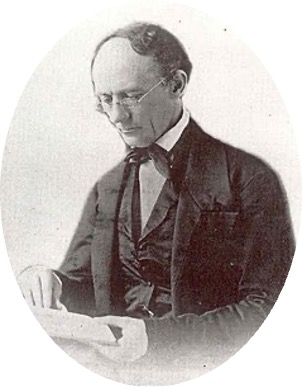
1845: The first American university course in statistics is offered at the University of Virginia, taught by William Holmes McGuffey. Although the 1844 Transylvania University catalogue mentions a “statistics” course, it’s not clear whether it was ever taught.
1876: Yale awards the first American doctorate in mathematical statistics to Mansfield Merriman for his work on least squares. His 1910 textbook eventually runs to eight editions.
1882: Richmond Mayo-Smith (ASA vice president, 1889–1901) introduces innovative courses at Columbia that mark the transformation of statistics from tabulations of what he calls “useless” numbers to a quantitative problem-solving discipline.
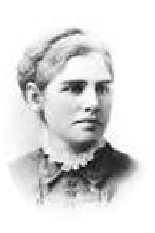
1883: Katharine Coman, professor of political economy at Wellesley College, is the first American woman to teach statistics. Wellesley is the only American women’s college to offer statistics courses before 1900.
1886: At the Massachusetts Institute of Technology, Davis Rich Dewey (ASA secretary, 1886–1906) offers the first named courses in statistics (Statistics of Sociology and Graphic Methods of Illustrating Statistics).
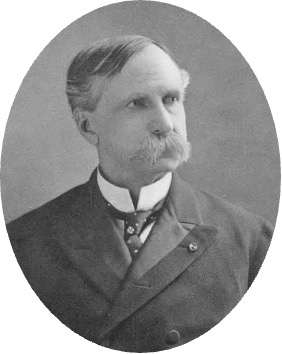
1887: Carroll Davidson Wright (fifth ASA president, 1897–1909) complains America lags far behind Europe in statistical teaching and expertise. He urges the American Economic Association to put more effort into creating standalone courses in “statistical science.”
1888: Franklin Giddings (ASA Fellow, 1914) integrates the pioneering work of Belgian Adolph Quetelet (honorary ASA member, 1840) into his courses at Bryn Mawr, training students in probabilistic methods of quantifying statistical regularities in socioeconomic data.
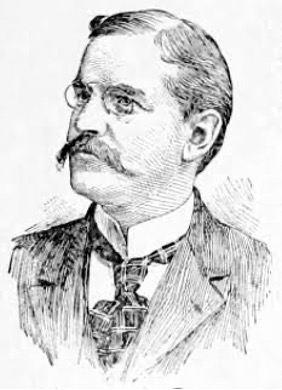
1888: At the University of Pennsylvania, Roland Post Faulkner (ASA Fellow, 1920) becomes the first American professor to teach statistics full time.
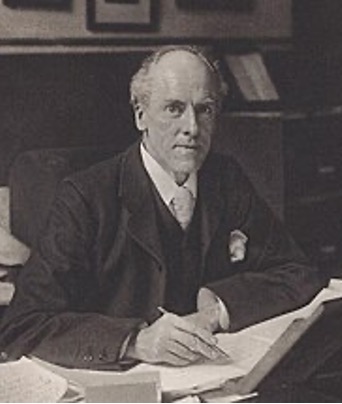
1911: Karl Pearson (honorary ASA member, 1924) establishes the first university statistics department at University College London and offers the first formal academic courses in mathematical statistics.
1912: At the University of Michigan, James Waterman Glover (ASA Fellow, 1916) begins teaching the first mathematical statistics course in America. Ten years later, Iowa State is still the only other institution in America to offer a similar course.
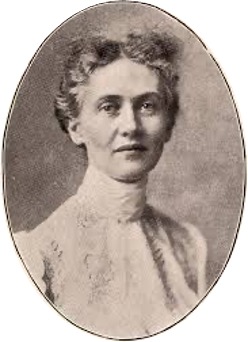
1912: Kate Holladay Claghorn (ASA Fellow, 1918) becomes a full-time faculty member at the New York School of Philanthropy, where she trains a generation of social workers in research design and statistical methods.
1918: Johns Hopkins establishes the department of biometry and vital statistics, founded by Raymond Pearl (ASA Fellow, 1920; ASA president, 1939) and Lowell Reed (ASA Fellow, 1927; ASA president, 1951). The first American academic department to include the word “statistics” in its title is renamed the department of biostatistics in 1930.

1924: George Waddel Snedecor (ASA Fellow 1939; ASA president, 1948) invites Henry Agard Wallace (later US vice president) to teach an advanced course on multiple regression featuring the use of mechanical desk calculators. The course is so successful that, in 1927, Snedecor installs IBM punch-card machines. He further revolutionizes statistical instruction by organizing his 1937 textbook Statistical Methods around real data arranged for machine-based calculations, marking the shift to computer-based statistical instruction.
1926: The ASA Committee on Standards, chaired by J. W. Glover, releases a report on the teaching of statistics in American colleges and universities. The news is not good: Statistics education is scattered across various departments, lacks standardized curricula, and rarely includes advanced mathematical training. Committee members agree statistics should be a stand-alone discipline, but they disagree on how it should be defined and taught. Battle lines are now drawn between the mathematical and applied statistics factions.
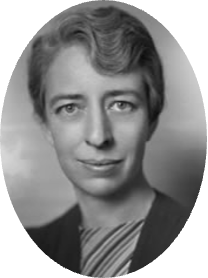
1930: Margaret Merrell (ASA Fellow, 1951) earns her ScD in biostatistics. A leading expert on randomized controlled trial design in 1957, she becomes the first female full professor at Johns Hopkins School of Public Health. Internationally recognized for outstanding teaching, she also carried most of the department’s teaching load; Raymond Pearl and other senior (male) faculty made her responsible for their teaching duties.
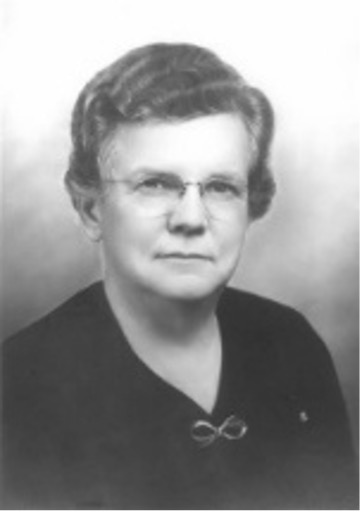
1934: Gertrude Mary Cox (ASA Fellow, 1944; ASA president, 1956) begins teaching the design of experiments course at Iowa State. In 1940, she transfers to North Carolina State University to become the first female department head of the department of experimental statistics. She later establishes and administers many highly successful national and international statistical teaching programs.
1942: During World War II, statistical quality methods are quickly recognized for their value to the war effort. Walter Shewhart (ASA Fellow, 1934; ASA president, 1945) spearheads the development of nationwide statistical quality-control courses for engineers and industrial managers. A parallel program, initiated by W. Edwards Deming (ASA Fellow, 1942), morphs into the enormously influential Statistical Research Group at Columbia University under W. Allen Wallis (ASA Fellow, 1948; ASA president, 1965).
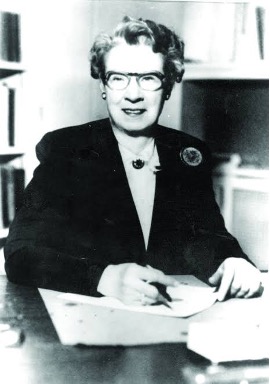
1944: Helen Walker (ASA Fellow, 1940; ASA president, 1944) becomes the first female ASA president and promptly creates the ASA Committee on the Training of Statisticians to standardize the teaching of statistics. A lifelong advocate of statistical literacy, Walker taught for more than four decades and authored several college statistics textbooks.
1949: Helen Abbey (ASA Fellow, 1976), a former student of Margaret Merrell, joins the Johns Hopkins biostatistics faculty. During her career, she teaches more than 4,000 students, mentors more than 700 graduate students, wins three Golden Apple teaching awards, and in 1991, she is named a Hero of Public Health.
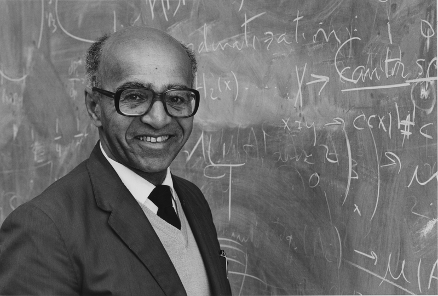
1955: David Blackwell (ASA Fellow, 1962; ASA vice president, 1978) is appointed full professor in the newly created department of statistics at the University of California, Berkeley. Renowned for both his mathematical genius and teaching skills, he demystifies densely mathematical concepts for students through storytelling and visual models.
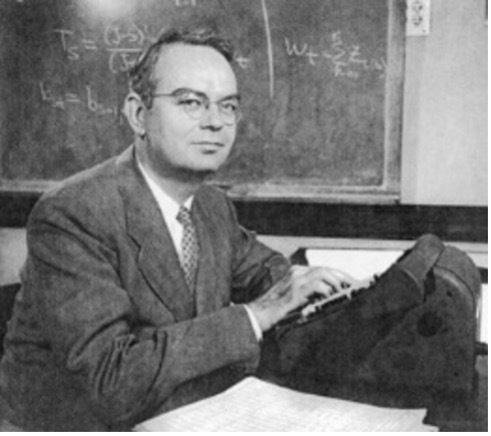
1961: Frederick Mosteller (ASA Fellow, 1949; ASA president, 1967) teaches the first nationally televised statistics course. More than 1.2 million people watch the broadcasts, and approximately 5,000 students take the course for academic credit.
1975: William (Bill) G. Hunter (ASA Fellow, 1979) reports on his method for teaching experimental design through student-created investigations, such as designing the perfect paper airplane. In 1978, with George Box (ASA Fellow, 1955; ASA president, 1978) and Stuart Hunter (ASA Fellow, 1961; ASA president, 1993), he coauthors the classic text Statistics for Experimenters. His later educational outreach initiatives include high school teacher training and international statistics education programs.
1990: Jacob Cohen (ASA Fellow, 1983) criticizes traditional statistics teaching methods. Instead of focusing on p-values and rote hypothesis testing, he says curricula should focus on statistical thinking skills such as design, effect size estimation, data visualization, and cumulative evidence.
1993: The British Medical Journal asks Doug Altman to write a few 600-word “filler” pieces on statistics education for medical professionals. A year later, he and Martin Bland launch the now iconic BMJ Statistics Notes series, explaining statistical concepts in plain English with practical worked examples. The series eventually runs to 67 articles with tens of thousands of citations.
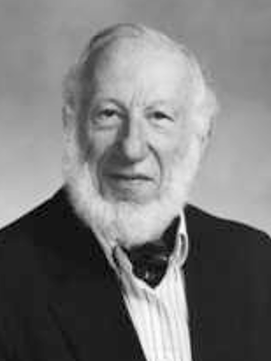
1998: Ingram Olkin (ASA Fellow, 1962; ASA Founder, 1991) becomes the first (and only) male recipient of the COPSS Elizabeth L. Scott Award for his advocacy for women in STEM. A mentor and statistical educator, he also makes contributions to mathematical statistics, especially meta-analysis and nonparametric statistics.
For details, download the references.
Leave a Reply