
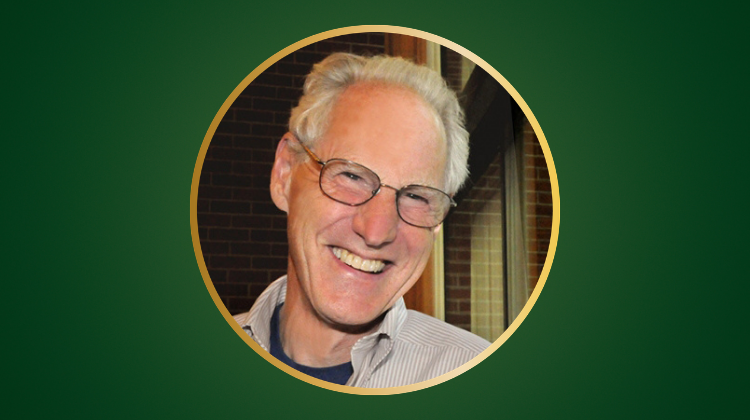
Steve Selvin, emeritus professor of biostatistics in the school of public health at the University of California, Berkeley, passed away in Oakland, California, on September 30, 2026, after a long struggle with dementia.
Steve was born on July 4, 1941, and was the eldest of three brothers (Michael and Joel). He attended Berkeley High School, from there attending the University of California, Riverside, where he graduated with a BA in mathematics in 1965. While at Riverside, he played on the varsity men’s basketball team, a reflection of what was to be a lifelong interest in sports. He was an avid San Francisco 49ers fan and, to a lesser extent, the San Francisco Giants.
After one year of graduate school at Iowa State University, Steve returned home to the University of California, Berkeley, where he earned a PhD in biostatistics in 1970 under the direction of Jacob Yerushalmy. His dissertation was titled, “A Biostatistical Investigation of Twins and Twin-Study Methodology.” Following graduation, Steve spent two years working in the Birth Defects Institute of the New York State Department of Health in Albany, New York. He then returned to the University of California at Berkeley as a faculty member in 1972, where he remained for the rest of his career.
In addition to his early work on genetics and twins, Steve worked on a wide array of statistical problems associated with various areas of epidemiology, including cancer incidence and mortality data, mapping and rare disease clustering, environmental exposure assessment, maternal weight gain during pregnancy, perinatal epidemiology—particularly neural tube defects—and risk factors for childhood leukemia. He authored an extensive series of popular texts on biostatistical methods largely focused on addressing epidemiological questions.
Ironically, Steve is best known for introducing the world to the Monty Hall Problem, motivated by an American game show, Let’s Make a Deal, that was originally hosted by Monty Hall. Steve first submitted a letter to the editor of The American Statistician abstracting the essential game show contestant options to a specific question in probability. Following some reaction, he followed up with a subsequent letter to the same journal using Bayes’ theorem to solve what he termed “the Monty Hall problem,” the first time this term was used. Over the years, the conundrum at the heart of the Monty Hall problem has confounded both lay persons and experts alike and has attracted enormous attention; it is often used as an illustration of statistical ideas in elementary textbooks. Steve would happily show you the personal correspondence he had with Monty Hall after his contributions started to receive notice.
Steve was recognized as a gifted teacher of biostatistical ideas to lay audiences, particularly to Berkeley students who need to understand such techniques, but who are not trained to any level of mathematical sophistication. His introductory course was legendary among public health and campus biological communities for the way in which he engaged students in complex statistical methods despite being offered at 8 a.m. He received the University of California, Berkeley, campus Distinguished Teaching Award in 1983, and a similar award from the School of Public Health in 1998.
Steve was dedicated to his campus from his earliest days selling programs at Memorial Stadium for Cal Bears football games at age 12. His primary educational contributions were the creation and development of two major degree programs within the school of public health. The first of these was an MPH track in epidemiology and biostatistics that attracted bright undergraduate applicants in biology, mathematics, and other areas of the natural sciences from top schools across the country into the field of public health.
Second, the development of the undergraduate major in public health, a remarkable example of Steve’s commitment to public health education and his sensitivity of the campus’s need to respond to the needs of a large undergraduate student population. Steve initially proposed the school of public health become more involved in undergraduate education despite being only a graduate program at that point. This suggestion in the mid-1990s initially met with strong faculty resistance largely due to concerns that the school was not funded to engage in undergraduate teaching and that embracing undergraduate teaching might possibly interfere with the faculty’s research activities and the school’s funding. Steve quietly pursued his vision and by 2004 had enlisted strong support from the faculty and campus administration when the first undergraduate majors in public health were enrolled. Within a year, the Berkeley School of Public Health had implemented the largest and most comprehensive program for a public health undergraduate major in the US. It remains one of the most popular campus undergraduate majors to this day. Steve was awarded the campus’ 2005 Teaching Initiative Award for these efforts. In 2011, he was recognized for his campus service when he was awarded the Berkeley Citation, an award from the chancellor that recognizes contributions to UC Berkeley that go beyond the call of duty and whose achievements exceed the standards of excellence in their fields.
Steve was dedicated to his family, married to his wife, Nancy, a noted ceramic artist and adjunct professor at the California College of the Arts, for 60 years. He was a devoted father to their daughter, Elizabeth (Liz), who is a professor of epidemiology at the Johns Hopkins Bloomberg School of Public Health, and loving grandfather to Benjamin and Eli, the two sons of Liz and her husband, David Bradford Long.
Steve was an influential biostatistician and epidemiologist. He was a warm, generous, and supportive colleague with a wonderful sense of humor. We will miss his treasure trove of stories and his radiant smile.
Leave a Reply