
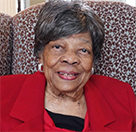
Ann began her government career at the US War Production Board during WWII. Early in her career, she also worked for the United States Navy and Air Force. She was one of the early “Government Girls,” a term coined during WWII when the federal government hired women to fill roles during a labor shortage. Not only was Ann a woman in the workforce during the 1940s and ’50s, she was also the first professional African American to work in several government agencies.
A Statistician's Life
Celebrating Black History Month 2022

In celebration of Black History Month, we recognize the innovative mathematical statistician Annie T. Randall, along with 11 individuals from the Black/African American collective who have made tremendous contributions to the statistics field. The 12 featured individuals have achieved success as professors, researchers, volunteers, and health care professionals.
Loni Philip Tabb
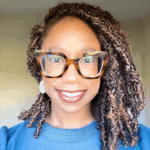
Loni Philip Tabb, originally from Philadelphia, started college as a business major but later changed to math. While earning her graduate degree, she was introduced to biostatistics and in awe of how such a field could exist that blended her love of numbers and storytelling. After completing her PhD, Tabb returned to Drexel University as an assistant professor of biostatistics and, in 2017, was promoted to associate professor and awarded tenure, reflecting her dedication to excellence in teaching, service, and cultivating a diverse and inclusive environment, in addition to her research. She is the first recipient of the Annie T. Randall Innovator Award.
Rhonda D. Fitzgerald

Rhonda followed in her father’s footsteps and earned her undergraduate degree in mathematics. After a family friend told her about this ‘new’ field called biostatistics, she propelled her journey forward and became the second African American to complete her PhD in biostatistics from Virginia Commonwealth University. Rhonda has received many awards and accolades as a tenured professor, but she is most proud of the relationships she has formed with her students and the impact she has made on their lives.
Brittany Dane Green

Brittany Green grew up in a rural town in Alabama and had a phenomenal teacher who piqued her interest in math. She wrestled with how to combine her interest in math with her passion for social justice until she discovered data science and statistics. After observing media and academia tout the benefits of machine learning models without regard for how they can negatively affect certain populations, she was drawn to exploring how these models can be used to positively affect society. Now, she contributes to the field of digital technologies and social justice as an assistant professor in information systems, analytics, and operations.
Melody S. Goodman

Melody Goodman began her undergraduate studies as a pre-med student. During her first semester, she heard senior pre-med students talking about cat lab, where you dissect a cat, and she dropped the pre-med major the next day. After a long period of being undecided, she changed her major to applied mathematics and statistics. She fell in love with combinatorics and game theory and eventually landed a job on Wall Street; she didn’t like it. After googling “math in health,” she learned about biostatistics and went to graduate school. She is now the associate dean for research and an associate professor of biostatistics at the NYU School of Global Public Health and working to educate the general public about quantitative public health data literacy and expose racial and ethnically diverse students to biostatistics and data science.
Therri Usher
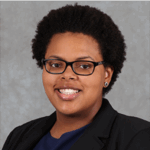
Therri Usher always enjoyed mathematics, even competing in competitions during high school. Despite this, others encouraged her to pursue a career as a medical doctor, so she entered college as a pre-med student. However, when she was offered the opportunity to work in a biology lab researching sickle cell disease and conducting data analysis, she changed her major to biostatistics with a specialization in statistics. After completing her PhD, Therri joined the US Food and Drug Administration, where she applies statistical theories and methods used in the regulation of drug products to treat viral infections and rare diseases.
Imposter to Expert: One Woman’s Journey to Statistician
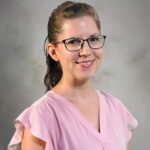
Deliverance Bougie had an unconventional journal into the field of statistics. Conquering learning challenges, she now educates elected officials on statistical practices.
Emma Benn: Professor, Mentor, Interpreter, and Advocate

In addition to serving as an associate professor and the associate dean for faculty well-being and development at Icahn School of Medicine at Mount Sinai, Emma Benn launched and was named founding director of the Center for Scientific Diversity. She is learning to better communicate inclusivity in the classroom and doing everything she can to raise awareness that different voices and people make our field stronger.
Barry Nussbaum: EPA ‘Statistics Guy’ and Persuasive Communicator

In 2017, Nussbaum served as ASA president and placed communication and engagement among his top presidential initiatives. His interpersonal communications strategy became a foundation for his famous mantra, “It’s not what we said; it’s not what they heard; it’s what they say they heard.”