

Born and raised in Lebanon, Amal Moussa holds a PhD in statistics, earned with distinction from Columbia University. Her thesis, “Contagion and Systemic Risk in Financial Networks,” shed light on the importance of the network structure in identifying systemic financial institutions and formulating regulatory policies and has been cited as a reference by former Federal Reserve president Janet Yellen. Moussa was also awarded the Minghui Yu Teaching Award at Columbia University.
A Statistician's Life
Anna B. Nevius
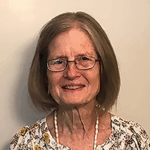
When Anna Nevius took a statistics course her senior year in college, she knew it was the field she wanted to study. After earning her PhD in applied statistics from the University of Maryland, she landed a job at the US Food and Drug Administration Center for Veterinary Medicine in their biostatistics group. Having found her dream job, she spent the rest of her career there designing studies and improving the ways data is gathered for animals who cannot verbally respond. She has since retired but continues to mentor colleagues as a member of the ASA and Caucus for Women in Statistics. She also served on the ASA Board of Directors as Council of Sections representative in addition to serving as chair of the Biopharmaceutical Section.
Andrea Rau
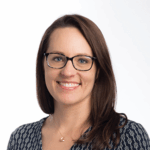
Andrea Rau has always loved learning. When her grandfather introduced her to BASIC on his Apple IIC, she fell in love with coding, particularly because it called for both logical and creative thinking. During college, she worked with data from the National Bone Marrow Donor Program and found it so rewarding she filled the remainder of her bachelor’s degree with statistics courses, eventually earning her master’s and PhD in applied statistics. Rau accepted a permanent researcher position near Paris at the French National Research Institute for Agriculture, Food, and the Environment after graduating and made France her permanent home. There, she enjoys being at the interface of statistics and biology, working with R packages, and mentoring students.
Holly Shulman

What appealed to Holly Shulman most about statistics was how it applied a mathematical approach to real-world problems. Consequently, her greatest passion has been developing the Pregnancy Risk Assessment Monitoring System (PRAMS), a state-population-based surveillance system of maternal behaviors and attitudes before, during, and shortly after pregnancy. PRAMS data has led to improved health through programmatic and legislative efforts. Shulman also serves as co-lead of the Healthy People 2030 Maternal, Infant, and Child Health (MICH) workgroup. Valuing professional service, Shulman served as president of the Caucus for Women in Statistics in 1999 and was chair of the ASA Committee on Women in Statistics in 2000. She is motivated by and follows in the footsteps of many inspiring women before her and hopes to inspire those who come after her.
Sharina D. Person

Although neither Sharina D. Person’s parents went to college, they strongly encouraged her to attend. She majored in math, but realized she wanted a career that allowed her to help society. Fortunately, she was introduced to biostatistics and found her passion. For the last 20 years, Sharina has enjoyed a research career that directly affects the lives and well-being of society, in particular population health and health equity. Another of her passions is seeing the light bulb come on in a student, mentee, or colleague’s eyes when she has explained a difficult statistical concept in a way they can comprehend.
Sydeaka Watson

Sydeaka Watson began her college education as a mathematics major at Dillard University and University of New Orleans in her hometown of New Orleans, Louisiana. The introductory statistics course she took as an elective became one of her favorite courses and she eventually earned her PhD in the field. Since then, she has had such professional experiences as professor, biostatistician, data scientist, and consultant. Watson has supported and led STEM diversity efforts as chair of the ASA Committee on Minorities in Statistics, co-organizer of the Dallas chapter of Blacks in Technology, and organizer of the Dallas chapter of R-Ladies Global.
Briana Joy Stephenson

Briana Joy Stephenson’s older brother unknowingly motivated her, as she challenged herself to master everything he learned so she would be competitive during their family Jeopardy games. This competitive spirit transcended to school, where she excelled in the classroom and eventually received the Top Flight Senior award at her tech magnet high school and a scholarship to the Massachusetts Institute of Technology. Now at Harvard T. H. Chan School of Public Health, Stephenson reflects on her circuitous yet intentional professional journey and is most proud of the influence she has had on the young women who follow her and have the confidence and encouragement to pursue the road less traveled.
Alisa Stephens-Shields

Through various games and activities, Alisa Stephens-Shields learned she enjoys problem-solving and finding patterns. And a summer job in the lab of a theoretical ecologist gave her the thrill of contributing to knowledge through research. Therefore, after a gap year that included a 6-month community service immersion in Costa Rica, she enrolled in the doctoral program in biostatistics at Harvard University and is now an assistant professor in the department of biostatistics, epidemiology, and informatics at the University of Pennsylvania Perelman School of Medicine.
Adrian Coles

Math and science were always Adrian Coles’s favorite subjects growing up in a socioeconomically disadvantaged community in southern Virginia. After serving nine years in the US Marine Corps, he attended The University of North Carolina to become a high-school math teacher. However, he fell in love with statistics after he took a course his senior year and saw the wide range of real-world problems the discipline helped solve. Eventually, he earned his PhD in statistics from North Carolina State University and became the first African American male to earn the degree from the time-honored department.
Reneé H. Moore

Reneé Moore attended Bennett College in Greensboro, North Carolina—a small, historically Black, women’s college. She loved teaching and declared three majors: mathematics; secondary mathematics education; and psychology. One summer, she participated in the Harvard Summer Program in Biostatistics and the United Negro College Fund Mellon Mays Undergraduate Fellowship Program, which set her on the path to becoming a biostatistician. Moore is currently a research professor at Drexel University; director of the Biostatistics Scientific Collaboration Center; and director of Diversity, Equity, and Inclusion for the department of epidemiology and biostatistics.