
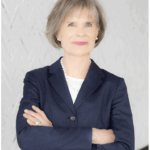
Shipp is the interim director and a professor at the Social and Decision Analytics Division within the Biocomplexity Institute at the University of Virginia. Working with Sallie Keller, the founding director, she built and developed the division for “democratizing” data science to serve the public good.
A Statistician's Life
Xihong Lin: On the Front Lines of COVID-19 Research
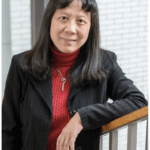
Xihong Lin, biostatistics and statistics professor at Harvard University, and her former post-doctoral fellow, Chaolong Wang, worked day and night to help the world understand COVID-19, what happened in Wuhan, and the steps it took to control the outbreak—including the use of personal protective equipment, which became life-saving.
Stacy R. Lindborg
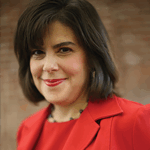
Stacy R. Lindborg’s interest in statistics came from a strength in mathematics, a biproduct of having an engineer as a father who thought studying math in the summer was cool. After earning her PhD, she took a job working for Eli Lilly & Company. As she began working on data, she learned one of the greatest strengths as a statistician lies in the depth of knowledge of the data. Since then, Stacy has worked on drugs targeting serious neurological and neurodegenerative diseases in addition to cancer, cardiovascular disease, diabetes, immunology, and pain. She has also served in numerous leadership roles, including head of R&D strategy, general product management leadership, and her current role as chief development officer.
Jonaki Bose

Jonaki Bose has been a federal statistician for 27 years. She’s worked in the Education, Transportation, and Health and Human Services departments. Now, as a senior adviser, she works on interesting production challenges, mentors, and performs methodological work with like-minded colleagues interested in furthering the production and use of health statistics.
Tamara G. Kolda
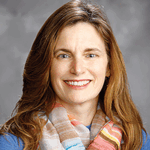
Tamara G. Kolda’s career began at the dawn of the internet, in the pre-Google era. Since then, she has worked at the intersection of mathematics, computing, and data. She was awarded the Alston S. Householder Postdoctoral Fellow in Scientific Computing at Oak Ridge National Labs in Tennessee after completing her doctorate and worked for two decades at Sandia National Labs in California. She has benefitted from the advice and guidance of many statisticians along the way and finds the community to be highly collegial. She helped launch and serves as founding editor-in-chief of the SIAM Journal on Mathematics of Data Science, an academic journal focused on the mathematical and statistical foundations of data science methods.
Ni Zhao
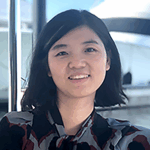
Ni Zhao’s career as a biostatistician followed a convoluted path. When she was a kid, her parents dreamed she would become a medical doctor. She partly had the same wish—she wanted to work toward improving human health and well-being. Yet, she was also fascinated by the beauty of mathematics and didn’t think there was a way to combine math and medicine until she discovered biostatistics. Now, as an assistant professor of biostatistics at The Johns Hopkins University, she collaborates with top-notch researchers and participates in frontline research.
Susan VanderPlas

Susan VanderPlas loved math but didn’t want to be a statistician like her father. To her, what he did looked boring, and she wanted to know how the brain worked. During her master’s project, she became interested in statistical graphics because it reminded her of her first love—psychology and how the brain works. Because she is red-green colorblind, she began investigating how perception differed from the raw data presented in charts and what people took from the visualizations. She also helped organize the 2019 Uncoast Unconference—a workshop and hackathon for R users in “flyover country.” Today, she is an assistant professor in statistics at the University of Nebraska and involved in the ASA Section on Statistical Graphics.
Snehalata Huzurbazar
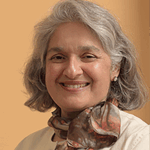
Snehalata Huzurbazar’s family is entrenched in the mathematical and physical sciences, so she tried to avoid anything close to STEM. It wasn’t until the economist Kathy Anderson told her a degree in statistics would be useful for employment that she discovered she passionately enjoyed the discipline and eventually earned a PhD in the field. Though the bulk of her career is as a faculty member in statistics departments, her proudest achievement occurred when, after some campus sexual assault incidents, she initiated and obtained funding to create the Combat Violence Against Women program. This created the University of Wyoming’s STOP Violence Program, which has since been institutionalized.
Alyssa Frazee
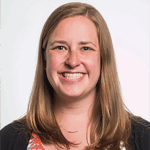
Alyssa Frazee became interested in statistics during her AP Statistics class in high school, because stats, she discovered, was the tool that helped us cope with uncertainty. Eventually, she earned her PhD in biostatistics and fell in love with programming. She has since dabbled in security, political forecasting, and fraud prevention, but is now a software engineer when she isn’t doing improv or playing the piano.
Nell Sedransk
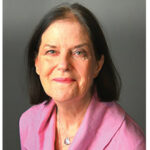
The ink was barely dry on Nell Sedransk’s PhD when she joined the department of surgery at the University of Wisconsin and assembled a clinical trials statistical center for cancer research. Spending time at the radiologist’s elbow, she learned the boundaries of a lung tumor are not sharp and distinct, exact repetition of an X-Ray is technically not possible, and the best in the world cannot measure without error. Later, she took research leadership appointments at the National Institute of Science and Technology (NIST) and National Institute of Statistical Sciences (NISS). At NIST, she became part of the multidisciplinary team overseeing modeling to determine the cause and process of the World Trade Center collapse. At NISS, she focused on research, mentoring, and program building. She has always wanted to keep learning; being a statistician has fulfilled that wish.