
The editor of Significance magazine, Brian Tarran, is inviting early-career statisticians and data scientists to use data and statistics to tell the stories that matter most to them—whether those stories are about politics, health, crime, education, industry, environment, or entertainment.
Additional Features
ASA Members Show Up Despite Challenges

Although much has changed since the pandemic began, ASA members contributed more than $280,000 in support of ASA programs.
Snehalata Huzurbazar
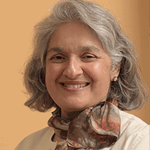
Snehalata Huzurbazar’s family is entrenched in the mathematical and physical sciences, so she tried to avoid anything close to STEM. It wasn’t until the economist Kathy Anderson told her a degree in statistics would be useful for employment that she discovered she passionately enjoyed the discipline and eventually earned a PhD in the field. Though the bulk of her career is as a faculty member in statistics departments, her proudest achievement occurred when, after some campus sexual assault incidents, she initiated and obtained funding to create the Combat Violence Against Women program. This created the University of Wyoming’s STOP Violence Program, which has since been institutionalized.
Alyssa Frazee
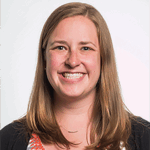
Alyssa Frazee became interested in statistics during her AP Statistics class in high school, because stats, she discovered, was the tool that helped us cope with uncertainty. Eventually, she earned her PhD in biostatistics and fell in love with programming. She has since dabbled in security, political forecasting, and fraud prevention, but is now a software engineer when she isn’t doing improv or playing the piano.
Celebrating Women in Statistics and Data Science 2022
In honor of Women’s History Month, we are once again celebrating ASA women who work in statistics and data science. These accomplished women were chosen because they are leaders, mentors, and influencers. Read their stories to find out why they chose statistics, who influenced them, and what they have accomplished.
State of the Nation’s Health Data Infrastructure: Experts Weigh in Two Years into Pandemic
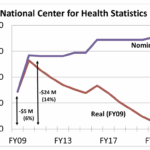
Count on Stats spoke with Jennifer Madans, Ninez Ponce, and Charles Rothwell—experts on the National Center for Health Statistics—for our series, State of the Data Infrastructure. They discuss how the pandemic exposed the agency’s challenges with budget, stature, and profile.
Nell Sedransk
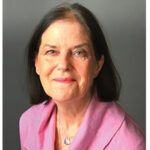
The ink was barely dry on Nell Sedransk’s PhD when she joined the department of surgery at the University of Wisconsin and assembled a clinical trials statistical center for cancer research. Spending time at the radiologist’s elbow, she learned the boundaries of a lung tumor are not sharp and distinct, exact repetition of an X-Ray is technically not possible, and the best in the world cannot measure without error. Later, she took research leadership appointments at the National Institute of Science and Technology (NIST) and National Institute of Statistical Sciences (NISS). At NIST, she became part of the multidisciplinary team overseeing modeling to determine the cause and process of the World Trade Center collapse. At NISS, she focused on research, mentoring, and program building. She has always wanted to keep learning; being a statistician has fulfilled that wish.
Amal Moussa

Born and raised in Lebanon, Amal Moussa holds a PhD in statistics, earned with distinction from Columbia University. Her thesis, “Contagion and Systemic Risk in Financial Networks,” shed light on the importance of the network structure in identifying systemic financial institutions and formulating regulatory policies and has been cited as a reference by former Federal Reserve president Janet Yellen. Moussa was also awarded the Minghui Yu Teaching Award at Columbia University.
Anna B. Nevius
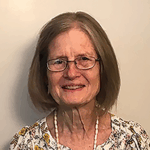
When Anna Nevius took a statistics course her senior year in college, she knew it was the field she wanted to study. After earning her PhD in applied statistics from the University of Maryland, she landed a job at the US Food and Drug Administration Center for Veterinary Medicine in their biostatistics group. Having found her dream job, she spent the rest of her career there designing studies and improving the ways data is gathered for animals who cannot verbally respond. She has since retired but continues to mentor colleagues as a member of the ASA and Caucus for Women in Statistics. She also served on the ASA Board of Directors as Council of Sections representative in addition to serving as chair of the Biopharmaceutical Section.
Andrea Rau
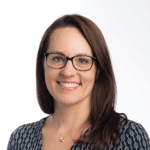
Andrea Rau has always loved learning. When her grandfather introduced her to BASIC on his Apple IIC, she fell in love with coding, particularly because it called for both logical and creative thinking. During college, she worked with data from the National Bone Marrow Donor Program and found it so rewarding she filled the remainder of her bachelor’s degree with statistics courses, eventually earning her master’s and PhD in applied statistics. Rau accepted a permanent researcher position near Paris at the French National Research Institute for Agriculture, Food, and the Environment after graduating and made France her permanent home. There, she enjoys being at the interface of statistics and biology, working with R packages, and mentoring students.