
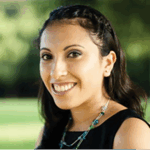
Born in Peru and raised in California, Tanya Garcia fondly remembers—as a 4-year-old—craftily fitting together the pieces of jigsaw puzzles. Puzzles took a new shape years later and her enthusiasm for solving mathematical and statistical problems blossomed. Now at UNC Chapel Hill as a tenured associate professor, Garcia works toward predicting precise, personalized, and robust progression profiles for neurodegenerative diseases.
Special Features
Celebrating Hispanic Heritage Month

In celebration of Hispanic Heritage Month, we recognize the following 12 individuals from the Hispanic community who have made tremendous contributions to the math and statistics field. Read their biographies to learn more about how they entered the field of statistics, what they’ve accomplished, and how they became leaders in their professional careers. Submitted by […]
Rob Santos

Robert Santos’s expertise spans quantitative and qualitative research design, sampling, survey operations, and statistical analysis, and his specialty areas include undocumented immigrants and other disadvantaged populations. He has held executive-level leadership positions across multiple organizations and was elected the 116th president of the ASA.
Janet Wittes

Janet Wittes was leaning toward a major in biochemistry at Radcliffe College until faculty mentor John Edsall noted her preference for inference and guided her to statistics. In 1970, with two toddlers in tow, Wittes and her husband—physician Robert E. Wittes—moved to Bethesda, Maryland, where she worked part time as a postdoctoral researcher with Jerome Cornfield at The George Washington University and he served in the USPHS Commissioned Corps as a Yellow Beret. She founded a consulting firm, Statistics Collaborative, in 1990 and remains its president.
Alyson G. Wilson
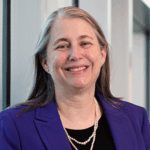
Alyson G. Wilson’s interest in statistics grew out of a summer internship in the clinical statistics department of Burroughs Wellcome, a pharmaceutical company in North Carolina. This was the first time she understood how math could be applied to real-world problems. Today, she is a professor in the department of statistics and associate vice chancellor for national security and special research initiatives, and her work has contributed to improving the use of data and quantitative methods in defense.
Gayle S. Bieler
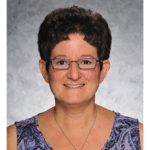
Gayle S. Bieler worked part time from her home for more than 15 years, until she became inspired by data science and the happenings in the Obama administration. That is when she took a risk and started something new. Six years later, she is leading a team of 24 talented data scientists at RTI.
Celebrating Rising Undergraduate Women in Statistics and Data Science

We invited rising undergraduate stars Audrey Bertin, Taneisha Arora, Sarah Zimmermann, and Ziwei “Crystal” Zang to answer a few questions in celebration of Women’s History Month.
Gabriela de Queiroz

Gabriela de Queiroz initially studied electrical engineering but fell in love with statistics after spending a semester in the US. She went on to complete her master’s in epidemiology and then became a data scientist, intrigued by how statistics and computer science were being used together in industry. Her great passion for sharing knowledge and connecting with people inspired her to create R-Ladies, a group that focuses on bringing more diversity into the R community. She recently started AI Inclusive, whose mission is to increase the representation and participation of gender minority groups in artificial intelligence.
Judith D. Singer

An internationally renowned statistician and social scientist, Judith D. Singer’s scholarly interests focus on improving the quantitative methods used in social, educational, and behavioral research. She is primarily known for her contributions to the practice of multilevel modeling, survival analysis, and individual growth modeling—and to making these and other statistical methods accessible to empirical researchers. She is senior vice provost for faculty development and diversity and James Bryant Conant Professor of Education at Harvard University.
Stephanie Zimmer
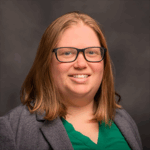
Stephanie Zimmer grew up near Charlotte, North Carolina, and developed an interest in statistics when she took AP Statistics in high school while attending the North Carolina School of Science and Mathematics. After finishing her studies at Iowa State, she joined RTI International in Durham, North Carolina, as a research statistician. There, she works on many projects, including surveys of prisoners, prisons, law enforcement agencies, and victims. She enjoys mentoring other statisticians in her group, particularly in learning R.