

Sheila Macdonald Bird’s father played mental arithmetic games with her when she was a child, which sparked her enthusiasm for math. And even though she has won numerous awards and her work has led to statistical guidelines for contributors to medical journals, some of her most enjoyable days have been spent absorbed in designing studies—especially when analysis leads to new insights with important implications for public health.
Special Features
Usha Govindarajulu

Usha Govindarajulu was inspired by her father to pursue biostatistics—which combined her love for biology and statistics. Her research in cardiac device safety recently generated three first-author publications and, when FDA statisticians saw her research presented during the Joint Statistical Meetings, she was asked to advise them on her methods. Her research has also been featured on the radio program “Public Health Minute.”
Claire McKay Bowen
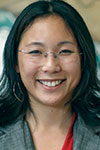
Claire McKay Bowen was raised on a small farm in Idaho, where she was encouraged to explore and question the world around her. Eventually, she pursued a degree in mathematics and physics, but what intrigued her most in the research projects was statistical analysis and how it was applied to solve real-world problems. She received several fellowships and the Gertrude Cox Women’s Scholarship, going on to earn a doctorate in statistics. She is now the lead data scientist for privacy and data security at the Urban Institute.
Dianne Cook
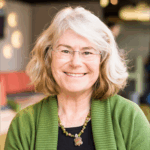
Dianne Cook was the center half on her small high-school field hockey team that beat all the larger high schools to become the state hockey champion. Sports—both watching sports and playing sports—exposed her to basic statistics. Where she really learned how to do data analysis, however, was at Iowa State University, where she, Hadley Wickham, and Heike Hofmann entered a data analysis competition—the first of many to come.
L. Adrienne Cupples

After earning her undergraduate degree in American studies, L. Adrienne Cupples married and worked for several years. But in 1968, she decided to take math courses at night school “just for the heck of it.” She is now professor of biostatistics and epidemiology at Boston University School of Public Health. For the past 30 years, she has been involved in genetic epidemiology in neurological diseases, mentored many students on their doctoral research, and won numerous awards.
Cynthia Zang Facer Clark

Cynthia Clark’s mother was a chemist prior to WWII and her father was an agricultural loan officer and bank director, so studying mathematics and science was not unusual for a girl in her home. She pursued mathematics until it was clear to her there were better career opportunities in statistics for a woman. A longtime leader in the official statistics community, she is the executive director of the Council of Professional Associations on Federal Statistics.
Randi Garcia
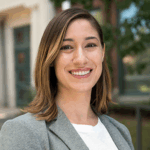
In high school, Randi Garcia loved math—and her math grades showed it. But when it came time to decide a college major, she chose to study psychology and women’s studies. Fortunately, she was quickly introduced to statistics and data analysis via her psychology courses and her love for math made a giant comeback. She now has her dream job at Smith College, where she teaches courses in both statistical and data sciences and psychology.
Elizabeth A. Stuart
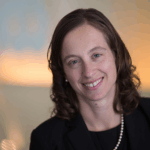
While studying for her undergraduate degree at Smith College, Elizabeth A. Stuart knew she wanted to “save the world through math,” but she had no idea what that meant. After college, she worked as a research assistant at Mathematica Policy Research, which is where she discovered statistics as a way to link her interests in public policy, the social sciences, and mathematics. She now works at the interface of statistical methods and public health, with expertise in methods for estimating causal effects. She is professor of mental health, biostatistics, and health policy and management and associate dean for education at Johns Hopkins Bloomberg School of Public Health.
Claudia Perlich
Claudia Perlich was born near Leipzig, East Germany. Her father—having worked on replicating the IBM 360—foresaw that computer-related skills would be in demand, so—on his advice—Claudia studied computer science. Today, she is an adjunct professor at NYU’s Stern School of Business and a senior data scientist at Two Sigma. Among the aspects of data science she appreciates most is the subtle skill of trying to find what she calls the “little quirks” in a data set. “It’s like doing detective work,” she says.
Sherri Rose
Sherri Rose grew up in poverty and violence. Adjusting to college life was a struggle, but she was laser-focused on her courses in hopes of finding a path to a stable future. In fact, she was part of the first group of undergraduates in the Summer Institute for Training in Biostatistics (SIBS) at Boston University, which solidified her determination to earn a PhD. She is now associate professor at Harvard Medical School and co-director of the Health Policy Data Science Lab.